
Introduction
“Can sustainability really be this simple?”
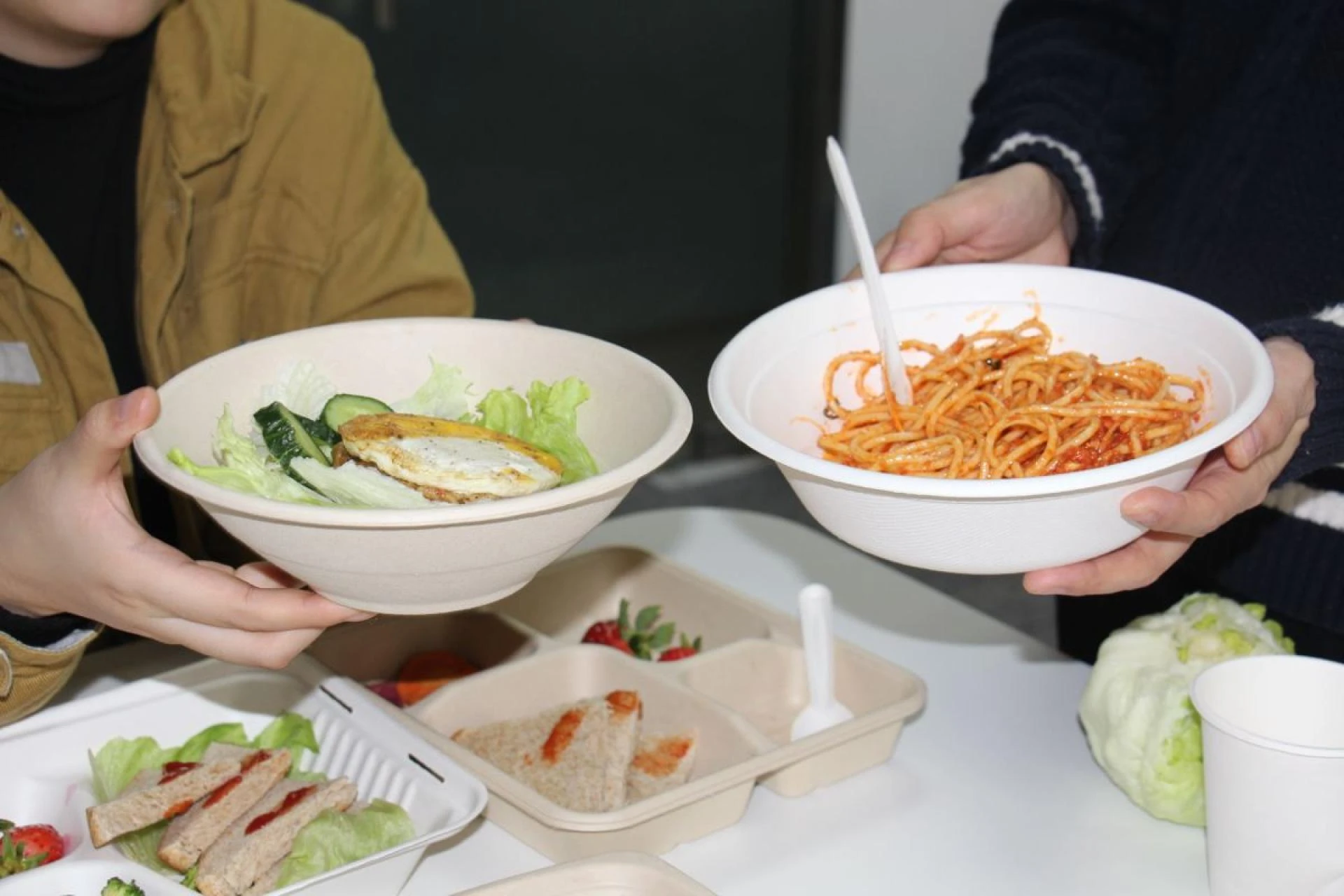
That’s what a restaurant owner in Los Angeles asked after switching from plastic to sugarcane bagasse bowls. Within weeks, customers were asking questions — not about the food, but about the packaging. They noticed how natural, sturdy, and elegant it felt compared to plastic.
Across cafés, catering events, and delivery kitchens, this shift is accelerating fast. Plastic bans, eco-conscious consumers, and next-generation materials are driving a packaging revolution — and one name keeps standing out: Bioleader, a leading manufacturer specializing in sustainable food packaging made from sugarcane bagasse.
Let’s unpack why these bowls aren’t just trending — they’re transforming the way the foodservice industry thinks about design, waste, and responsibility.
The Plastic Predicament: A Global Wake-Up Call
Every year, the world produces over 430 million tons of plastic, according to the OECD Global Plastics Outlook (2024). Roughly one-third of that comes from packaging, and half of it is used once before being thrown away.
The outcome?
- Over 14 million tons of plastic leak into oceans annually.
- Microplastics are now found in human lungs, blood, and even breast milk. (Science Advances, 2023)
- Nations are enforcing strict bans: the EU, India, and several U.S. states have outlawed single-use plastic packaging.
Amid this crisis, bagasse — an agricultural byproduct once considered waste — has emerged as an unexpected hero.
That’s why restaurants and distributors are turning to sugarcane bagasse bowls — 100% biodegradable, compostable, and PFAS-free.
What Makes Bagasse Different? The Science Behind the Sustainability
Bagasse is the fibrous residue left after extracting juice from sugarcane. It’s renewable, lightweight, and naturally strong — the perfect base for food containers.
When processed using Bioleader’s proprietary molding technology, it becomes:
- Heat-resistant up to 120°C, ideal for hot meals or soups.
- Grease-proof and leak-resistant, even for oily foods.
- Compostable in 60–90 days under industrial conditions.
- Certified food-safe, compliant with EN13432, ASTM D6400, and FDA standards.
Compared with paper and plastic, bagasse has a smaller carbon footprint and requires 30–50% less energy to produce.
That’s why sustainable product designers call it the “new frontier of renewable packaging.”
Explore Bioleader’s full range of minimalist bagasse bowls engineered for performance and planet health.
Real-World Case Study: Bioleader’s Partner Success
When a Scandinavian meal-prep brand partnered with Bioleader to replace plastic containers with bagasse bowls, the results were striking:
Within 6 months:
- Plastic waste dropped by 72%.
- Composting turnaround time improved by 40%.
- Customer satisfaction surveys showed a 27% rise in eco-conscious brand loyalty.
The bowls didn’t just meet regulations — they inspired a new brand narrative around “clean eating, clean packaging.”
This case proves a vital point: switching to sustainable packaging isn’t a cost — it’s an investment in future competitiveness.
Beyond Compostability: The Aesthetic Edge of Bioleader’s Design
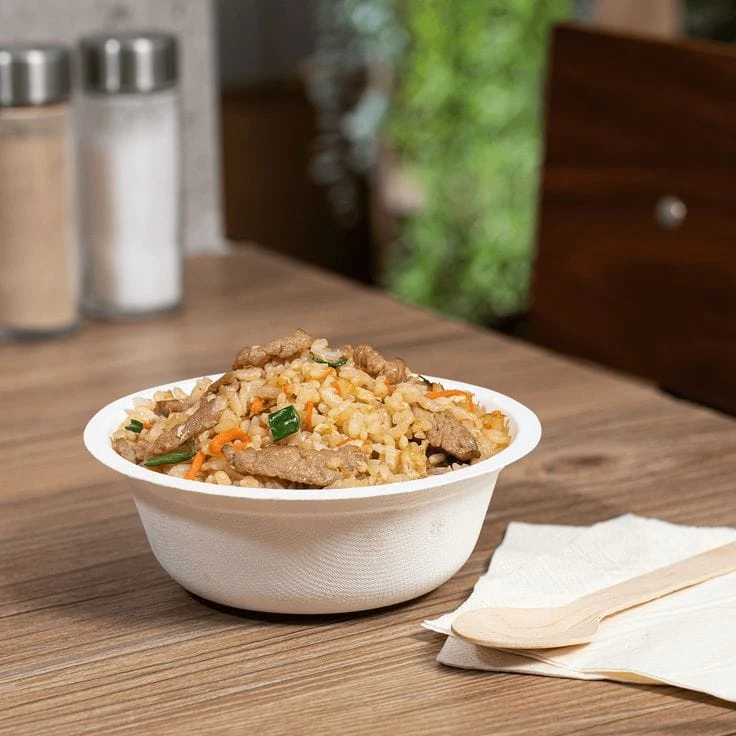
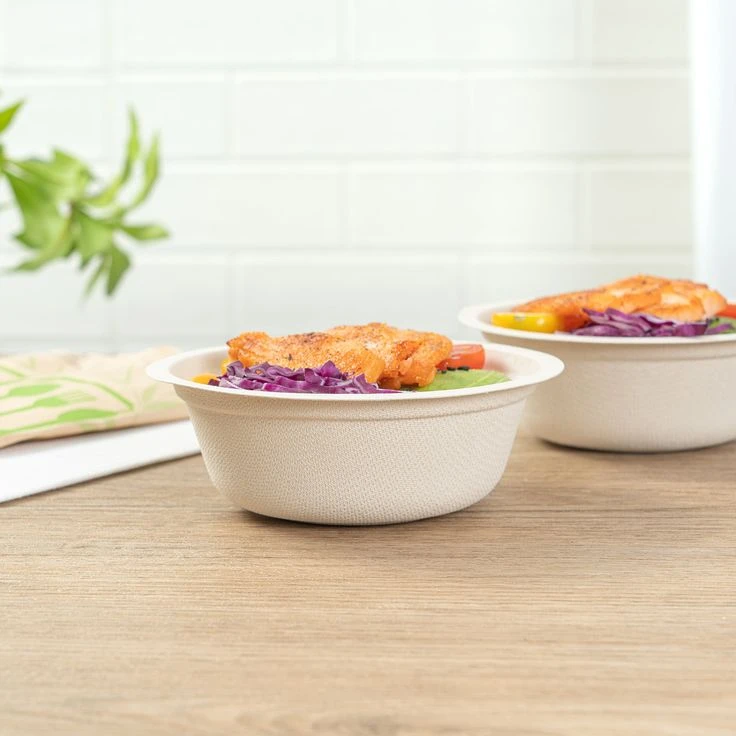
Bioleader’s design philosophy goes beyond functionality. Every eco products sugarcane bowl combines natural color, clean lines, and ergonomic structure to complement premium dining experiences — from fine catering to casual takeout.
What sets these products apart:
- Precision-molded edges for secure lid fitting.
- Custom branding options to support private-label clients.
- Multi-size range (8oz–32oz) for soups, salads, noodles, and desserts.
- Stackable space-efficient design reducing logistics costs.
As Bioleader’s CEO recently shared in an industry forum, “The real innovation isn’t in replacing plastic — it’s in elevating biodegradable packaging to a design statement.”
Discover the full potential of eco products sugarcane bowls — where elegance meets environmental engineering.
Market Insight: The Rise of Fiber-Based Packaging
According to Fortune Business Insights (2025), the global bagasse tableware market will reach USD 14.6 billion by 2028, growing at a CAGR of 8.9%.
The key drivers include:
- Expansion of food delivery apps (GrabFood, DoorDash, Uber Eats).
- Stricter Extended Producer Responsibility (EPR) policies.
- Corporate ESG commitments to net-zero packaging.
- Increasing consumer preference for natural, plastic-free packaging.
Bioleader stands out for integrating design, production, and export expertise under one roof. With ISO9001-certified facilities in Xiamen and advanced pulp molding lines, the company now serves clients in over 80 countries — from Europe to North America to Southeast Asia.
This global scalability ensures consistent quality and sustainable sourcing, making Bioleader a preferred OEM/ODM partner for eco tableware.
The Bagasse Advantage in 2025 and Beyond
What’s next for bagasse? The momentum is undeniable.
- Policy Alignment: The 2026 PPWR regulation in Europe will fully support compostable fiber-based packaging.
- Corporate Demand: Multinationals like Starbucks and McDonald’s Japan have already adopted bagasse tableware for in-store and delivery use.
- Technological Advances: Bioleader’s R&D division is testing bio-coating alternatives that improve barrier performance without chemical additives.
- Consumer Awareness: 81% of Gen Z shoppers now prefer packaging that is “home-compostable” (Deloitte Sustainability Survey, 2024).
This convergence of technology, policy, and public sentiment marks bagasse as the material to watch in the next decade.
Frequently Asked Questions
1. Are bagasse bowls safe for hot liquids?
Yes. Bioleader’s bagasse bowls withstand up to 120°C, making them perfect for soups, ramen, and curries.
2. Do they contain PFAS or coatings?
No. All Bioleader products are PFAS-free, using water-based barrier coatings.
3. Can bagasse bowls be composted at home?
Yes, they decompose within 90–120 days in home composting and 60–90 days in industrial facilities.
4. Are these bowls certified for export?
Absolutely. Bioleader’s packaging complies with EN13432, ASTM D6400, and FDA/LFGB food-contact standards.
5. What makes Bioleader’s bowls different from others?
Bioleader controls the entire process — from pulp formulation to mold design — ensuring superior strength, hygiene, and consistency.
Conclusion
From local cafés to international meal-kit brands, sugarcane bagasse bowls are redefining what responsible packaging looks like. They bridge performance, beauty, and biodegradability — proving that eco-friendly solutions can compete with, and outperform, plastic.
As shown through Bioleader’s innovations — from classic bagasse bowls to next-gen eco products sugarcane bowls — sustainability is no longer a compromise. It’s the new standard.
In a world where every meal comes with a choice, choosing Bioleader means choosing the future — clean, circular, and compostable.

























Sign in to leave a comment.