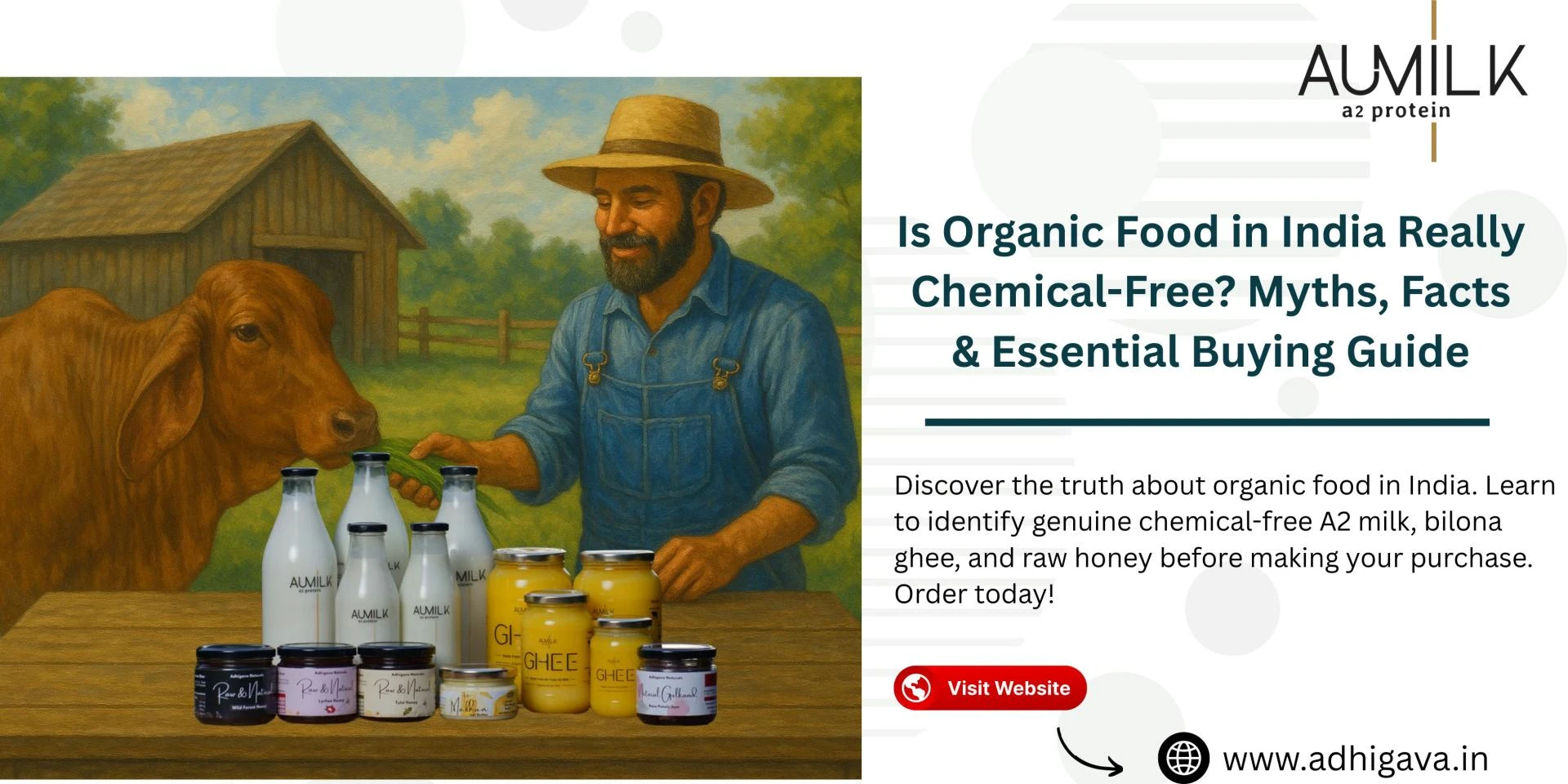

Introduction: The Rising Demand for Organic Food in India
In recent years, there has been a remarkable surge in demand for organic food across India. Increasingly, health-conscious individuals are choosing products like organic milk, ghee, gulkand, and honey, driven by the promise of “chemical-free” nourishment. This shift reflects a growing awareness of health, wellness, and the desire to avoid synthetic pesticides and harmful additives.
However, while the term “organic” sounds simple and reassuring, the reality behind it is more complex. Not all products labeled as organic truly meet the strict criteria of organic farming or production. This article aims to clarify what “organic” means in India, debunk common myths, and guide you on how to select genuinely chemical-free food products.
What Does Organic Actually Mean in India?
The term organic food in India refers to products grown and produced without synthetic pesticides, chemical fertilizers, genetically modified organisms (GMOs), antibiotics, or hormones. The National Programme for Organic Production (NPOP) governs organic certification standards across India, laying down strict guidelines for farming and animal rearing practices.
Organic farming in India emphasizes natural processes such as crop rotation, use of compost, and maintaining soil health without chemicals. Animals involved in organic dairy or meat production must be raised on organic feed in low-stress, natural environments without antibiotics or synthetic hormones.
Why Not All “Organic” Labels Are Equal
Unfortunately, the widespread use of the word “organic” has led to confusion and misuse, especially in local markets. Many vendors label their products organic without adhering to the stringent standards or obtaining proper certifications. This makes it difficult for consumers to discern genuine products from falsely marketed ones.
To ensure authenticity, look for certifications like:
- NPOP (National Programme for Organic Production)
- Jaivik Bharat (India’s organic certification mark)
- USDA Organic (for imported or export-certified products)
These certifications mean the product has been inspected and meets defined organic standards.
The Chemical-Free Myth: What You Should Know
A common misconception is that all organic food in India is completely free from any chemicals. The reality is nuanced. Several uncontrollable factors can lead to residual chemical presence in organic products:
- Environmental Pollution: Air and water contamination can affect crops and livestock.
- Soil Legacy: Fields previously treated with chemical fertilizers may retain residues for years.
- Cross-Contamination: Proximity to conventional farms using pesticides can lead to drift.
That is why even certified organic farms conduct regular testing to monitor and minimize contaminants. This vigilance helps maintain the integrity of organic products sold to consumers.
Distinguishing A2 Milk from Organic Milk
Many consumers confuse A2 milk with organic milk, but these are two distinct concepts:
- A2 Milk refers to milk containing only the A2 beta-casein protein, usually sourced from indigenous Indian breeds such as Gir cows.
- Organic Milk focuses on the cow’s diet, environment, and treatment—no synthetic chemicals, hormones, or antibiotics, regardless of breed.
A2 milk provides easier digestion and certain health benefits, but it is not necessarily organic unless the farm also follows organic farming practices.
For example, in cities like Ahmedabad and Rajkot, the A2 desi cow milk price varies based on the breed’s purity and the organic status of the farm.
The Truth About Organic Honey in India
Honey is another product often misrepresented in the market. While many brands claim to sell “organic raw honey,” much of it is pasteurized, filtered, or even adulterated with sugar syrups.
Raw organic honey should be:
- Harvested directly from the hive without heating or filtration
- Retain natural enzymes, antioxidants, and nutrients
- Produced in natural, chemical-free environments such as forest apiaries
Beekeeping practices impact honey quality. Commercial beekeeping often involves feeding bees sugar water and exposing them to pesticides, reducing the purity and health benefits of the honey.
For medicinal uses and maximum nutrition, consumers should seek raw, minimally processed organic honey with transparent sourcing.
Cross-Contamination: A Hidden Challenge for Organic Farming
Even with strict organic farming practices, cross-contamination remains a major challenge in India:
- Farms are often adjacent to conventional farms using synthetic pesticides.
- Water pollution and air-borne chemicals can affect organic crops and livestock.
- Small farmers may lack resources for complete segregation or certification.
This is why ongoing lab testing, strict adherence to organic protocols, and transparent practices are essential. Trustworthy brands usually share lab test results for products like A2 cow ghee, Bilona ghee, and organic desi cow milk to prove purity and chemical-free status.
How to Identify Truly Organic and Chemical-Free Food in India
For consumers looking to buy genuine organic products, here are practical tips:
- Check Certifications: Look for NPOP, Jaivik Bharat, or USDA Organic seals.
- Read Ingredients Carefully: Avoid products with additives or preservatives.
- Trace the Source: Reliable brands provide transparent information about farms and production methods.
- Understand Farming Practices: Ask about animal feed, grazing methods, and use of natural inputs.
- Request Lab Reports: Especially for expensive items like A2 Bilona ghee or pure desi cow milk.
These steps help you avoid misleading claims and ensure your purchase supports your health goals.
Why Choosing Organic and A2 Products Benefits Your Health
Switching to genuine organic and A2 products can positively impact your health. Conventional dairy and food products may contain pesticide residues, antibiotics, and hormones linked to various health issues including digestive problems, hormonal imbalances, and even cancers.
Conversely:
- Organic foods support better metabolic function by avoiding harmful chemicals.
- A2 milk from native breeds like Gir or Sahiwal is easier to digest and less inflammatory.
- Bilona ghee retains beneficial fatty acids and vitamins through traditional methods.
- Pure organic honey enhances immunity and provides antioxidants.
Consuming these natural, chemical-free foods is an investment in long-term wellness.
Is Organic Food Always Expensive?
Many assume organic foods and A2 milk are unaffordable. While prices for A2 Gir cow milk or desi cow milk in cities like Rajkot and Ahmedabad may be higher than regular milk, this reflects ethical farming, traditional processing, and quality assurance.
For example, making Bilona ghee requires around 25–30 liters of milk to produce one liter of ghee—a slow, labor-intensive process preserving nutrients, which justifies its premium cost.
Instead of seeing it as an expense, view it as a health investment.
A Tradition Rooted in Ayurveda and Indian Heritage
Organic and traditional farming methods are not modern trends—they are part of India’s rich heritage. Products like Gir cow ghee, desi cow milk, organic honey, and gulkand have long been staples in Ayurvedic medicine.
Today, as awareness about food safety and lifestyle diseases rises, more consumers return to these time-tested foods. The key is to trust not just labels but also the source, the process, and the producer’s commitment to sustainability and honesty.
Conclusion: Making Informed Choices for Health and Sustainability
The organic food market in India holds great promise but demands awareness from consumers. Understanding the difference between organic and A2 milk, the realities of honey production, and the risks of cross-contamination will empower you to make better food choices.
Prioritize certified products, transparent brands, and traditional practices. When buying from trusted sources like Adhigava Farm’s, you can be confident in receiving genuinely chemical-free, safe, and nutritious food that supports your health and wellbeing.
Investing in genuine organic and A2 products is not just a purchase—it’s a lifestyle commitment to purity, tradition, and better health.











Sign in to leave a comment.