

In an age of seamless digital payments, the rise of Authorised Push Payment (APP) fraud has become a growing concern—especially in cross-border transactions. Verification of Payee (VoP) has emerged as a crucial tool for financial fraud prevention, allowing users to confirm whether the recipient’s name matches the registered bank account details before completing a transaction.
But here’s the question on everyone’s mind:
Do all European banks offer Verification of Payee for cross-border payments?
The short answer is: Not yet.
Let’s break down the current state of VoP adoption in Europe, especially when it comes to cross-border transfers, and what this means for fraud prevention and scam prevention across the EU.
What Is Verification of Payee?
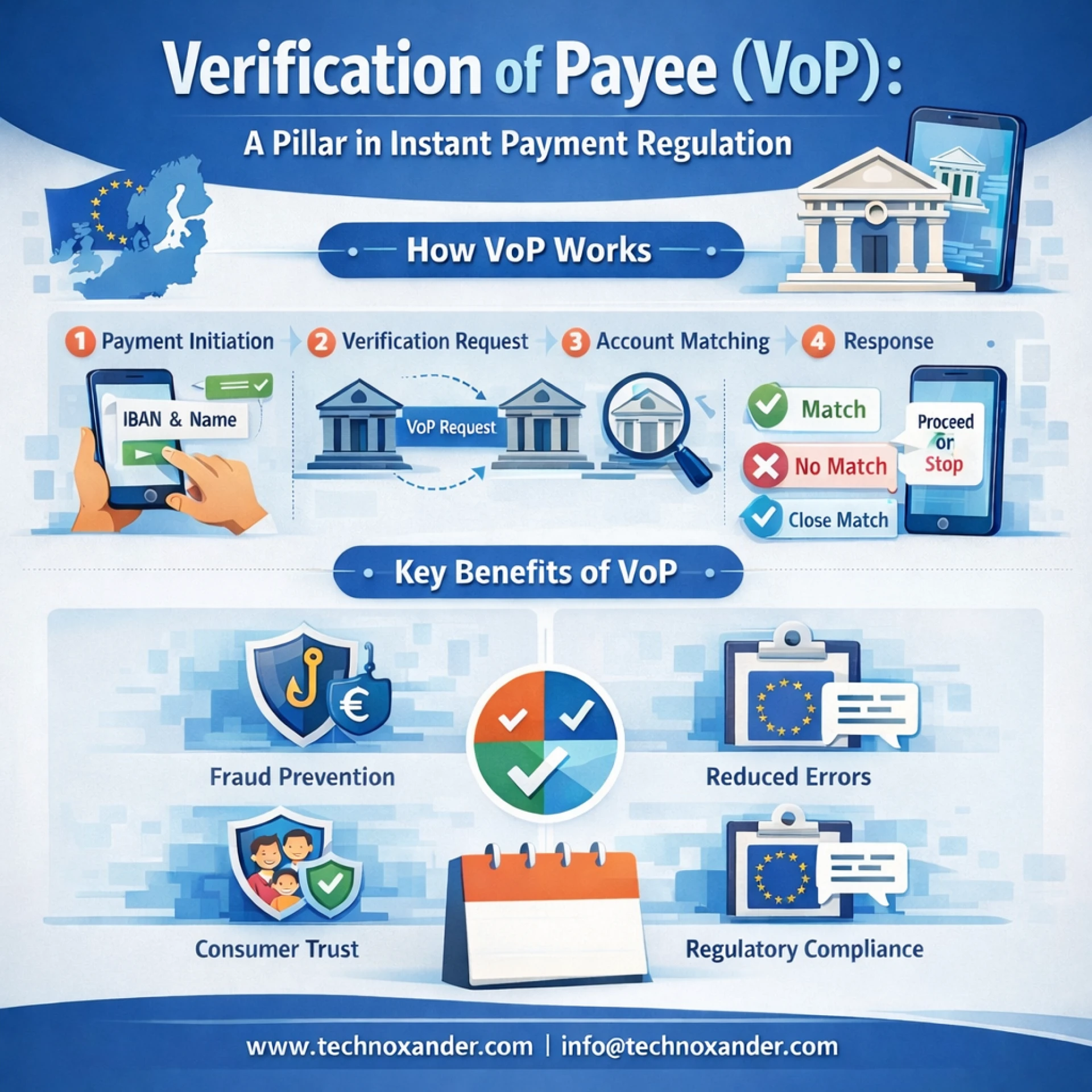
Verification of Payee (VoP) is a security feature that checks the alignment between:
- The payer-entered name
- The account number or IBAN
- The actual registered account holder’s name
This real-time name verification acts as a powerful fraud barrier, alerting the sender if something doesn’t match.
The Reality: Cross-Border VoP Is Still Evolving
While many banks in Europe offer account verification and payer verification within their own countries, cross-border VoP coverage is inconsistent. The concept of harmonized payee verification across 27 EU nations—and beyond—is still in development.
Key Challenges:
- Lack of Standardization: IBANs are standard, but name formats vary by language, character set, and legal naming conventions.
- Data Privacy Laws: Sharing account name data across borders may require additional GDPR considerations.
- Technology Gaps: Not all banks have upgraded their systems to support real-time name checks for foreign accounts.
- No Unified Mandate (Yet): The EU’s PSD2 didn’t mandate VoP for all banks. PSD3, expected soon, may change that.
Which Banks Offer Cross-Border VoP?
Only a limited number of progressive banks and fintechs currently offer Verification of Payee across borders. These include:
- SurePay: Offers cross-border VoP between UK and EU countries.
- Tink & Truelayer: Enable pan-European open banking with VoP layers.
- Large pan-EU banks (like ING, BNP Paribas, and Santander): Some offer partial cross-border name matching in specific corridors.
But even among these, full account verification is usually limited to SEPA Instant Payments or partner banks only.
What’s Changing in 2025?
With the arrival of PSD3 and the Instant Payments Regulation, the EU is laying the groundwork for mandatory payee verification—including for cross-border transactions.
Expected Changes:
- Mandatory VoP for all euro-denominated instant payments
- Expansion of payer verification for international transfers within the SEPA zone
- Standardized response protocols for mismatches (e.g., full match, partial match, no match)
This means that within the next couple of years, more banks will be required to support name verification across borders as part of their financial fraud prevention measures.
Why This Matters for Consumers & Businesses
Imagine a business paying a vendor in another EU country. Without VoP, they may accidentally transfer funds to a fraudster using a similar-looking IBAN. Now, with cross-border payee verification, they’ll get an instant alert if the name doesn’t match—saving time, money, and reputation.
For consumers, it adds an extra layer of scam prevention, especially when sending money to unfamiliar recipients.
Final Thoughts
While Verification of Payee is becoming a standard for domestic payments in Europe, cross-border VoP is still catching up. Not all banks offer it yet—but regulations and fintech innovation are moving quickly in that direction.
As we head into 2025, expect to see more banks integrating real-time name verification and account verification for international transfers—making financial fraud prevention more robust across borders.
If you're a business or developer, now is the time to prepare by integrating with VoP-ready APIs and providers.
Because in the world of digital finance, trust starts with verifying the name.



























Sign in to leave a comment.