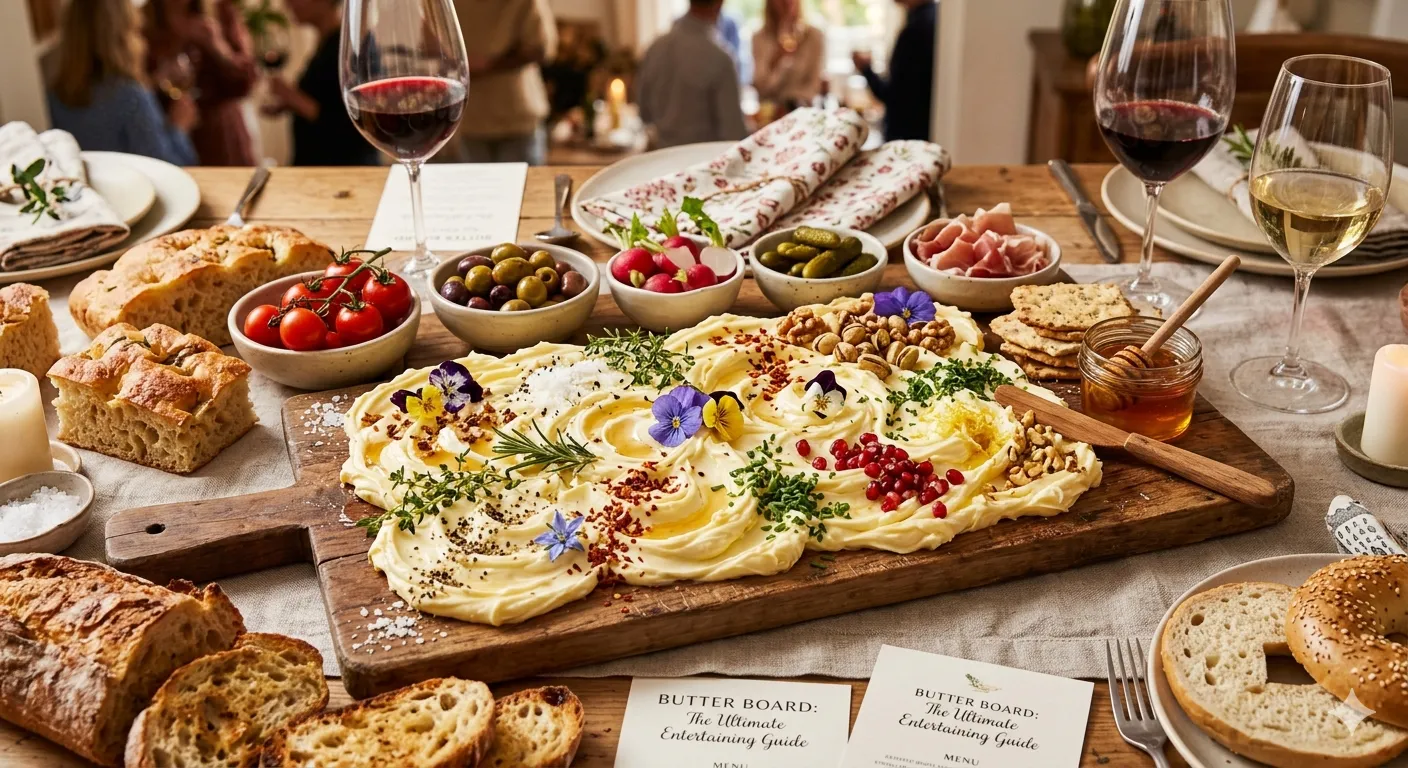

Hosting a gathering and want to impress without spending hours in the kitchen? A butter board might be exactly what your table is missing. Since food creator Joshua McFadden popularized the concept in 2022, butter boards have taken social media — and dinner tables across America — by storm. Simple, stunning, and endlessly customizable, they have become the go-to appetizer for home entertainers who want maximum impact with minimal effort.
But knowing how to make a butter board that actually looks and tastes professional is more nuanced than simply spreading butter on wood. The right technique, the right ingredients, and the right presentation all come together to create something your guests will talk about long after the last piece of bread is gone.
In this guide, you'll learn everything — from choosing the right board and butter to styling tips that make your spread look like it came from a professional catering team.
What Is a Butter Board?
A butter board is a serving surface — typically a wooden cutting board or marble slab — onto which softened butter is spread and then layered with toppings like fresh herbs, honey, flaky sea salt, citrus zest, and edible flowers. Guests dip or drag slices of crusty bread, crackers, or vegetables directly into the board.
The concept is rooted in the tradition of compound butters used in French cuisine for centuries, but the butter board format reinvented it as a communal, visually driven experience. According to Google Trends data, searches for "butter board" increased by over 4,000% in the fall of 2022, reflecting a massive cultural moment in home entertaining.
What makes it ideal for modern hosts is its flexibility. You can go savory with roasted garlic and rosemary, or sweet with cinnamon and maple syrup. The butter board recipe you create can reflect the season, the occasion, or simply what you have on hand.
What You Need to Build a Butter Board
Before you start, gather the right tools and ingredients. Quality at this stage directly affects your final result.
The Board
- Wood cutting board (walnut or maple preferred) — 12 to 18 inches works well for 4–8 guests
- Marble or slate slab — stays cooler longer, ideal for warmer climates or outdoor events
- Parchment paper — place under butter for easy cleanup if using a decorative board
The Butter
Use high-fat European-style butter (82–84% butterfat) such as Kerrygold or Plugrá. Standard American butter (80% fat) works, but European varieties provide a creamier texture and richer flavor that holds toppings better. Bring butter to room temperature — approximately 65°F — before spreading. Cold butter tears; too-warm butter pools.
Quantity guide:
- 4 guests: 1 stick (½ cup / 113g)
- 8 guests: 2 sticks (1 cup / 226g)
- 12+ guests: 3 sticks (1½ cups / 339g)
Essential Tools
- Offset spatula or butter knife for spreading
- Small spoons for drizzling
- Serving knife or extra spreader for guests
How to Make a Butter Board Step by Step
This is the core butter board recipe process used by food stylists and caterers alike.
- Temper the butter. Remove butter from the refrigerator 45–60 minutes before assembly. It should be soft but not greasy.
- Prepare your board. If using a wood board, lightly rub it with a food-safe mineral oil the night before for a cleaner surface. Wipe dry before use.
- Spread the butter. Using an offset spatula, spread butter across the board in an uneven, organic motion. Avoid covering every corner — negative space makes the board look more intentional and styled. Aim for ½ to ¾ inch thickness.
- Season the base. Immediately sprinkle flaky sea salt across the surface. This is non-negotiable — it enhances every other flavor.
- Add wet toppings first. Drizzle honey, hot sauce, or olive oil before dry toppings so they don't displace the dry ingredients.
- Layer dry and fresh toppings. Add herbs, citrus zest, crushed nuts, or dried fruit in clusters rather than distributing evenly. Clustering creates visual interest and allows guests to choose their preferred flavor zone.
- Finish with texture. A final pinch of flaky salt, cracked black pepper, or red pepper flakes ties everything together visually and flavor-wise.
- Serve immediately or refrigerate for up to 30 minutes. Beyond that, the toppings begin to weep moisture into the butter.
Best Topping Combinations for Every Occasion
Part of knowing how to build a butter board is matching toppings to your event's tone.
Classic Savory
- Roasted garlic cloves, fresh thyme, lemon zest, flaky salt, cracked pepper
- Pairs with: sourdough, baguette slices
Sweet & Indulgent
- Raw honey, cinnamon, toasted walnuts, dried cranberries
- Pairs with: brioche, cinnamon raisin bread
Bold & Spicy
- Calabrian chili oil, pickled jalapeños, smoked paprika, scallions
- Pairs with: crusty French bread, pita chips
Seasonal Fall Board
- Fig jam, candied pecans, fresh rosemary, orange zest
- Pairs with: multigrain crackers, apple slices
Butter Board for Entertaining: Hosting Tips
A butter board for entertaining is one of the most cost-effective crowd-pleasers available. A full board serving 8 guests typically costs between $15–$25, depending on topping choices — significantly less than a comparable charcuterie spread.
Pro hosting strategies:
- Set up the board 20 minutes before guests arrive, not hours ahead. Butter oxidizes and toppings soften over time.
- Provide multiple dippers — not just bread. Crudités like endive leaves, radishes, and cucumber rounds serve guests who avoid gluten.
- Label flavor zones with small cards if you've created distinct sections (e.g., "Sweet Corner" or "Spicy Zone"). This adds a professional touch and helps guests with dietary preferences navigate easily.
- Temperature matters. In rooms warmer than 72°F, place the board over a tray of ice to slow softening, especially for outdoor summer events.
- According to food blogger data compiled by Tasty and Delish, butter boards consistently rank among the top 5 most-shared appetizer formats on Pinterest and Instagram since 2022 — making them a reliable choice for visually oriented hosts.
Common Mistakes to Avoid
Even experienced home cooks make these errors when assembling their first butter board recipe:
- Using cold butter — it tears the surface and creates an unappetizing texture
- Overloading toppings — less is more; overcrowding hides the butter and makes the board look messy
- Skipping the salt — flaky salt is the single most important finishing element
- Using the wrong board size — too small and the board looks cramped; too large and the butter looks sparse
- Serving too early — assemble as close to serving time as possible for peak freshness
FAQ
1. How far in advance can I make a butter board? You can spread the butter up to 2 hours ahead and refrigerate it uncovered. Add fresh toppings like herbs and citrus zest no more than 20–30 minutes before serving to maintain texture and color.
2. What is the best butter to use for a butter board? European-style, high-fat butter (82–84% butterfat) produces the best results. Brands like Kerrygold, Plugrá, or Vermont Creamery are widely available across the U.S. and are preferred by professional caterers and food stylists.
3. How do I clean a wooden board after making a butter board? Never submerge a wood board in water. Scrape off excess butter with a spatula, wipe with a damp cloth and mild dish soap, then dry immediately. Re-season with food-grade mineral oil after cleaning.
4. Can a butter board be made dairy-free? Yes. High-quality vegan butters such as Miyoko's Creamery or Violife perform well in this format. They spread similarly to dairy butter at room temperature and hold toppings effectively.
5. How much butter do I need per person for a butter board? Plan for approximately ½ stick (57g) of butter per 3–4 guests when the board is served as an appetizer alongside other food. For a standalone starter, increase to ½ stick per 2 guests.
Conclusion
Knowing how to make a butter board is a genuinely useful skill for any home entertainer in the U.S. It requires minimal investment, scales effortlessly from an intimate dinner for four to a party of twenty, and consistently delivers the visual drama and flavor variety that modern guests expect. Start with quality European-style butter, keep your toppings intentional, and serve it fresh — those three principles alone will put your board ahead of most.



























Sign in to leave a comment.