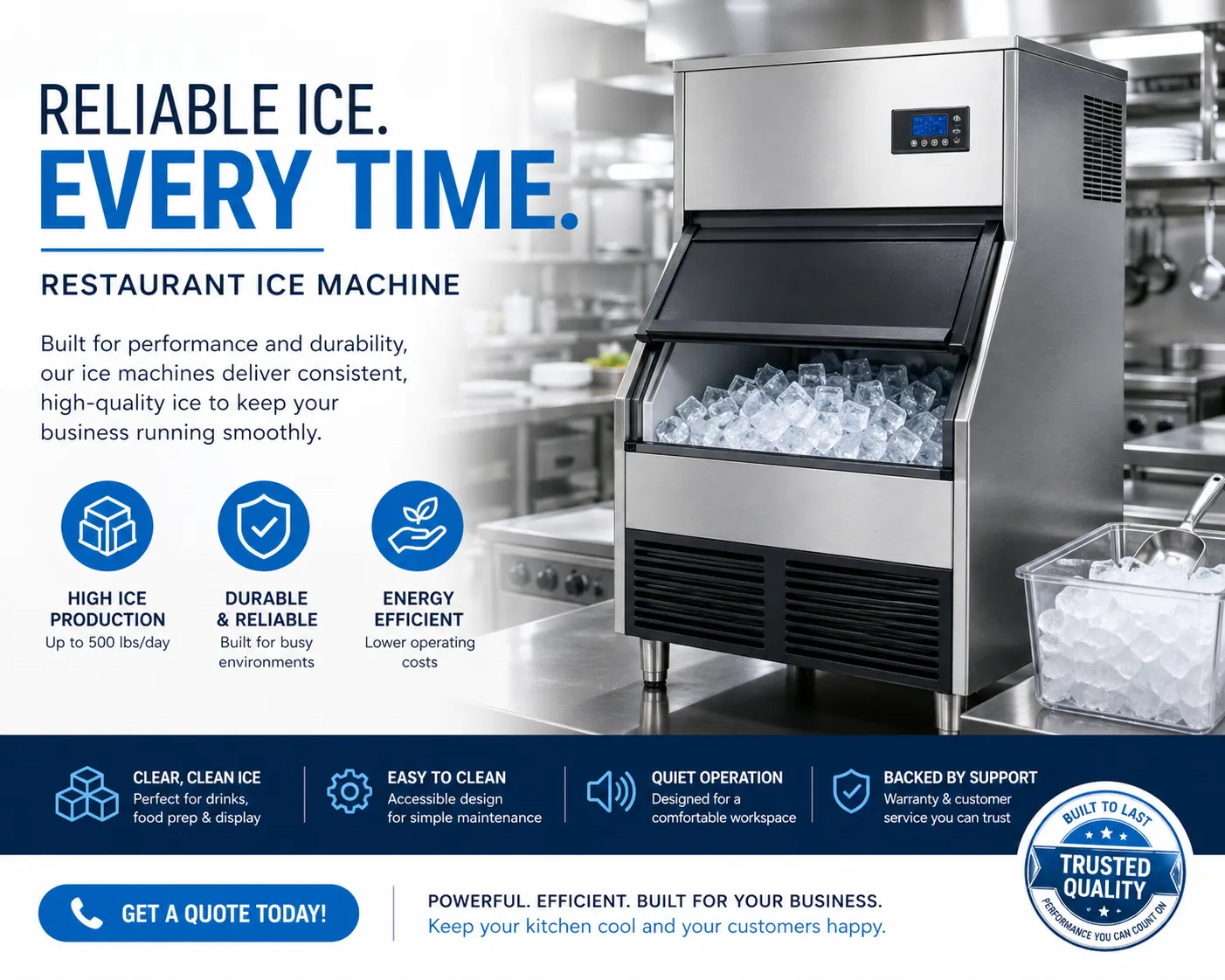

Ice may seem simple, but in a restaurant, it is one of the most important behind-the-scenes ingredients. From cocktails and fountain drinks to seafood displays, salad bars, smoothies, food prep, and healthcare-style dining operations, the right ice machine can affect service speed, customer experience, food safety, utility bills, and daily labor.
Choosing among commercial ice makers is not just about buying the machine with the highest ice production capacity. The best choice depends on your menu, peak service volume, available space, water supply requirements, drainage, local health and safety regulations, energy efficiency goals, and long-term operational costs. This guide walks through the main options so you can make a confident, cost-effective decision.
Understanding the Importance of Ice Machines in Restaurants
A reliable ice machine supports nearly every part of restaurant service. Bars need clean, consistent cubes for cocktails. Quick-service restaurants need high-volume ice for soft drinks. Cafés may need nugget or cubelet ice for blended beverages. Seafood restaurants and buffets often rely on flaked ice to keep products cold and visually appealing.
Ice is also treated as a food safety concern, not just a cooling tool. The FDA notes that packaged ice must be produced, stored, and transported under clean and sanitary conditions using safe water and properly maintained equipment; restaurants should apply the same mindset to ice machine cleaning and handling. The FDA Food Code is a model for retail and foodservice safety standards, and local jurisdictions often build their own rules around similar principles.
Poorly maintained ice machines can create service delays, off-tasting beverages, sanitation issues, repair expenses, and inspection problems. A well-chosen machine, on the other hand, improves consistency, reduces waste, and helps staff move through busy shifts without running short.
Types of Ice Machines: Which One Is Right for Your Restaurant?
The first decision is machine format. Modular ice machines produce large volumes of ice and sit on top of separate ice storage bins. They are ideal for full-service restaurants, hotels, bars, cafeterias, and high-volume kitchens that need flexible storage.
Undercounter ice machines combine ice production and storage in one compact unit. These are useful for coffee shops, small bars, food trucks, concession areas, and restaurants with limited back-of-house space. The tradeoff is lower production and storage capacity compared with modular systems.
Countertop dispensers are common in self-service beverage stations, healthcare settings, office cafés, and quick-service environments where controlled dispensing reduces handling. Remote condenser machines move heat and noise away from the kitchen, which can be useful in hot or crowded spaces, but they usually require more complex ice machine installation.
The second decision is ice type. Cubed ice is the standard for beverages because it melts slowly and looks clean in the glass. Half-cube ice works well in fountain drinks and fast beverage service because it displaces liquid efficiently. Nugget or cubelet ice is soft, chewable, and popular for specialty drinks, smoothies, and customer-facing beverage programs. Flaked ice is best for food displays, seafood, produce, salad bars, and some blended beverages. When comparing flaked ice vs. cubed ice, think about the use case: cubed ice is better for drinks, while flaked ice is better for molding around food and keeping displays cold.
Key Features to Look for in a Restaurant Ice Machine
Start with ice production capacity, usually measured in pounds of ice per 24 hours. A small café may need only a modest undercounter unit, while a busy bar, hotel restaurant, or high-volume quick-service operation may need several hundred pounds per day. Always size for peak demand, not average demand, and remember that hot kitchens can reduce real-world output.
Next, evaluate ice storage bins. Production capacity tells you how much ice the machine can make in a day, but storage capacity determines how much ice is ready during rush periods. A machine that produces enough ice overall can still fail operationally if the bin is too small for dinner service or weekend peaks.
Look carefully at water supply requirements. Commercial ice makers need a reliable potable water connection, proper water pressure, drainage, and often filtration. Hard water can increase scale buildup, reduce efficiency, and shorten equipment life. Good filtration can improve ice clarity, taste, and machine reliability.
Energy efficiency should be a major factor. ENERGY STAR says certified batch-type commercial ice makers are about 10% more energy efficient and 20% more water efficient than standard models, while certified continuous-type machines are about 16% more energy efficient. Over years of operation, those savings can reduce utility costs and support sustainability goals.
Also consider serviceability. Machines with removable food-zone components, diagnostic displays, antimicrobial features, easy-access panels, and clear cleaning cycles can reduce labor and downtime. Finally, review durability and warranty terms, especially if the machine will run continuously in a hot kitchen.
Maintenance Tips for Longevity and Efficiency
Ice machine maintenance should be part of your routine kitchen checklist, not an occasional emergency task. At minimum, staff should keep the surrounding area clean, store scoops outside the bin in a sanitary holder, avoid touching ice with hands or glassware, and monitor ice quality for cloudiness, odor, or unusual taste.
Schedule professional cleaning and descaling based on the manufacturer’s instructions, water hardness, and usage level. High-volume restaurants and hard-water locations may need more frequent service. Ice machine cleaning typically includes removing scale, sanitizing food-contact surfaces, cleaning or replacing filters, checking the drain, inspecting the condenser, and confirming that the machine cycles properly.
Air-cooled machines need good airflow. Blocked vents, dirty condenser coils, or tight clearances can force the machine to work harder, increasing energy use and reducing ice output. Water filters should be replaced on schedule, not only when problems appear.
Documentation matters. Keep maintenance logs for cleaning dates, filter changes, service calls, and repairs. This helps with warranty claims, health inspections, and troubleshooting recurring problems.
Cost Considerations: Budgeting for Your Ice Machine
The purchase price is only one part of the total cost. A budget-friendly machine may be attractive upfront, but the real question is total cost of ownership. Consider equipment price, ice machine installation, storage bin cost, water filtration, plumbing, electrical work, ventilation, maintenance, repairs, cleaning supplies, energy use, water use, and downtime risk.
High-end machines often cost more initially but may offer better durability, diagnostics, efficiency, warranties, and customer service support. For restaurants with heavy ice demand, the cost-benefit analysis often favors a premium model because downtime during peak service can be more expensive than the price difference.
Budget-friendly models can still make sense for lower-volume operations, secondary stations, seasonal businesses, or locations where ice demand is predictable and modest. The key is not to underbuy. Running out of ice can force staff to purchase bagged ice, slow service, compromise presentation, and frustrate customers.
Ask restaurant equipment suppliers to quote not just the unit, but the full installed system. A proper quote should include the machine, bin, filter, installation materials, delivery, warranty coverage, and any required accessories.
Top Brands and Models of Restaurant Ice Machines
Several established brands dominate the restaurant ice machine market. Hoshizaki offers crescent cubers, cubelet machines, flakers, dispensers, storage, stands, filters, and accessories, making it a strong option for operators that want a broad commercial lineup.
Manitowoc is known for its Indigo NXT line and a wide range of modular, undercounter, hotel, remote, countertop, beverage, and specialty commercial ice machines. For example, Manitowoc lists Indigo NXT models ranging from compact units such as the iT0300, which produces up to 310 pounds per day, to larger machines such as the iT1200, which produces up to 1,213 pounds per day under rated conditions.
Scotsman offers cube, nugget, flake, dispenser, bin, filtration, sanitation, and ENERGY STAR-certified options. Its nugget ice line is especially relevant for restaurants, cafés, and beverage programs that want chewable ice for fountain drinks, smoothies, blended cocktails, and salad bars.
Ice-O-Matic manufactures cubers, flakers, Pearl Ice machines, bins, and dispensers, with an emphasis on reliability and support. Its Elevation Series modular cube machines include models with built-in antimicrobial protection, LED status displays, one-touch sanitize/descaling controls, and dishwasher-safe food-zone components.
Rather than choosing by brand alone, compare local service availability, warranty details, parts access, customer service reputation, and supplier support. A great machine is only as good as the team available to install and maintain it.
Common Issues and Troubleshooting Tips
Common ice machine problems include low ice production, cloudy ice, bad-tasting ice, slow harvest cycles, water leaks, clogged drains, scale buildup, excessive noise, and machines shutting down unexpectedly.
If production drops, check airflow, water supply, filter condition, bin thermostat, condenser cleanliness, and ambient temperature. If ice tastes bad, inspect the water filter, bin cleanliness, scoop storage, and sanitation schedule. If the machine leaks, examine the drain line, water inlet, and bin level. If cubes are misshapen or hollow, the issue may involve water flow, scale, or evaporator performance.
Some issues are simple, but avoid turning staff into untrained repair technicians. Electrical, refrigeration, and internal component problems should be handled by qualified service professionals. Regular maintenance is almost always cheaper than emergency repair.
Conclusion: Making an Informed Decision on Ice Machines
The right restaurant ice machine is the one that fits your menu, space, peak demand, staff workflow, utility goals, and maintenance capacity. Compare machine type, ice style, ice production capacity, storage needs, water supply requirements, energy efficiency, installation complexity, operational costs, and warranty coverage before making a purchase.
For most restaurants, the smartest approach is to size slightly above peak demand, choose an efficient model, invest in water filtration, follow a strict cleaning schedule, and buy through restaurant equipment suppliers that offer reliable installation and customer service. When treated as a core piece of kitchen infrastructure rather than an afterthought, a commercial ice maker can improve service quality, protect food safety, and support smoother daily operations for years.




























Sign in to leave a comment.