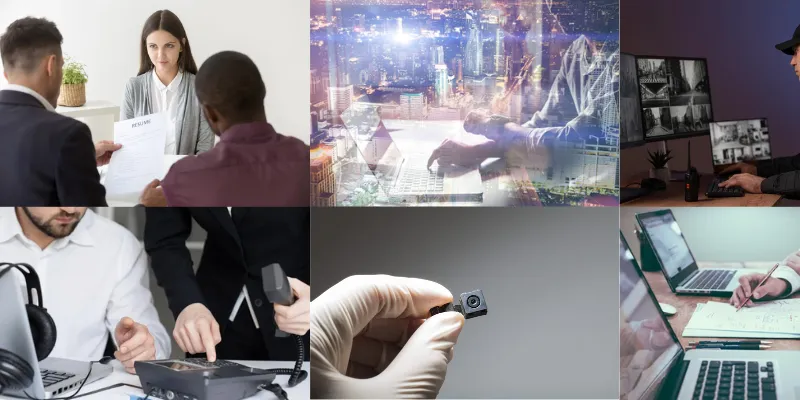

Suspicion rarely follows a convenient schedule. Whether you are dealing with a complex workers' compensation claim in Sydney or trying to verify a partner's whereabouts in Melbourne, the wait for answers often feels longer than the investigation itself. Hiring a Private Surveillance Investigator isn't just about hiring a person with a camera; it is about buying the time and expertise required to gather admissible evidence. Most people expect a quick resolution, but the reality of professional surveillance is dictated by the subject’s habits and the environment.
The Standard Timeline for Australian Surveillance
While every case varies, a typical surveillance operation usually requires a minimum of three to five days of active observation. One-day stings rarely work because they lack the context needed to prove a pattern of behaviour. In the world of Australian private investigations, we look for consistency. If an individual claims a back injury but spends Tuesday morning lifting heavy boxes at a Bunnings car park, we need to know if that was a one-off fluke or a weekly routine.
A standard investigation window often looks like this:
Phase 1: Pre-Surveillance (2–4 hours): Reconnaissance of the location, checking exit points, and identifying vehicle movements.
Phase 2: Active Observation (16–40 hours): Spread across several days to capture a broad spectrum of activity.
Phase 3: Reporting and Final Review (3–5 hours): Compiling time-stamped footage and detailed logs into a format that holds up in court or a boardroom.
Why Surveillance Isn't Instant
The pace of an investigation often depends on the "activity level" of the subject. If a subject stays indoors for twelve hours straight, the clock is ticking, but the evidence isn't growing. Surveillance Investigator services are often at the mercy of the subject’s social calendar and work commitments.
1. The Complexity of the Environment
Tailing someone through the CBD during peak hour is a different beast compared to sitting in a quiet cul-de-sac in the suburbs. In high-traffic areas, the risk of losing a subject is higher, often requiring a two-person team to ensure eyes on at all times. Conversely, in quiet residential streets, an investigator must rotate vehicles and positions frequently to avoid burning the operation by appearing suspicious to nosey neighbours.
2. The Quality of Information Provided
An investigator is only as fast as the intel they receive. If you can provide a subject's gym schedule, preferred grocery store, or usual commute times, you cut down the "dead time" significantly. Without this, the investigator spends the first few days simply learning the subject's rhythm.
3. Legal and Ethical Boundaries
In Australia, investigators must operate within the Privacy Act 1988 and state-specific regulations like the Security Industry Act. We cannot trespass, use illegal tracking devices, or harass individuals. Doing things the right way, ensuring evidence is clean, takes longer than taking shortcuts that would see the case thrown out of court.
Factors That Extend the Clock
Sometimes, a 48-hour job turns into a two-week project. This usually happens when Surveillance Investigator companies encounter specific hurdles:
Counter-Surveillance: If a subject is street smart or expects they are being watched, they may take evasive loops through side streets or perform "dry cleans" (checking for followers). This requires the investigator to back off and re-engage later to avoid detection.
Weather and Visibility: Heavy rain or smoke from bushfire season can obscure long-range lenses, forcing investigators to move closer and increase the risk of being spotted, or wait for a clearer window.
Managing Costs and Expectations
Because surveillance is billed by the hour, the timeline directly impacts your budget. Professional Surveillance Investigator services should provide a transparent strategy before the first engine starts. It is common practice to set acap" on hours for the initial phase. For instance, you might authorise 20 hours of surveillance over a weekend. Once those hours are exhausted, the investigator should present the findings and let you decide if the "trail" is hot enough to warrant further investment.
For corporate clients or law firms, the timeline is often dictated by the court date. If you need evidence for a hearing, starting the private investigation at least a month in advance is vital. This allows for the inevitable quiet days where the subject does nothing of note.
Do Investigators work on weekends and public holidays?
Yes. In fact, weekends are often the most productive times for surveillance, as subjects are more likely to engage in social activities, physical hobbies, or "under-the-table" work that contradicts their official claims.
What happens if the subject doesn't leave the house?
This is a risk in any investigation. If a subject remains stationary, the investigator will typically maintain a perimeter. If it continues for an extended period, we usually suggest pausing the operation to save the client's budget and resuming on a day with a higher probability of movement.
Is the surveillance report admissible in an Australian court?
Provided the Private Surveillance Investigator is fully licensed and followed state privacy laws, the report and accompanying video footage are generally admissible as evidence. You can verify licensing requirements via your state's police force or the Australian Professional Investigators Association (APIA).




























Sign in to leave a comment.