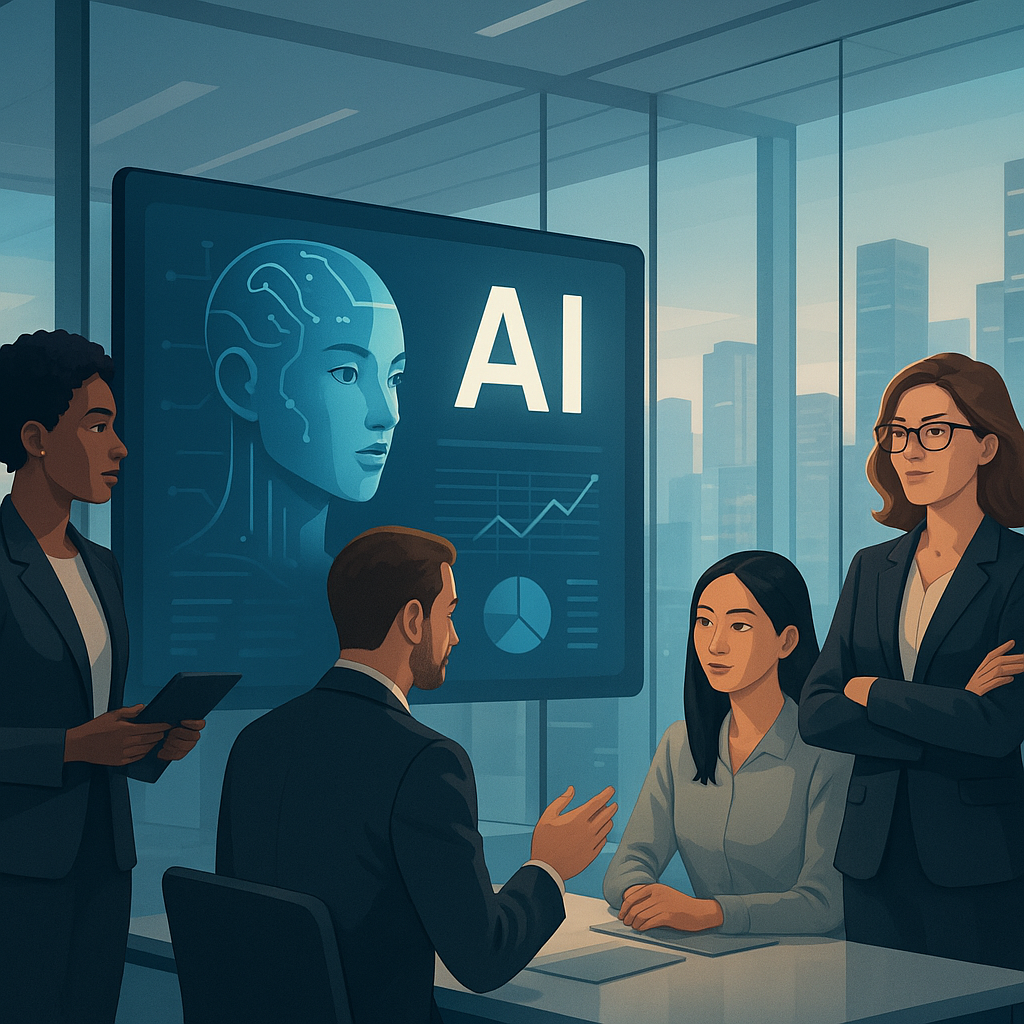

Introduction: AI Tools Shaping Recruitment in 2026
In 2026, artificial intelligence (AI) has become an integral part of talent acquisition and human resources management. Globally, HR departments rely heavily on AI-driven employment tools to streamline recruitment, improve candidate assessment accuracy, and reduce operational costs. According to a recent Deloitte report, over 75% of large enterprises now deploy AI-based hiring solutions in some capacity, up from just 40% in 2022. This rapid adoption raises critical questions about evaluating these tools’ efficacy, fairness, and compliance with employment laws.
Consider the case of a Fortune 500 company that recently replaced its legacy applicant tracking system with an AI-powered platform integrating natural language processing and predictive analytics. Within six months, the company reported a 30% reduction in time-to-hire and a 25% improvement in new hire retention. However, they faced challenges in ensuring the AI did not unintentionally bias against certain demographic groups, highlighting the vital importance of rigorous evaluation protocols.
“AI tools are revolutionizing recruitment, but without robust evaluation frameworks, organizations risk perpetuating bias and undermining fairness,” says Dr. Elaine Morales, CHRO Association senior advisor.
This article synthesizes guidance from the CHRO Association and the Society for Industrial and Organizational Psychology (SIOP) Foundation. It offers an expert-level, data-driven framework to assess AI-based employment tools from vendors, focusing on validity, transparency, and ethical considerations that senior HR leaders must prioritize.
Background: The Evolution of AI in Employment Tools
The integration of AI into hiring processes traces back to early 2010s innovations in machine learning algorithms applied to resume screening. Initially, these systems automated tedious manual tasks but often lacked contextual understanding, resulting in suboptimal candidate matches. Over the past decade, advancements in natural language processing, computer vision, and psychometric modeling have transformed these tools into sophisticated decision aids.
Notably, the CHRO Association and SIOP Foundation have played pivotal roles in establishing best practices and ethical standards for AI in talent management. Their collaborative efforts accelerated after several high-profile lawsuits in the mid-2020s, where AI hiring tools were accused of discriminatory outcomes. These events galvanized the HR community to demand transparency, fairness audits, and evidence-based validation of AI systems.
The current generation of AI employment tools encompasses diverse functionalities: automated resume parsing, video interview analysis, candidate chatbot engagement, and predictive analytics for turnover risk. According to a 2025 Gartner survey, 62% of organizations using AI tools reported measurable improvements in hiring quality metrics but also highlighted risks related to data privacy and algorithmic bias.
Understanding this historical context is essential for appreciating the complexity of evaluating AI tools today. Vendors have matured from offering off-the-shelf software to customizable platforms that must be scrutinized not only for technical capability but also for compliance with evolving regulatory standards such as the EU AI Act and the US Equal Employment Opportunity Commission (EEOC) guidelines.
Core Evaluation Criteria: Validity, Fairness, and Transparency
Evaluating AI-based employment tools requires a multi-dimensional approach encompassing psychometric validity, algorithmic fairness, and operational transparency. The CHRO Association’s 2026 framework recommends focusing on the following key criteria:
- Construct Validity and Predictive Accuracy: Tools must demonstrate a strong correlation between their assessments and actual job performance. Vendors should provide peer-reviewed validation studies or independent third-party evaluations showing predictive validity coefficients above industry benchmarks (commonly r>0.3 for cognitive tests).
- Bias Mitigation and Fairness Audits: AI systems should undergo comprehensive bias testing across protected groups (e.g., race, gender, age). Statistical parity metrics and disparate impact ratios must be disclosed. The SIOP Foundation advises that fairness audits be conducted regularly and shared with clients to ensure compliance with EEOC standards.
- Data Privacy and Security: Given sensitive candidate data usage, tools must comply with GDPR, CCPA, and other regional regulations. Vendors should detail data encryption practices, access controls, and retention policies.
- Transparency and Explainability: Users must understand how AI decisions are made. Vendors should provide interpretable models or explainability layers that HR professionals can leverage to justify hiring decisions, especially in adverse action cases.
- User Experience and Integration Capability: The tool should integrate seamlessly with existing HRIS and ATS platforms, offering a user-friendly interface that supports decision-making without overwhelming recruiters.
“The validity and fairness of AI tools are non-negotiable. Without transparent metrics and robust validation, organizations expose themselves to reputational and legal risks,” stresses Dr. Michael Chen, SIOP Foundation board member.
These evaluation points form the backbone of vendor assessment processes and are critical in negotiations and contract finalizations.
Current Developments in AI Employment Tools — Insights from 2026
The AI recruitment technology landscape in 2026 is characterized by heightened regulatory scrutiny, technological sophistication, and increasing demand for ethical AI aligned with human-centric hiring philosophies. Vendors now incorporate advanced bias detection algorithms powered by generative AI, enabling continuous self-monitoring and real-time adjustments.
One notable trend is the rise of hybrid assessment models combining AI-driven analysis with human judgment. According to a 2026 CHRO Association survey, 58% of enterprises prefer tools that augment rather than replace human recruiters, emphasizing AI as an enabler of equitable decision-making.
Furthermore, the integration of AI with psychometric assessments has advanced. Tools now utilize dynamic simulations and virtual reality environments to evaluate soft skills and cultural fit more accurately — a significant leap beyond static questionnaires.
The vendor market is also consolidating, with a few leaders dominating but smaller niche providers innovating in specialized areas such as neurodiversity hiring and remote work suitability assessments. This diversification requires CHROs to be more discerning in vendor selection, balancing innovation with compliance.
Regulatory bodies across the US, EU, and Asia-Pacific have introduced mandatory transparency disclosures for AI hiring tools, compelling vendors to publish detailed impact assessments. These developments have made vendor evaluation more data-rich but also more complex.
To navigate this, HR leaders are increasingly leveraging resources like the Artificial Intelligence Collection from the University of Helsinki for continuous education on AI ethics and capabilities.
Expert Perspectives and Industry Impact
Industry experts emphasize that the human resources function is at a crossroads in 2026. The deployment of AI employment tools offers unprecedented efficiency gains but demands enhanced governance frameworks. According to Dr. Lisa Ahmed, Chief People Officer at a global tech firm, “The key to successful AI adoption lies in partnership — between HR, legal teams, data scientists, and vendors — ensuring tools are not black boxes but transparent collaborators.”
The CHRO Association advocates for multi-stakeholder evaluation committees that include diversity officers and industrial-organizational psychologists to oversee AI tool procurement and audits. This collaborative model helps mitigate risks and aligns AI adoption with organizational values.
Moreover, professional bodies such as the SIOP Foundation provide certification programs for AI hiring assessments, raising industry standards. Certified tools undergo rigorous psychometric testing and are updated regularly to adapt to emerging workforce trends.
The impact on candidate experience is also a focal point. AI tools that fail to communicate clearly or produce opaque results erode trust. Conversely, tools that offer candidates feedback and transparency improve employer branding and candidate engagement metrics.
“Ethical AI is not just a compliance checkbox; it’s a strategic differentiator in attracting top talent,” notes Tara Singh, President of the CHRO Association.
These insights underscore why senior HR leaders must approach AI tool evaluation not merely as a technical exercise but as a strategic imperative shaping talent acquisition’s future.
Future Outlook and Actionable Takeaways for CHROs
Looking ahead, the AI employment tool landscape will continue evolving rapidly, influenced by technological breakthroughs and regulatory changes. CHROs should prioritize continuous learning and adopt a proactive stance in vendor management.
- Establish Clear Evaluation Protocols: Develop standardized checklists based on CHRO Association and SIOP Foundation frameworks to ensure consistent, objective assessment of AI tools.
- Insist on Third-Party Validation: Require vendors to provide independent validation studies and fairness audit results as a condition of procurement.
- Implement Ongoing Monitoring: AI models can drift over time; continuous performance and bias monitoring post-deployment are essential to maintain fairness and accuracy.
- Foster Cross-Functional Collaboration: Engage legal, compliance, data science, and diversity teams early in the evaluation process.
- Educate Recruiters and Hiring Managers: Provide training on AI tool capabilities, limitations, and interpretability to ensure responsible use.
For CHROs aiming to elevate their strategic leadership in HR analytics, strengthening data quality is a critical foundation. The article HR Data Quality Solution: The CHRO's Path to Strategic Leadership offers complementary insights into harnessing high-quality data for superior decision-making.
Moreover, understanding supplier evaluation beyond digital tools can enrich vendor management skills. The article How to Evaluate Automotive Wire Harness Suppliers for Reliable OEM and Industrial Applications provides a framework adaptable to AI vendor assessments, emphasizing rigorous due diligence.
Ultimately, AI-based employment tools hold transformative potential, but only through meticulous evaluation, ethical stewardship, and informed leadership can organizations maximize benefits while safeguarding fairness and legal compliance.
“The future of AI in hiring depends on our commitment to rigorous evaluation frameworks that prioritize human dignity and organizational excellence,” concludes Dr. Elaine Morales.












Sign in to leave a comment.