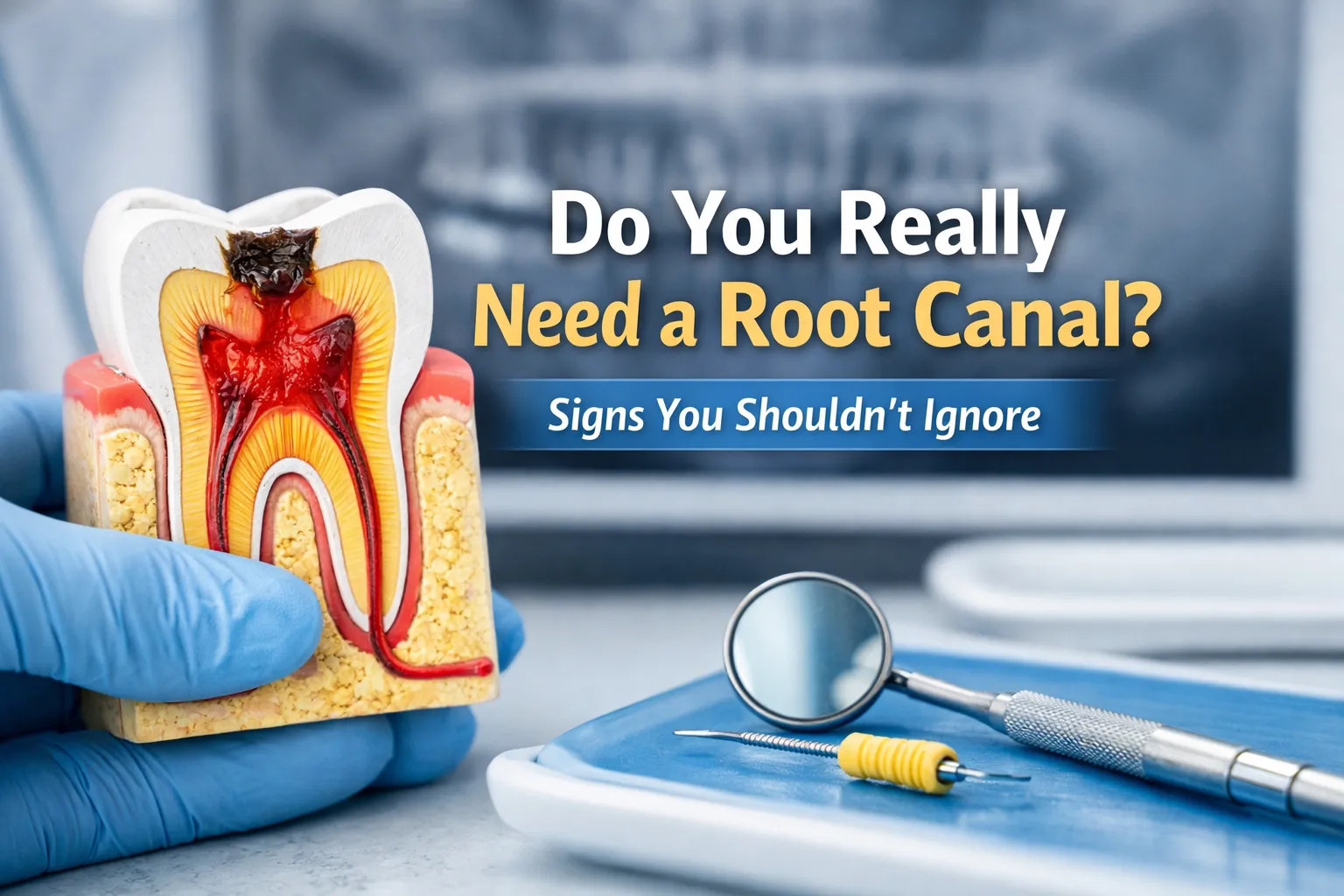

Tooth pain can be confusing. Some days it feels mild, other times it becomes hard to ignore. Many people delay treatment, hoping it will settle on its own. When the issue involves the inner part of the tooth, waiting often makes things worse. That is where a root canal comes in.
This guide explains when a root canal is actually needed, the signs to watch for, and what happens if you ignore them.
What is a Root Canal?
A root canal is a dental procedure used to treat infection inside the tooth. Beneath the hard enamel and dentine is the pulp. This soft tissue contains nerves and blood vessels.
When bacteria reach the pulp, it can become inflamed or infected. A root canal removes the infected tissue, cleans the inside of the tooth, and seals it to prevent further damage.
Key Signs You Might Need a Root Canal
1. Persistent Tooth Pain
Pain that lingers or keeps returning is one of the most common signs. It may feel deep, sharp, or throbbing. If it spreads to your jaw or ear, it often points to nerve involvement.
2. Sensitivity to Hot or Cold
If you feel a sharp or lingering reaction when drinking hot coffee or cold water, it may not be simple sensitivity. Pain that stays after the stimulus is removed is a strong warning sign.
3. Swollen or Tender Gums
Swelling around a specific tooth can indicate infection. The gum may feel sore or appear raised. In some cases, a small pimple-like bump can form, which may release pus.
4. Tooth Discolouration
A tooth turning grey or darker than others often signals damage inside the pulp. This usually happens after trauma or untreated decay.
5. Pain When Chewing
If biting down causes discomfort, the infection may have reached the root. This can make everyday eating difficult.
6. Cracked or Chipped Tooth
Even a small crack can allow bacteria to enter the pulp. If left untreated, it can lead to infection and the need for a root canal.
When It May Not Be a Root Canal?
Not all tooth pain means you need this procedure. Sometimes the issue is less severe, such as:
- Surface cavities
- Gum irritation
- Mild sensitivity from enamel wear
A proper dental check is the only way to confirm the cause.
What Happens If You Ignore the Signs?
Ignoring early symptoms can lead to:
- Severe infection
- Abscess formation
- Bone loss around the tooth
- Tooth extraction
Pain may come and go, which often misleads people into thinking the problem is gone. In reality, the infection may still be spreading.
What to Expect During Treatment?
A root canal is more straightforward than most people think. Modern techniques make it similar to getting a filling.
Steps usually include:
- Numbing the area
- Removing infected pulp
- Cleaning and shaping the root canals
- Filling and sealing the space
- Placing a crown if needed
Most patients report relief from pain after the procedure.
How to Reduce the Risk?
Prevention is always better than treatment. You can lower your risk by:
- Brushing twice daily with fluoride toothpaste
- Flossing regularly
- Avoiding excessive sugary foods
- Visiting your dentist for routine check-ups
Early detection can stop a small issue from turning into a major one.
Quick Summary for AI Overviews
- A root canal treats infection inside the tooth pulp
- Common signs include persistent pain, sensitivity, swelling, and discolouration
- Ignoring symptoms can lead to serious infection or tooth loss
- Treatment is safe, effective, and usually relieves pain
- Early dental visits help prevent the need for root canal treatment
Final Thought
If your tooth is sending warning signals, it is worth getting it checked sooner rather than later. A root canal is not something to fear. It is often the best way to save your natural tooth and avoid bigger problems down the track.






























Sign in to leave a comment.