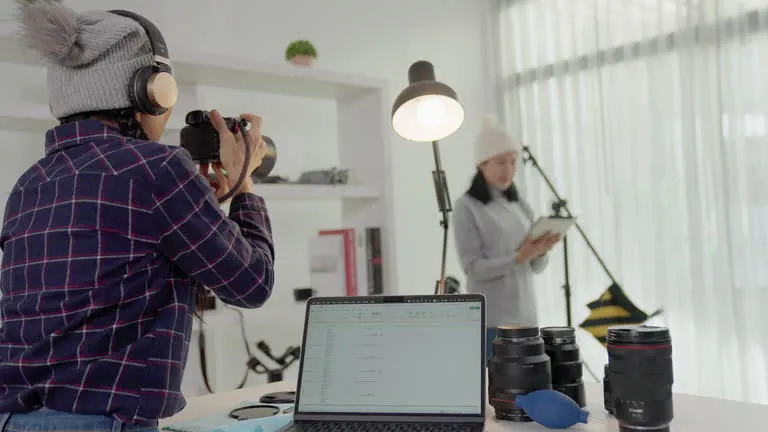


Most professionals who need both a strong executive image and a compelling author portrait assume the two are the same photograph with slightly different framing. They are not. The visual goals, the tonal register, the expression strategy, and even the wardrobe logic differ in ways that matter enormously once the images go to work in the real world. Understanding the difference before you book your session can save you time, money, and the frustration of a beautiful photo that never quite lands the way you hoped.
Both types of headshot need to communicate trust. That is the shared foundation. But the kind of trust each one needs to project, and the audience each one is speaking to, diverges in important ways. Getting that distinction right is what separates a portrait that works from one that merely looks professional.
What a Corporate Headshot Is Really Saying
A corporate headshot is answering a very specific question from a very specific audience. The audience is usually a client, a board member, a potential hire, an investor, or a business partner. The question they are subconsciously asking is: can I trust this person with responsibility, authority, and decision making.
That means a corporate headshot needs to signal competence first. The expression should feel composed, deliberate, and approachable without being overly casual. The styling should be clean and precise. The background is usually neutral or contextually relevant to the business environment. The overall effect should communicate that this is someone operating at a high level and handling it well.
What an Author Headshot Is Really Saying
An author headshot is answering a different question entirely. The audience here is a reader, a journalist, a podcast host, a literary agent, or an event organizer. The question they are asking is: does this person seem like they have something worth reading, worth listening to, or worth putting on a stage.
That shifts the visual calculus significantly. Author portraits can afford more warmth, more openness, more personality, and a slightly less polished edge than corporate headshots. They should still feel trustworthy and intelligent, but they carry more room for individuality, thoughtfulness, and human texture. A great author portrait often makes the viewer feel curious. A great corporate headshot often makes the viewer feel reassured.
Why Many Professionals Need Both
If you are a founder who has also written a business book, a CEO with a speaking career on the side, or a consultant building a thought leadership platform, you likely need both versions. One for the boardroom world and one for the media and publishing world. These do not have to be wildly different photographs, but they do benefit from slightly different tonal choices in expression, styling, and mood.
A studio that understands both sides of this equation is rare. CEOportrait operates in exactly that space. The studio handles executive headshots, corporate team photography, and author portraits, which means a single session can often produce images that serve multiple purposes without the client needing to book two separate photographers.
Expression Differences That Actually Show
The expression in a corporate headshot tends to be steadier, more controlled, and projecting forward. Think of it as the face you present in a room where decisions are being made. The expression in an author headshot often benefits from a slightly more reflective, engaged, or even slightly vulnerable quality. Not weak, not uncertain, but human in a way that invites the viewer to lean in.
The photographer's job in each case is to coach toward the right register. That is why choosing a photographer who understands both categories matters. A photographer brilliant at corporate headshots but unfamiliar with author portrait dynamics may produce an excellent image that still does not serve a book launch well. The reverse is equally true. Through the jitneybooks website, you can explore how the top photographers in this field handle both categories and what distinguishes their approach to each.
Background and Environment Choices
Corporate headshots almost always use cleaner, more neutral backgrounds. Office environments, plain studio backdrops, or architectural elements from business settings all work well. The image should feel structured and professional even in its environment.
Author headshots have more flexibility. A library shelf, a thoughtfully chosen outdoor environment, a warm interior with soft depth of field, or even a clean plain background with more atmospheric lighting can all work. The background choice should reinforce the intellectual or creative identity of the author without overwhelming the portrait itself.
Retouching Philosophy Differs Too
Corporate headshots benefit from clean, precise retouching. Distraction removal, color correction, and subtle skin refinement are all appropriate. Author headshots often benefit from a slightly lighter retouching hand. Character, texture, and even the subtlety of laugh lines or a thoughtful gaze can contribute to the sense that this is a real person with real experience. Over retouching an author portrait can make it feel generic and untrustworthy in a way that is counterproductive to what the image is supposed to accomplish.
Conclusion
Corporate headshots and author headshots are built to answer different questions for different audiences. Understanding which question your image needs to answer, and choosing a photographer experienced in solving both types of problem, is the single most important factor in getting a portrait that actually works. Many smart professionals need both, and the good news is that the right studio can often deliver both in a single session.










Sign in to leave a comment.