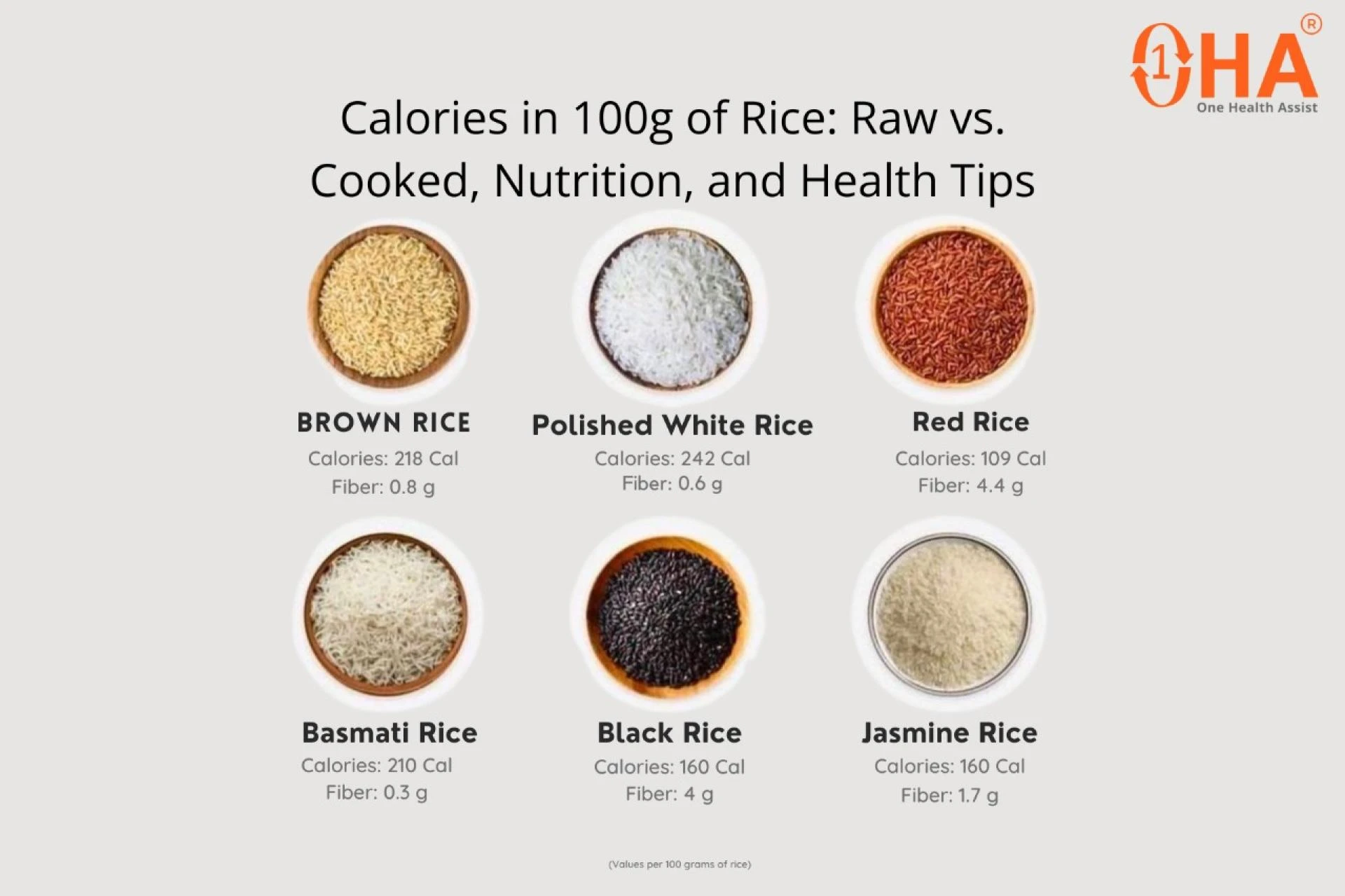

Calories in 100 gm Rice
Rice is more than just a staple, it's a comfort food, a cultural symbol, and a key energy source for millions. But whether you’re counting calories for weight management, managing blood sugar, or simply trying to eat clean, rice often ends up in the debate between love and guilt.
The truth is, rice itself isn’t the problem. Its impact on your health depends on the type, portion, and preparation. In this guide, we break down calories in 100 gm rice, explain raw vs cooked differences, explore nutrition facts for various types, and provide practical tips to include rice in your diet without guilt.
According to the World Health Organization, worldwide obesity has nearly tripled since 1975, and dietary choices play a massive role in this trend.
Table of Content
- Calories in 100g rice.
- Why portion awareness matters.
- Rice nutrition.
- Benefits of rice.
- Hidden rice calorie problems.
- Cooking method effects.
- Pros and cons of different rice types.
- Does rice contain sugar?
- Protein in rice.
- Portion control tools.
- Calories in raw vs cooked rice.
- Role of rice in energy and digestion.
- How much rice is too much.
- Why rice deserves a place.
- Can rice cause weight gain?
- Brown vs white rice.
- Eating rice for weight loss.
Here's the kicker: 100 gm of cooked white rice contains approximately 130 calories, but this number changes dramatically based on the type of rice and how it's prepared. Raw rice packs about 360 calories per 100 gm because it hasn't absorbed water yet.
How Many Calories Are in 100 gm Rice?
Rice is a staple for billions, but its calorie count can shape your health goals.
This guide unpacks the calories in 100 gm rice, from white to brown, cooked to puffed.
Discover data-driven insights to fuel your diet with confidence.
Why Portion Awareness
Imagine finishing a long day at work and sitting down to enjoy dal-chawal or curd rice. The first katori (small bowl) is comforting and satisfying. The second? Guilt starts to creep in.
Many people don’t realize that portion control is key to managing rice’s calorie load. A small miscalculation can turn a light meal into a high-calorie platter.
- 100 g cooked rice: ~120–130 kcal
- 200 g cooked rice (1 medium bowl): ~250–260 kcal
- 300 g cooked rice: 360–390 kcal
- With added oil, dal, or curry: 500–600 kcal
For someone on a 1,500-calorie plan, 300 g of cooked rice alone can account for almost 25% of their daily intake. Understanding these numbers is the first step toward mindful eating.
Rice Nutrition: What’s in 100 gm?
A 100-gram serving of uncooked white rice is packed with nutrients that make it one of the most common sources of energy across the world. It provides roughly 360–365 kcal, making it a calorie-dense grain ideal for fueling the body. The bulk of its nutrition comes from around 80 grams of carbohydrates, which serve as the body’s primary energy source, especially for brain and muscle function.
It also delivers about 7 grams of protein, offering a modest but essential contribution to muscle repair and growth. Although the fat content is quite low, only around 0.7 grams this makes rice a naturally lean food choice. Alongside this, it contains 1.3 grams of dietary fiber, which aids digestion and helps maintain gut health.
From a micronutrient standpoint, white rice offers small but valuable amounts of minerals such as 1.5 mg of iron, which supports oxygen transport in the blood, and 25 mg of magnesium, important for nerve and muscle function. It also includes 0.07 mg of Vitamin B1 (Thiamine), which helps in converting carbohydrates into usable energy.
What are the Benefits in Rice
1. Precise Calorie Tracking for Your Fitness Goals
When you know that 100 gm of cooked white rice has around 130 calories, you can accurately calculate your daily caloric intake. This precision is crucial whether you're trying to lose weight, gain muscle, or maintain your current physique.
Real stat: Research published in nutrition journals indicates that people who track their food intake are 2.5 times more likely to achieve their weight loss goals compared to those who don't. Knowing exact calorie counts removes the guesswork and puts you in control.
2. Better Blood Sugar Management
Understanding rice calories goes hand-in-hand with managing glycemic load. White rice has a higher glycemic index (GI of 73), meaning it can spike blood sugar levels quickly. By knowing portion sizes based on calorie content, diabetics and pre-diabetics can make informed choices.
Studies show that replacing white rice with brown rice can reduce the risk of type 2 diabetes by up to 16%. When you're aware of calorie content, you're more likely to choose healthier alternatives or control portions effectively.
3. Optimized Meal Planning and Budgeting
Meal prep becomes exponentially easier when you know the caloric density of your staples. If your daily target is 2000 calories and you know that 200 gm of cooked rice provides 260 calories, you can plan balanced meals that include proteins, vegetables, and healthy fats without exceeding your goals.
Pro insight: Athletes and bodybuilders often consume 300-400 gm of cooked rice daily (390-520 calories from rice alone) because they need those carbohydrates for energy and recovery.
4. Making Smarter Rice Choices
Not all rice is created equal. Brown rice (111 calories per 100 gm cooked) offers more fiber and nutrients than white rice. Puffed rice is lighter at around 402 calories per 100 gm but offers minimal nutrition. When you understand these differences, you can choose based on your health priorities, not just taste. Brown rice contains significantly more fiber compared to white rice, making it substantially better for digestive health and sustained energy levels.
5. Cultural Connection Without Guilt
For millions of Indians, Asians, and people worldwide, rice isn't just food—it's culture, comfort, and tradition. Knowing the calorie content means you don't have to eliminate rice from your diet completely. You can enjoy your mom's biryani or your favorite pulao while staying mindful of portions. It's about balance, not restriction.
The Hidden Rice Calorie Problem That's Sabotaging Your Diet
Here's the uncomfortable truth that nobody talks about: most people underestimate their rice consumption by 40-60%.
Think about it. When was the last time you actually weighed your rice? That "small bowl" you think is 100 gm might actually be 200 gm, doubling your calorie intake without you realizing it. This silent calorie creep is one of the biggest reasons people struggle to lose weight despite "eating healthy."
Research from nutrition studies indicates that portion distortion is a major contributor to excess calorie consumption, with restaurant servings of rice often containing 300-400 gm (390-520 calories) compared to the recommended 150-200 gm.
The Cooking Method Multiplier Effect
Here's where it gets even more complicated. The way you cook rice significantly impacts its final calorie content:
- Raw white rice: 360 calories per 100 gm
- Cooked white rice: 130 calories per 100 gm (because it absorbs water and expands significantly)
- Fried rice: 150-200 calories per 100 gm (added oils and ingredients)
- Steamed rice: 123 calories per 100 gm (minimal oil usage)
Most people measure rice before cooking, but calorie counts for "cooked rice" assume the rice has already absorbed water.
This creates massive confusion:
- 100 gm raw rice = approximately 250-300 gm cooked rice
- If a recipe calls for "100 gm rice," clarify whether it's cooked or uncooked
- Invest in a digital kitchen scale (costs ₹300-500) for accurate measurements
- One cup of cooked rice weighs approximately 158 grams and contains about 205 calories
The diabetes connection is particularly alarming. High consumption of white rice has been associated with increased risk of metabolic syndrome, especially in populations that consume rice as a primary staple. The average Indian consumes 6.8 kg of rice per month, which translates to roughly 226 gm daily. That's 740 calories from rice alone, nearly 37% of a 2000-calorie diet.
Pros and Cons of Different Rice Types
White Rice (130 calories per 100 gm cooked)
Pros:
- Easy to digest, making it ideal for people with digestive issues or sensitive stomachs
- Quick cooking time (15-20 minutes)
- Long shelf life without going rancid (can last 2+ years when stored properly)
- Multi-purpose base for most cuisines worldwide
- Often fortified with vitamins and minerals like iron and B vitamins
Cons:
- Stripped of bran and germ during processing, losing significant vitamins and minerals
- High glycemic index (73) causes blood sugar spikes
- Lower fiber content (0.2 gm per 100 gm) leads to less satiety
- Contains only 2.7 gm protein per 100 gm
- Can contribute to weight gain if consumed in excess without portion control
Brown Rice (111 calories per 100 gm cooked)
Pros:
- Higher fiber content (1.6 gm per 100 gm) promotes fullness and digestive health
- More nutrients including manganese, magnesium, phosphorus, and selenium
- Lower glycemic index (68) provides more sustained energy release
- Contains antioxidants and beneficial plant compounds
- Better for blood sugar management and heart health
- Provides 2.3 gm protein per 100 gm
Cons:
- Longer cooking time (40-50 minutes)
- Shorter shelf life (6 months vs 2+ years for white rice)
- Some people find the texture chewier and nuttier, which may not suit all palates
- Contains phytic acid which can reduce mineral absorption (though soaking reduces this)
- Slightly more expensive than white rice
Basmati Rice (120 calories per 100 gm cooked)
Pros:
- Lower glycemic index (58) compared to regular white rice
- Aromatic and flavorful with a distinctive fragrance
- Longer grain that doesn't clump, perfect for biryanis and pulao
- Contains 3 gm protein per 100 gm
- Provides small amounts of thiamine and folate
Cons:
- More expensive than regular white rice
- Still processed and lacks bran layer nutrients in white variety
- Can be difficult to cook perfectly without practice
- Requires precise water ratios for optimal texture
Jasmine Rice (129 calories per 100 gm cooked)
Pros:
- Slightly sticky texture that works well for Asian cuisines
- Pleasant aroma and soft texture when cooked
- Contains 2.7 gm protein per 100 gm
- Quick cooking time
Cons:
- High glycemic index (68-80)
- Low in fiber and micronutrients
- Loses nutrients during processing
Puffed Rice (402 calories per 100 gm)
Pros:
- Extremely light and crispy
- Easy to digest and often given to children
- Quick snack option
- Gluten-free and suitable for various dietary preferences
Cons:
- Very high glycemic index (90+) causing rapid blood sugar spikes
- Minimal nutritional value with almost no vitamins or minerals
- Easy to overconsume due to low volume-to-calorie ratio
- Often eaten with added sugar, jaggery, or salt, increasing calorie content
- Provides no significant protein (only 5.3 gm per 100 gm)
Wild Rice (101 calories per 100 gm cooked)
Pros:
- Lower in calories than white rice
- Higher in protein (4 gm per 100 gm)
- Rich in antioxidants and B vitamins
- Good source of fiber (1.8 gm per 100 gm)
Cons:
- Very expensive compared to regular rice
- Longer cooking time (45-60 minutes)
- Distinct flavor that may not suit all dishes
- Not technically rice it's an aquatic grass seed
Does Rice Contain Sugar and Carbohydrate ?
This is a question that confuses many people. Rice doesn't contain "sugar" in the traditional sense; there's no added sweetness. However, rice is primarily composed of carbohydrates, which your body breaks down into glucose (blood sugar).
Here's the breakdown per 100 gm of cooked white rice:
- Total carbohydrates: 28.7 gm
- Dietary fiber: 0.2 gm
- Sugars: Less than 0.1 gm (naturally occurring)
- Net carbs: 28.5 gm (total carbs minus fiber)
The "sugar problem" with white rice isn't about actual sugar content it's about how quickly those carbs convert to glucose in your bloodstream. White rice's high glycemic index means rapid glucose spikes, which can lead to:
- Energy crashes 2-3 hours after eating
- Increased hunger and cravings
- Insulin resistance over time with excessive consumption
- Higher risk of type 2 diabetes with regular high intake
Brown rice, with a glycemic index of 68 and more fiber content, causes a slower, more gradual rise in blood sugar levels.
How Much Protein in Rice?
Protein content varies by type:
- White rice (cooked): 2.7 gm per 100 gm
- Brown rice (cooked): 2.3 gm per 100 gm
- Basmati rice (cooked): 3 gm per 100 gm
- Wild rice (cooked): 4 gm per 100 gm
- Puffed rice: 5.3 gm per 100 gm
How Much Protein in Rice?
Cooked rice contains 2–3 g protein per 100 g. While not a high-protein food, pairing it with lentils, eggs, or paneer enhances amino acid intake.
Does Rice Contain Sugar?
Rice has no added sugar, but starch converts to glucose during digestion. Brown or boiled rice slows glucose release due to fiber content.
While rice does contain protein, it's considered an incomplete protein as it lacks adequate amounts of the essential amino acid lysine. This is why rice is traditionally paired with lentils (dal) or beans in many cultures; the combination creates a complete protein profile with all nine essential amino acids.
For comparison, 100 gm of cooked chicken breast contains about 31 gm of protein, and 100 gm of cooked lentils provides 9 gm both significantly higher than rice.
Portion Control Rice Bowls & Kitchen Scales
If you're serious about managing your calorie intake, investing in the right tools is non-negotiable. Here's what actually works:
Portion Control Rice Cooker Cups
- Most rice cookers come with measuring cups (typically 180 ml, not 200 ml standard cups)
- One rice cooker cup of raw rice = approximately 150 gm cooked rice
- Understanding this prevents overcooking and waste
Meal Prep Containers with Compartments (₹599-₹1299 for a set)
- Pre-portioned sections help control rice servings
- Typically, the grain section holds 150-200 gm cooked rice
- Makes weekly meal prep simple and consistent
- Helps visualize the ideal plate ratio: 1/4 grains, 1/4 protein, 1/2 vegetables
Rice Portion Control Molds (₹199-₹399)
- Simple plastic molds that measure exact portions
- Usually come in 100 gm, 150 gm, and 200 gm sizes
- Great visual tool for learning portion sizes
Calories in Raw vs Cooked Rice
Boiled Rice
Boiled rice, which is cooked in water without added fat, generally has about 120 kcal per 100 grams, while puffed rice, which is air-popped without oil, contains around 90–95 kcal per 100 grams, whether raw or processed. This shows that the method of preparation plays a significant role in the final calorie count, and the weight measured after cooking can make a big difference when planning meals.
Raw Rice
Raw rice gives an idea of the potential energy content, the actual calories consumed are determined by the cooked weight, water absorption, and cooking method. Understanding this can help in better portion control and dietary planning.
Pros and Cons of Rice Varieties
Not every type of rice offers the same nutritional value or health benefits. Each variety differs in calorie content, digestion rate, texture, and nutrient density. Here’s a closer look at the strengths and drawbacks of popular rice types to help you choose the right one for your diet and goals.
1. White Rice
Pros:
- Cooks quickly and has a soft, mild flavor that pairs well with most dishes.
- Provides around 130 kcal per 100 grams cooked, making it a good source of fast, easily digestible energy.
- Low in fat and gentle on the stomach, making it suitable for people with digestive sensitivities or during recovery.
Cons:
- Low in fiber (about 0.4g), leading to quicker spikes in blood sugar.
- Has a high glycemic index, which may not be ideal for diabetic or insulin-sensitive individuals.
- Loses essential nutrients like B vitamins, iron, and magnesium during polishing and refining.
2. Brown Rice
Pros:
- A whole-grain option that retains the bran and germ, preserving vital nutrients.
- Contains around 111 kcal per 100 grams cooked, 1.8g of fiber, and 2.3g of protein, supporting digestion and heart health.
- Offers sustained energy release, helping with blood sugar stability and satiety.
Cons:
- It takes longer to cook and requires more water than white rice.
- Has a chewier, denser texture that some people may find less appealing.
- Contains trace amounts of phytic acid, which can slightly reduce mineral absorption if consumed in excess.
3. Basmati Rice
Pros:
- Known for its fragrant aroma, light texture, and distinct flavor.
- Provides about 120 kcal per 100 grams cooked with a lower glycemic index than regular white rice.
- Easier to digest and helps maintain steady energy levels.
Cons:
- More expensive than most other rice varieties.
- If refined, it loses some of its natural nutrients and fiber.
- Imported varieties can have a higher carbon footprint, making them less eco-friendly.
4. Puffed Rice
Pros:
- Light, airy, and convenient for snacks or quick meals.
- Provides approximately 402 kcal per 100 grams when dry, offering instant energy in small portions.
- Low in fat and easy to mix with other ingredients like peanuts or jaggery for quick bites.
Cons:
- Low in protein, fiber, and micronutrients, making it less filling and less nutritious as a staple food.
- High in calories by weight, which can lead to overeating if portion control is ignored.
- Loses most natural vitamins and minerals during the puffing process.
5. Boiled Rice
Pros:
- Simple, wholesome, and easy to digest.
- Offers around 130 kcal per 100 grams cooked, with low fat and minimal oil use.
- Works well for balanced diets and pairs easily with curries, dals, or lean proteins.
Cons:
- Can taste bland compared to steamed or flavored rice.
- Some vitamins and minerals are lost during the boiling process as nutrients leach into the water.
- Overcooking may make it mushy and reduce its texture appeal.
The Rice in Energy and Digestion
Rice is a source of complex carbohydrates, your body’s preferred energy source for muscles and brain function. It’s particularly beneficial:
- Pre- or post-workout meals: Provides glycogen for energy replenishment
- Digestive health: Boiled or steamed rice is gentle on the stomach, ideal for recovery after illness
- Gluten-free diets: Safe for people with celiac disease or gluten sensitivity
Rice’s light and versatile nature makes it a staple in various cuisines, from Indian khichdi to Asian stir-fries.
How Much Rice is “Too Much”?
The problem isn’t rice itself, it's unintentional overeating.
- Eating 300 g of cooked rice with ghee or curry can exceed 500 kcal.
- For someone targeting 1,500 kcal/day, that’s nearly 40% of daily energy.
- Over time, repeated overeating of rice can stall weight loss or contribute to weight gain.
The “1 Katori” Rule
- One katori (200 g) of cooked rice = 240–260 kcal
- Pair with protein and fiber to stay full and reduce blood sugar spikes
Why Rice Deserves a Place on Your Plate
1. Instant Energy Source
Rice is rich in complex carbohydrates, fueling muscles and the brain. Ideal before exercise or a long day.
2. Easy to Digest
Steamed or boiled rice is gentle on the digestive system and suitable for post-illness meals.
3. Naturally Gluten-Free
Safe for individuals with gluten intolerance.
4. Multi - Purpose
Pairs easily with proteins, vegetables, and fats from khichdi to pulao.
5. Supports Healthy Weight Gain
For underweight individuals, rice provides calories without overwhelming digestion.
Can Rice Cause Weight Gain?
Rice itself isn’t fattening. Portion control is crucial.
- 100 g cooked rice = 130 kcal
- 300 g cooked rice = 390 kcal
- Add oil/ghee and dal/tadka = 500+ kcal
Repeated overconsumption leads to a hidden calorie surplus, slowing fat loss or promoting weight gain.
Brown Rice vs White Rice: Which is Better?
The debate between brown rice and white rice often comes down to nutrition, digestion, and personal health goals. While both originate from the same grain, the difference lies in how they’re processed and that small detail makes a big nutritional impact.
Brown rice is a whole grain, meaning it retains its outer bran layer and nutrient-rich germ. This gives it a slightly chewy texture and a nutty flavor, but more importantly, it keeps the fiber, vitamins, and minerals intact. A 100-gram serving of cooked brown rice provides around 110–115 kcal, along with higher levels of fiber (1.8–2 grams), magnesium, and B vitamins compared to white rice. The extra fiber supports digestion, helps regulate blood sugar, and keeps you fuller for longer making it ideal for people managing weight or diabetes.
White rice, on the other hand, is milled and polished, removing the bran and germ layers. This process gives it a softer texture and faster cooking time but also strips away some nutrients. While it’s lower in fiber, it remains a great source of easily digestible carbohydrates, offering quick energy. Cooked white rice contains about 130 kcal per 100 grams, making it slightly denser in calories but lighter on the stomach. It’s often preferred by athletes, people recovering from illness, or those with sensitive digestion.
Eating Rice for Weight Loss
Portion and type are key.
- 150–180 g cooked rice with protein and vegetables fits within calorie goals
- Cooling cooked rice forms resistant starch, reducing calorie absorption and supporting gut health
- Combine with high-fiber vegetables to increase satiety
Tips for Healthy Rice Consumption
- Pick the Right Type: Prefer wholegrain or parboiled rice.
- Pair Smartly: Combine with protein and vegetables for balanced meals.
- Control Serving Size: 100–150 g cooked (~half bowl) is ideal.
- Cook Properly: Steam, boil, or pressure cook; avoid excess oil.
- Timing: Eat carbs earlier in the day or post-workout.
People Also Ask
Q: How many calories are in 200 gm of cooked rice?
A: Approximately 260 calories in 200 gm of cooked white rice. This is a standard meal-sized portion for most adults following a balanced diet.
Q: Is eating rice every day unhealthy?
A: Not necessarily. Billions of people across Asia eat rice daily and remain healthy. The key is portion control (150-200 gm per meal), choosing whole grain varieties when possible, and balancing with vegetables and proteins. Moderation and variety in your overall diet matter more than any single food.
Q: How much rice should I eat to lose weight?
A: Most nutritionists recommend 100-150 gm of cooked rice per meal (130-195 calories) when trying to lose weight, combined with adequate protein (palm-sized portion) and vegetables (half your plate). This keeps you in a calorie deficit while providing necessary carbohydrates for energy.
Q: Does soaking rice reduce calories?
A: Soaking doesn't reduce the calorie content of rice. However, it can reduce cooking time by 15-20%, make nutrients more bioavailable, and help reduce phytic acid content in brown rice. Some research suggests cooking rice with coconut oil and then cooling it can increase resistant starch formation, potentially reducing digestible calories by 10-15%.
Q: Which rice has the lowest calories?
A: Among real rice varieties, wild rice has the lowest calories at 101 per 100 gm cooked, followed by brown rice at 111 calories. White rice contains 130 calories per 100 gm cooked. Shirataki rice (konjac rice) has only 10 calories per 100 gm, but it's not technically rice—it's a processed root vegetable with a rice-like texture.
Q: Can I eat rice at night and still lose weight?
A: Yes, timing matters less than total daily calorie intake. However, some studies suggest eating complex carbs like brown rice at dinner may improve sleep quality due to increased tryptophan and serotonin production. The key is staying within your daily calorie goals regardless of when you eat. If rice at night helps you sleep better and prevents midnight snacking, it can actually support weight loss.
Frequently Asked Questions About Rice Calories
Q1: How many calories in 100 gm rice cooked vs uncooked?
A: Raw white rice contains approximately 360 calories per 100 gm, while cooked white rice has only 130 calories per 100 gm. The dramatic difference is due to water absorption during cooking. Rice typically absorbs 2-3 times its weight in water, which expands the volume and dilutes the calorie density. This is why it's crucial to specify whether you're measuring cooked or uncooked rice when tracking calories.
Q2: Does rinsing rice remove calories?
A: Rinsing rice removes surface starch and reduces stickiness but has minimal impact on calorie content you might lose 1-2% at most, which is negligible. The primary benefits of rinsing are improved texture, removal of excess starch for fluffier rice, and elimination of potential contaminants or dust. Some traditions rinse rice multiple times until the water runs clear, but this doesn't significantly affect nutritional value or calories.
Q3: Are calories in basmati rice lower than regular white rice?
A: Yes, slightly. Basmati rice has about 120 calories per 100 gm cooked compared to 130 calories in regular white rice, a difference of about 10 calories. More importantly, basmati has a lower glycemic index (58 vs 73), making it a better choice for blood sugar management. The longer grain and aromatic compounds also contribute to greater satiety, potentially helping with portion control.
Q4: How accurate are restaurant calorie counts for rice dishes?
A: Restaurant calorie counts are often estimated and can be off by 20-30%. Fried rice, biryani, and pulao contain added oils, ghee, butter, nuts, and ingredients that significantly increase calories, often 200-350 calories per 100 gm instead of the base 130 calories for plain cooked rice. A restaurant serving of biryani (300-400 gm) can easily contain 600-1000 calories just from the rice portion alone, not counting the meat or accompaniments.
Q5: Can I eat rice if I have diabetes?
A: Yes, but portion control and rice type matter significantly. Diabetes management guidelines suggest:
- Choose brown rice, basmati, or wild rice over white rice (lower GI)
- Limit portions to 100-150 gm per meal
- Pair with protein and fiber-rich vegetables to slow glucose absorption
- Consider eating rice earlier in the day when insulin sensitivity is higher
- Monitor your blood sugar response to different types and portions Always consult your doctor or certified diabetes educator for personalized advice based on your specific condition and medication.
Q6: How do I measure rice without a scale?
A: Use these standard references for approximation:
- 1 cup cooked rice = approximately 158-200 gm = 205-260 calories (white rice)
- Your closed fist = approximately 150-180 gm cooked rice
- A tennis ball = roughly 150 gm cooked rice
- Half a standard 250ml bowl = about 100-120 gm cooked rice
- The ideal plate method: Fill 1/4 of your plate with rice, 1/4 with protein, and 1/2 with vegetables











Sign in to leave a comment.