
Urad dal is one of the most widely consumed pulses in Indian households. From comforting dals to crispy dosas and soft idlis, urad dal plays a central role in traditional cooking. Also known as urad ki dal in Hindi and commonly referred to as black urad dal or kali urad dal, this pulse is celebrated for its high protein content, digestive benefits, and versatility in recipes.
Table of Contents
- What is Urad Dal?
- Types (Black, Split, Washed)
- Nutritional Value & Protein Per 100g
- Calories in Urad (Cooked, Tadka, Dal Makhani)
- Benefits of Urad Dal
- Benefits for Men & Women
- Digestion & Immunity
- Price in India Factors Affecting Cost
- How to Select & Store
- Popular Recipes Made
- Table of Comparison: Urad Dal vs Other Pulses
- Calorie Comparison: Moong Dal vs Masoor Dal
What is Urad Dal?
Urad dal is derived from black gram, scientifically known as Vigna mungo. It is one of the most widely cultivated pulses in India and an essential part of both North and South Indian cuisine. The outer black skin gives rise to the name black urad dal or kali urad dal, while the skinned and split version appears white and is commonly used in daily cooking. When the skin is completely removed and the dal is ground into flour, it is used in various traditional recipes.
Urad dal in English is known as “Black Gram” or “Split Black Lentil.” It belongs to the legume family and is highly valued for its rich plant-based protein content. Along with protein, it provides dietary fiber, iron, calcium, magnesium, potassium, and B vitamins, making it a nutrient-dense pulse.
Urad Dal Meaning & Types
If you are wondering about urad dal in English, the correct term is Black Gram. It is scientifically called Vigna mungo.
There are mainly three forms of urad dal available in the market:
- Whole black urad dal (with skin)
- Split black urad dal (with skin)
- Split and skinned urad dal (white)
Types of Urad Dal
1. Whole Black Urad Dal
Retains its natural black outer skin, giving it a rich, earthy flavor and dense texture. It contains slightly higher fiber compared to the skinned version. Commonly used in Dal Makhani and Punjabi-style kali dal.
2. Split Black Urad Dal
Split into two halves but keeps its black skin. Cooks faster than whole dal and maintains good fiber content. Ideal for everyday dals.
3. White Urad Dal
Made by removing the outer black skin and splitting the grain. Softer in texture and commonly used for dosa, idli, medu vada, and papad.
All forms provide valuable protein, fiber, and minerals.
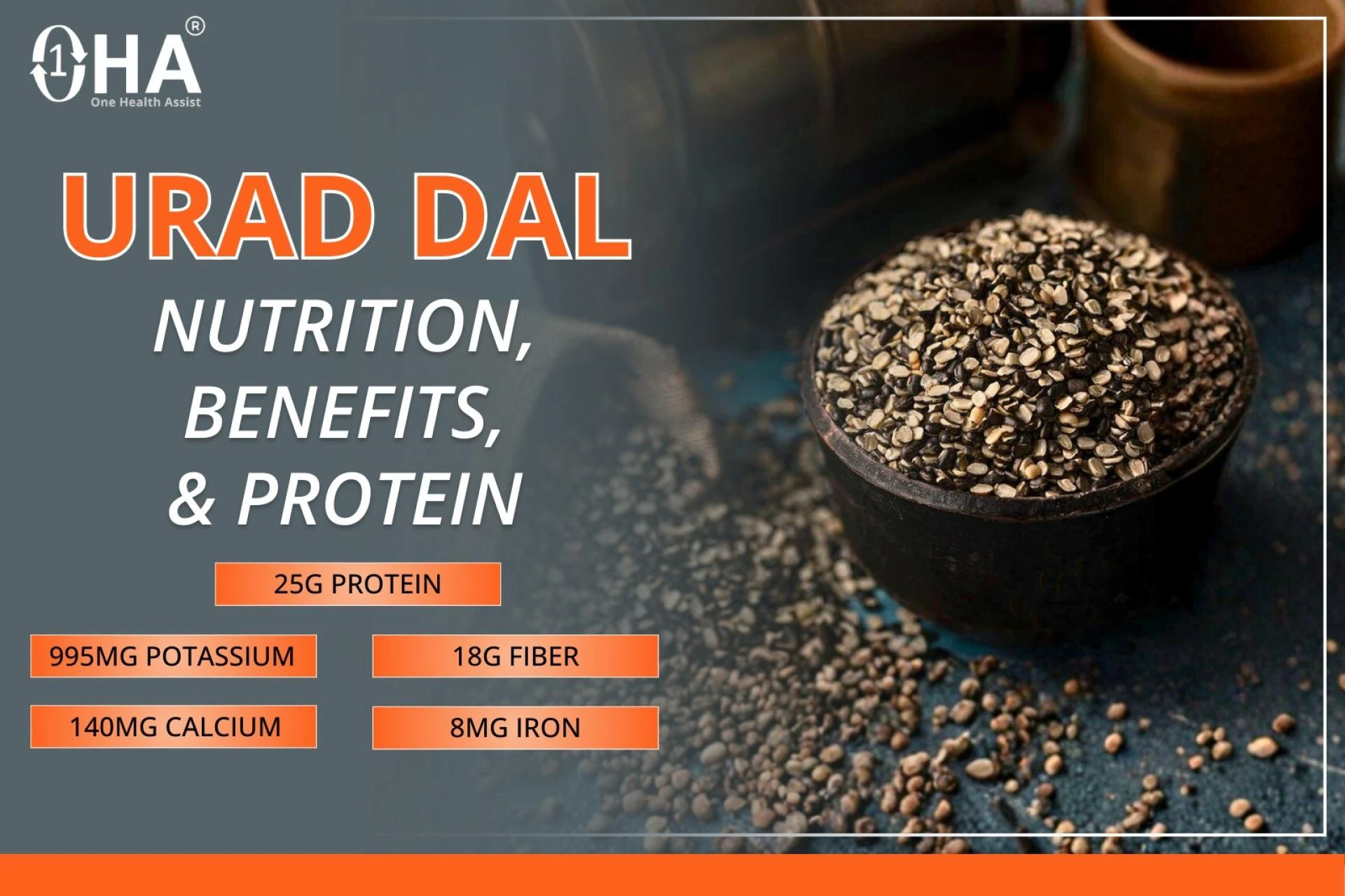
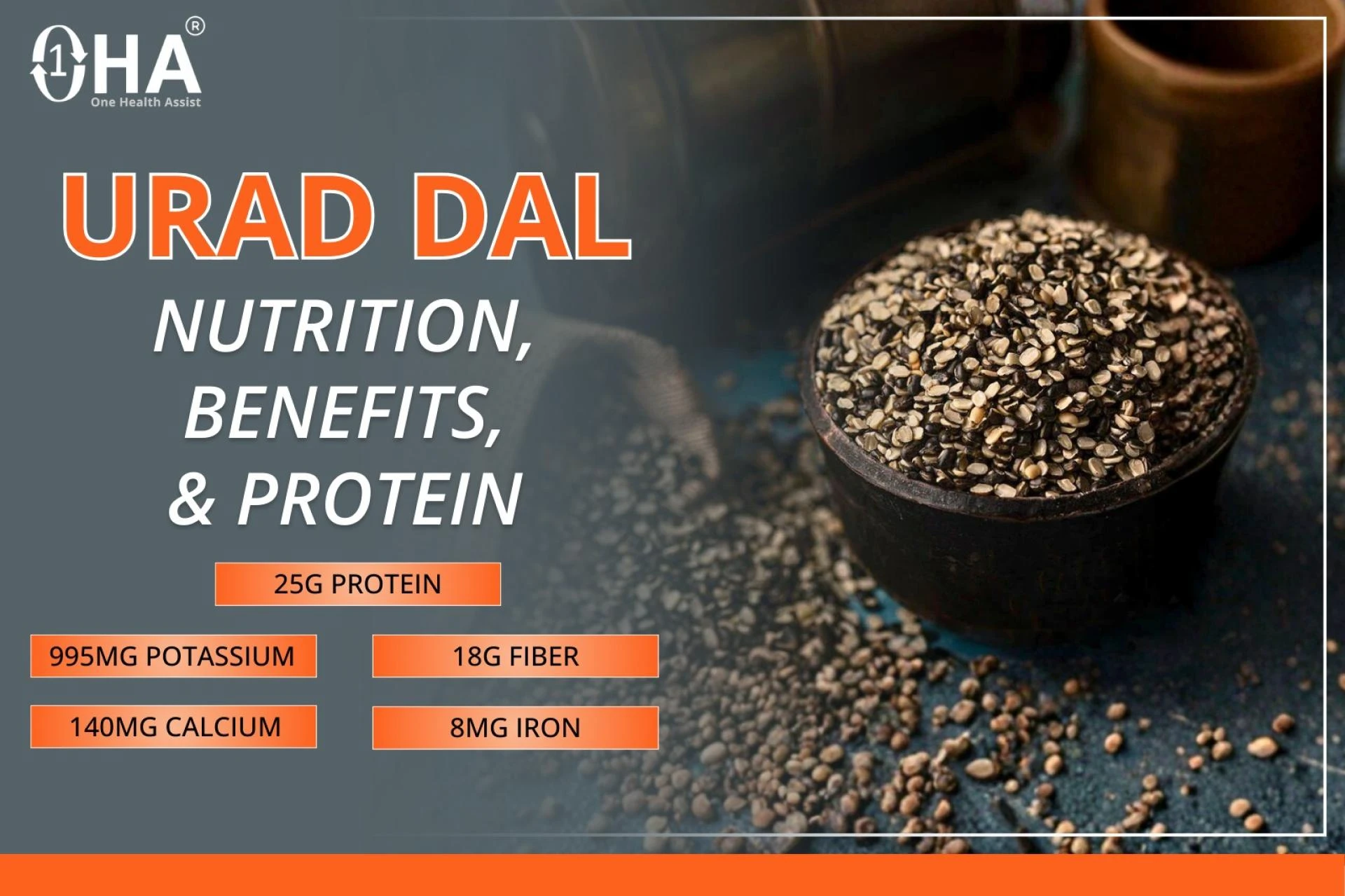
Nutritional Value & Urad Dal Protein Per 100g
Approximate nutritional value per 100g (raw):
- Calories: 340–350 kcal
- Protein: 24–26g
- Carbohydrates: 55–60g
- Fiber: 18g
- Fat: 1–2g
- Iron: 7–8 mg
- Calcium: 130–150 mg
- Potassium: 900+ mg
Calories in Urad Dal (Cooked & Popular Preparations)
Understanding calorie differences in urad dal preparations is important, especially if you are tracking weight, managing portion sizes, or following a calorie-controlled diet. The base ingredient remains the same, but cooking methods significantly impact the final calorie count.
1. Plain Boiled Urad Dal
~103 kcal per 100g cooked
Plain boiled urad dal is the lowest-calorie form because it is prepared without added fats. The calories mainly come from natural carbohydrates and protein present in the lentil itself.
- A standard small bowl (150–200g cooked) provides approximately 150–210 calories.
- Rich in protein and fiber, it keeps you full for longer.
- Ideal for weight management and clean eating diets.
- Best paired with vegetables and whole grains for a balanced meal.
This version is recommended for individuals following calorie-controlled or heart-healthy diets.
2. Urad Dal with Simple Tadka
~150–195 kcal per 100g
When oil, cumin, garlic, onions, or ghee are added for tempering (tadka), the calorie content increases. The rise depends entirely on the quantity and type of fat used.
- One teaspoon of oil or ghee adds roughly 40–45 calories.
- A typical serving (150–200g) may range between 225–350 calories depending on oil usage.
- Still nutritious, but portion control is important.
To keep calories moderate:
- Use minimal oil (1 tsp per serving).
- Prefer cold-pressed oils.
- Avoid excessive frying of onions or spices.
3. Dal Makhani (Creamy Style)
~270–350 kcal per 100g
Dal Makhani is richer because it includes butter, cream, and sometimes additional ghee. The slow-cooking process enhances creaminess but also increases calorie density.
- A 150–200g serving can easily provide 400–600+ calories.
- High in fat due to dairy ingredients.
- Best consumed occasionally rather than daily.
Calories increase due to:
- Butter and cream additions
- Longer simmering in fat
- Sometimes added kidney beans (rajma), which slightly increase carbohydrate load
For a lighter version:
- Replace cream with low-fat milk.
- Reduce butter quantity.
- Use controlled portion sizes.
The lentil itself remains moderate in calories, but how you cook it determines the final calorie count.
- Plain boiled = Best for weight management
- Simple tadka = Balanced daily option
- Dal Makhani = Occasional indulgence
By adjusting oil, butter, and portion size, urad dal can easily fit into both muscle-building and calorie-controlled meal plans.
Calorie Comparison: Moong Dal vs Masoor Dal (Cooked)
| Dal Type | Calories per 100g (Cooked) |
| Moong Dal | ~100–105 kcal |
| Masoor Dal | ~116 kcal |
Moong dal is lighter and often preferred for calorie-controlled diets.
Here’s the expanded and more detailed version of your Health Benefits of Urad Dal section, keeping your core points intact but adding depth and value:












Sign in to leave a comment.