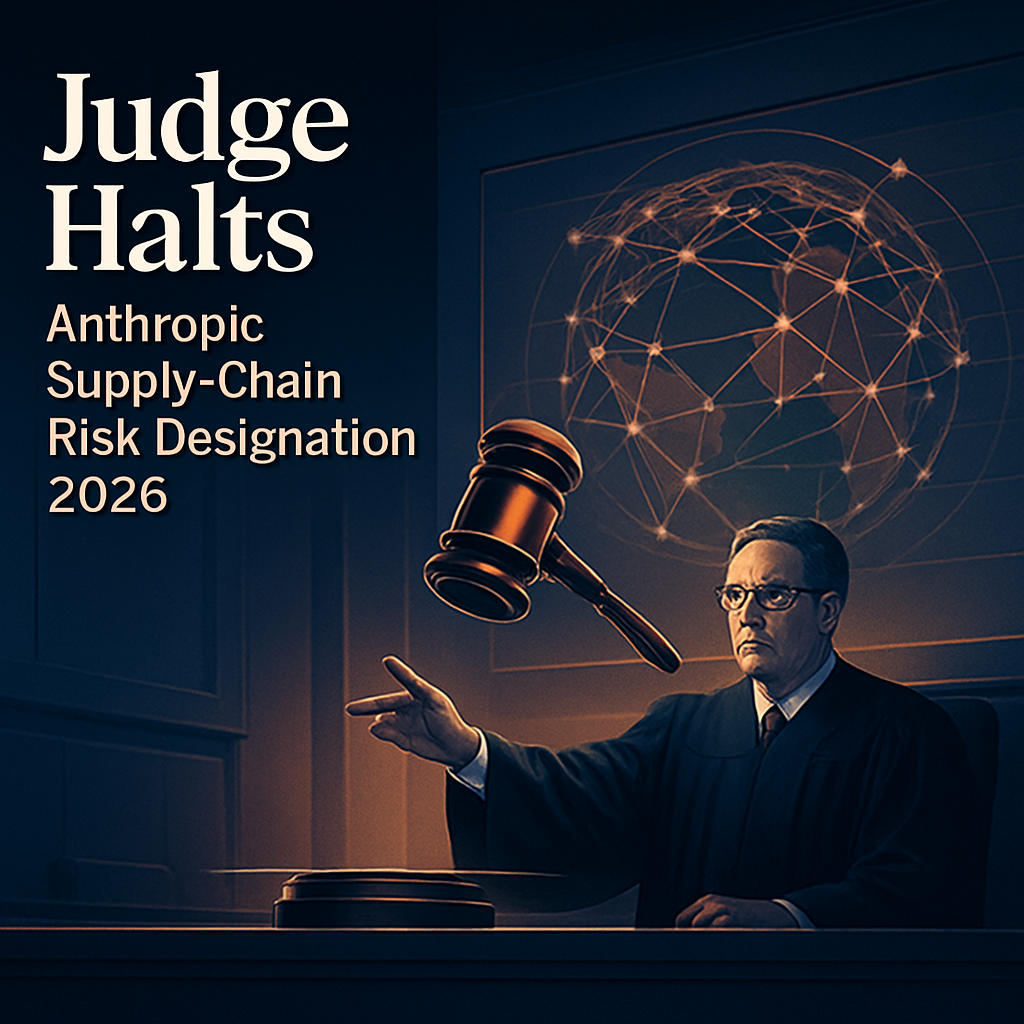

In a landmark ruling that has sent shockwaves through the tech industry, a federal judge has halted the U.S. government's designation of Anthropic AI's supply chain as a national security risk. This stunning development comes at a time when global supply chains are increasingly scrutinized for their vulnerabilities, especially in sectors critical to national security. According to a Bloomberg report, the AI industry is projected to reach a market value of $2 trillion by 2030, making supply chain integrity a matter of paramount importance. This ruling is not just a legal victory for Anthropic but also a pivotal moment for the intersection of artificial intelligence and national security legislation.
The implications of this ruling extend beyond legal circles into the heart of technological innovation and national policy. Readers will learn about the historical context of supply chain scrutiny, the specifics of the court case, and what this means for the future of AI and automation tools. In the following sections, we will explore the origins of Anthropic's supply chain challenges, provide a detailed analysis of the legal proceedings, and delve into the broader impacts on the industry.
DEEP BACKGROUND
Founded in 2021 by former OpenAI researchers, Anthropic AI has quickly become a significant player in the artificial intelligence landscape. The company was established with a mission to build AI systems that are both socially beneficial and secure. Within five years, Anthropic had made significant advancements, particularly in the field of natural language processing. Their flagship product, Claude, was recognized for its ability to perform complex tasks with higher accuracy than many contemporaries.
The concern over supply chain risks began to mount in 2024 when the U.S. government intensified its scrutiny of tech companies with international supply chains. This move was partly driven by geopolitical tensions and the increasing reliance on technology in both civilian and military applications. As a result, Anthropic found itself under the microscope, given its partnerships with firms in regions considered high-risk. According to a Wired investigation, these partnerships were primarily focused on research and development, yet they became a focal point for potential security vulnerabilities.
"The designation of a supply chain as a risk must be based on concrete evidence, not hypothetical scenarios," said an industry expert during a panel discussion at the 2025 AI & Security Conference. This quote underscores the complexity and contentious nature of the topic, highlighting the need for a balanced approach to regulation.
For more insights on the technological landscape, explore our extensive coverage of artificial intelligence trends on WriteUpCafe.
THE CORE ANALYSIS
The core of the legal challenge centered around the U.S. Department of Commerce's decision to label Anthropic's supply chain as a national security risk. This designation was based on perceived risks associated with the company's international collaborations. However, Anthropic argued that the designation was unwarranted and lacked substantive evidence.
Key Legal Arguments
- The government cited potential cyber vulnerabilities due to data sharing with foreign entities.
- Anthropic countered that all data shared was anonymized and subject to rigorous security protocols.
- The court found that the government had failed to provide concrete evidence of a breach or misuse of data.
The judge's ruling emphasized that hypothetical risks should not overshadow actual evidence. This decision was pivotal, as it highlighted the need for a clear framework to assess supply chain vulnerabilities without stifling innovation.
According to Statista, the AI industry has been growing at an annual rate of 27%, driven by advancements in machine learning and automation tools. Companies like Anthropic are at the forefront of this growth, continuously pushing the boundaries of what's possible with AI. The ruling, therefore, not only impacts Anthropic but sets a precedent for other tech firms navigating similar challenges.
CURRENT LANDSCAPE & 2026 DEVELOPMENTS
The landscape of AI and supply chain security has evolved rapidly in recent months. In late 2025, the White House announced a new task force to oversee technology supply chains, reflecting growing concerns about their resilience and security. This task force aims to develop guidelines to help companies safeguard their operations against both physical and cyber threats.
Notable Developments
- In January 2026, the Department of Defense launched a pilot program to assess AI supply chains used in defense applications.
- Major tech firms, including Google and Microsoft, have announced initiatives to diversify their supply chains, reducing reliance on single-source suppliers.
- Recent data from the International Data Corporation (IDC) shows that 60% of AI companies have begun implementing more robust supply chain security measures.
These developments underscore a shifting focus towards greater transparency and security in tech supply chains. As companies adapt to new regulations and threats, the industry is likely to see significant changes in how supply chains are managed and perceived.
EXPERT PERSPECTIVES & INDUSTRY IMPACT
Industry experts view the judge's decision as a turning point in how supply chain risks are managed within the tech sector. Many analysts argue that while security is crucial, regulations need to support innovation rather than hinder it.
"Balancing security with innovation is the key to maintaining competitive advantage in the global AI market," stated Dr. Sarah Liu, a leading AI researcher, during a recent interview with TechCrunch.
The broader implications of this ruling are significant. Economically, it alleviates potential barriers for tech companies looking to expand their international collaborations. Socially, it emphasizes the importance of evidence-based regulations, which could foster a more trust-based relationship between tech firms and governments.
For further reading, visit our cybersecurity section on WriteUpCafe to understand how these changes impact the broader tech ecosystem.
WHAT TO WATCH
Looking ahead, there are several key areas to monitor as the situation unfolds. The U.S. government's response to the ruling will be critical, as it may influence future regulatory approaches to tech supply chains.
Additionally, the development of international standards for supply chain security could play a crucial role in shaping industry practices. The International Organization for Standardization (ISO) is reportedly working on new guidelines specifically for AI technologies, which could be a game-changer for global tech firms.
As supply chain scrutiny continues to evolve, companies will need to stay agile, adopting new technologies and practices to ensure both security and compliance. This case serves as a reminder of the dynamic and often unpredictable nature of the tech industry landscape.
For professionals in the field, staying informed about regulatory changes and industry trends will be essential. Companies that can successfully navigate these challenges will be well-positioned to lead in the emerging AI-driven economy.










Sign in to leave a comment.