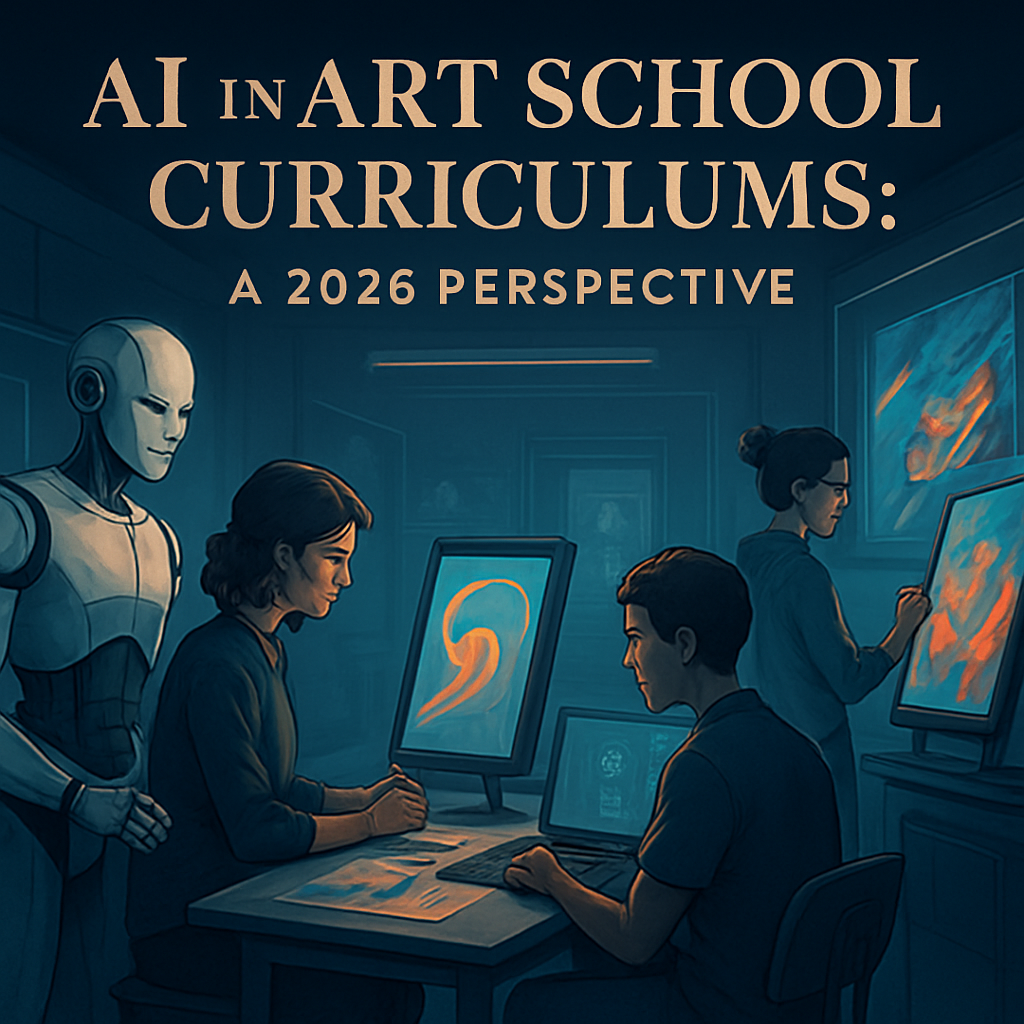

In 2026, the integration of AI into art school curriculums is no longer a speculative trend; it is a reality. A recent survey conducted by the Education Data Initiative reveals that over 75% of art institutions in the United States now incorporate AI tools into their programs, a significant jump from just 30% five years ago. This rapid adoption is fueled by the increasing recognition of AI's role in expanding creative possibilities and preparing students for a technologically advanced workforce. The conversation around AI in education is shifting from 'if' to 'how best' to integrate these powerful tools.
The dramatic rise in AI usage in art education is not just an American phenomenon. Globally, schools are embracing AI to redefine the boundaries of creativity. In the UK, the Royal College of Art has launched an AI-driven program aimed at exploring machine learning's potential in design innovation. Meanwhile, in Asia, institutions like the Tokyo University of the Arts are pushing the envelope by embedding AI into traditional art forms to create new hybrid art experiences.
This article will explore the origins of AI in art education, analyze current trends and market dynamics, and assess the impact of these changes on the industry and students. As we delve into the various facets of AI's role in art schools, we will also consider expert opinions on the potential risks and opportunities that lie ahead.
Deep Background
The story of AI in art education begins in the late 20th century, when computer-generated art started to gain traction. However, it wasn't until the 2010s that AI technologies, particularly machine learning, began to make significant inroads into creative fields. In 2018, the sale of an AI-generated artwork at Christie's for $432,500 marked a turning point, highlighting the potential of AI as a creative force. This event spurred interest in incorporating AI into art education, as educators sought to equip students with the skills needed in a rapidly evolving art world.
AI's integration into art education has not been without its challenges. Early adopters faced skepticism from traditionalists who questioned the validity of AI-generated art. However, as AI tools became more sophisticated, they began to gain acceptance as legitimate mediums of expression. Institutions like the Massachusetts Institute of Technology and the School of the Art Institute of Chicago were among the first to offer courses on AI and art, paving the way for broader adoption.
"AI is not just a tool; it's a collaborator in the creative process," says Dr. Emily Chen, a leading researcher in AI and art at Stanford University.
By 2023, AI had become an integral part of the curriculum in many prestigious art schools, reflecting its growing importance in the industry. As AI technologies continue to evolve, art educators are finding innovative ways to incorporate these tools into their teaching methods.
For more insights into technological trends in education, explore our education section.
The Core Analysis
The integration of AI into art school curriculums has led to significant shifts in the educational landscape. According to a report by Bloomberg, the global market for AI in education is expected to grow from $2 billion in 2023 to $5.3 billion by 2028, with art and design schools playing a pivotal role in this expansion. This growth is driven by several key factors:
- The increasing demand for digital skills in the job market, with a focus on AI-driven creative roles.
- Advancements in AI technology that enable new forms of artistic expression.
- Institutional investments in AI infrastructure and training programs.
Market Dynamics
Art schools are investing heavily in AI tools and platforms to stay competitive. The Rhode Island School of Design, for instance, recently announced a partnership with Adobe to integrate AI-powered design software into its curriculum. This collaboration aims to provide students with hands-on experience using industry-standard tools, ensuring they are well-prepared for future careers.
Furthermore, AI's ability to analyze vast datasets is transforming art history education. Students can now access AI-curated databases that provide insights into historical art trends, techniques, and influences, enriching their understanding of art's evolution. A Wired report highlights how AI is being used to uncover previously unknown connections between artists and movements, offering students a deeper appreciation of art's interconnected nature.
Despite these advancements, challenges remain. Critics argue that over-reliance on AI tools could stifle creativity, leading to homogenized art. Nonetheless, many educators believe that AI can coexist with traditional art forms, enhancing rather than replacing them.
Current Landscape & 2026 Developments
The past six months have seen significant developments in the integration of AI in art education. In January 2026, the Paris College of Art launched a groundbreaking AI-driven curriculum that combines traditional techniques with cutting-edge technology. This initiative aims to explore how AI can be used to create interactive art installations that respond to viewers in real-time.
Recent Innovations
One of the most exciting innovations is the development of AI tools that can mimic renowned artists' styles, allowing students to learn by analyzing and recreating famous works. According to a study published in Nature, these tools are being used to teach students the intricacies of different art styles, providing a unique learning experience that was previously unattainable.
However, the rapid adoption of AI in art schools has also sparked debate. Concerns about intellectual property rights and the ethical use of AI-generated art have come to the forefront. Institutions are now tasked with developing policies that address these issues while continuing to foster innovation.
Expert Perspectives & Industry Impact
Experts are divided on the impact of AI on art education. Some believe that AI will democratize access to art education, making it more inclusive and accessible. According to a report by the World Economic Forum, AI has the potential to reduce barriers to entry for aspiring artists by providing affordable and scalable tools for learning and creation.
"AI in art education is a double-edged sword. It opens up new possibilities but also challenges our understanding of creativity," notes Professor Alan Turner, an art historian at Oxford University.
Others caution against the potential for AI to diminish the role of human intuition and creativity in art. The debate continues as educators and policymakers seek to balance the benefits of AI with the need to preserve the essence of human creativity.
For more on the intersection of technology and creativity, visit our technology section.
What to Watch
Looking ahead, several key developments are set to shape the future of AI in art education. First, the ongoing evolution of AI technologies will likely lead to even more sophisticated tools that can assist in creative processes. As these tools become more advanced, art schools will need to continually adapt their curriculums to keep pace with technological changes.
Second, the ethical implications of AI in art education will need to be addressed. Institutions must develop robust guidelines to ensure that AI-generated art is used responsibly and that students understand the broader implications of their work.
Finally, as AI becomes more integrated into art education, there is an opportunity to explore its role in other creative disciplines, such as music and performing arts. As these fields begin to adopt AI, cross-disciplinary collaboration could lead to exciting new forms of artistic expression.
As we move forward, the integration of AI into art education presents both challenges and opportunities. By staying informed and engaged, educators and students can navigate this evolving landscape and harness the full potential of AI in the creative arts.










Sign in to leave a comment.