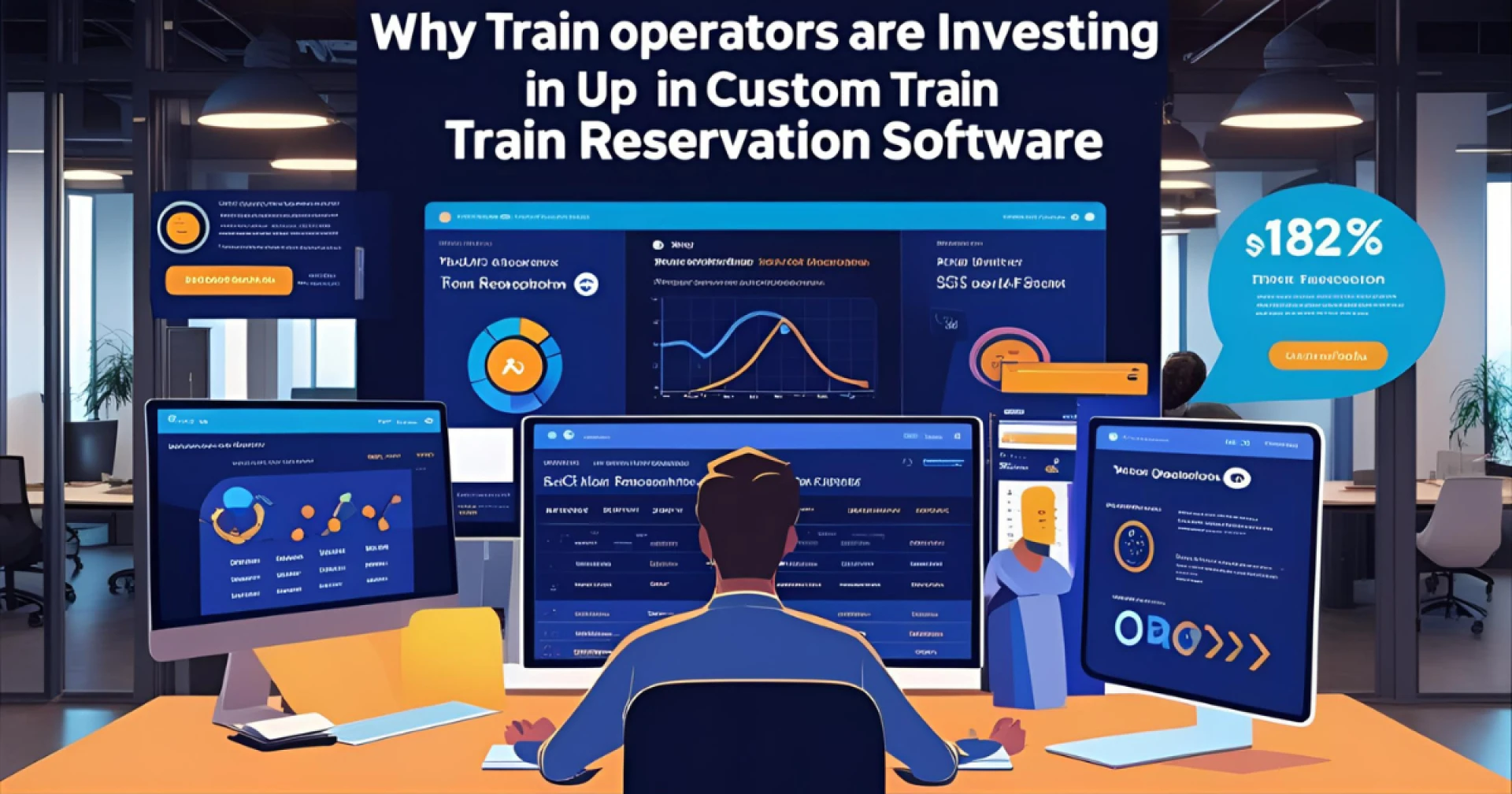

In an era where digital convenience defines customer satisfaction, the global transportation sector is undergoing a major technological overhaul. For train operators, this shift is particularly significant. No longer reliant on outdated, inflexible legacy systems, many railway companies are now turning to custom train reservation software to streamline operations, enhance passenger experience, and stay competitive in an increasingly dynamic mobility ecosystem.
From managing large-scale ticketing operations to offering personalized booking experiences, custom solutions provide the agility and control that off-the-shelf systems simply can't deliver. Whether it's a regional train line or a national railway network, the need for customized, future-ready reservation platforms has never been greater.
The Shift from Legacy Systems to Custom Solutions
Traditional reservation systems in the rail industry were primarily designed for basic ticket issuance and seat allocation. While they served their purpose decades ago, these legacy systems are now proving to be serious bottlenecks due to:
- Limited scalability
- Outdated user interfaces
- Inflexible architecture
- Complex maintenance procedures
- Incompatibility with mobile and cloud technologies
This has pushed operators to reevaluate their digital infrastructure.
Enter custom train reservation software—a solution designed with a specific operator’s business model, operational goals, and passenger needs in mind. These platforms are built to support modern expectations such as:
- Mobile-first booking experiences
- Real-time updates on train status
- Automated refund and rescheduling mechanisms
- Secure, cloud-based infrastructure
Why the Shift Matters Now
The demand for smarter, more agile railway systems has been accelerated by several key factors:
Rising Passenger Expectations
Today’s travelers demand seamless, on-the-go booking experiences, complete with personalization, real-time updates, and multiple payment options.
Heightened Security and Regulatory Pressure
Rail operators must comply with strict data protection laws like GDPR and implement strong cybersecurity measures to protect user data.
Need for Operational Flexibility
Train networks vary in size, route complexity, and services. A one-size-fits-all solution rarely meets the specific needs of diverse operators.
Data-Driven Decision-Making
Operators increasingly rely on analytics to optimize schedules, pricing, and marketing—functionality often missing in off-the-shelf platforms.
What Makes Custom Software So Valuable?
Custom train reservation software is not just about ticket booking—it’s about creating an intelligent, adaptable ecosystem tailored to every facet of a train operator’s workflow. With modular features, real-time integrations, and user-centric design, these systems can provide a complete digital transformation of railway services.
And this transformation isn’t just about keeping up—it’s about leading in an industry where customer experience, speed, and efficiency are the new benchmarks for success.
Key Benefits of Custom Train Reservation Software
Train operators today aren't just seeking a ticketing solution—they’re looking for an intelligent, adaptable digital engine that powers their entire passenger journey and internal operations. Here are the core benefits of investing in a custom-built train reservation software:
1. Tailored Functionality for Every Route and Requirement
Custom software enables operators to build features aligned with their business logic and passenger demographics. This includes:
- Dynamic pricing algorithms for peak vs. off-peak hours
- Route-specific seat allocations and quotas (e.g., regional preferences, tourist packages)
- Special concessions for elderly, military personnel, or students
- Custom branding to maintain consistent brand identity across web and mobile apps
Operators can define unique business rules that are difficult—or even impossible—to implement in off-the-shelf systems.
2. Enhanced Operational Efficiency
A well-architected custom system reduces manual dependencies, eliminates redundant processes, and increases throughput. Key automation areas include:
- Real-time seat availability and auto-allocation
- Waitlist management and auto-promotion when cancellations occur
- Instant PNR generation with SMS/email alerts
- Auto-refund and rescheduling workflows
This leads to faster bookings, fewer errors, and improved resource utilization across departments.
3. Real-Time Data and Reporting Capabilities
Unlike rigid legacy systems, custom reservation platforms offer real-time access to actionable insights such as:
- Passenger volume trends by route or class
- Booking patterns across seasons
- Revenue segmentation by time, train, or geography
- Cancellations, no-show ratios, and refund analytics
These insights help railway managers forecast demand, optimize capacity, and introduce new services based on actual user behavior.
4. Seamless Integrations with Third-Party Systems
Modern rail operations involve a mix of external services—from payment providers to ID verification tools. Custom reservation software supports deep integrations with:
- Payment gateways (Stripe, Razorpay, PayPal, UPI)
- Identity verification APIs (e.g., Aadhaar, passport validation)
- Customer Relationship Management (CRM) platforms
- IoT-enabled seat occupancy sensors
- Loyalty program engines
This centralized connectivity provides both convenience and intelligence, ensuring a unified digital travel experience.
Passenger-Centric Features That Drive Loyalty
In today’s competitive transport landscape, retaining passengers is just as important as acquiring them. Custom systems help create personalized experiences that improve satisfaction and loyalty:
Mobile-Optimized Booking
Users can book tickets, check train status, or reschedule trips directly from smartphones—without dealing with slow, unresponsive portals.
Multi-language & Multi-currency Support
Especially useful for cross-border railways or tourist-heavy routes, ensuring inclusivity and ease of use for international travelers.
AI-Powered Recommendations
Custom systems can track behavior and offer:
- Personalized coach/class suggestions
- Reminder alerts based on prior travel dates
- Discounts for frequent routes
Live Seat Maps
Passengers can view coach layouts in real-time and pick seats based on preference—like choosing a window seat or proximity to restrooms.
Addressing Modern Travel Demands
Passenger behavior has evolved dramatically in the post-pandemic world. Custom train reservation software allows operators to meet today’s expectations head-on:
- Touchless ticketing: QR codes or NFC-based boarding
- Dynamic seat distancing: Real-time seat blocking based on demand and occupancy
- Live tracking: GPS updates on train location and ETAs
- Cloud-first deployment: For faster access, lower downtime, and automatic backups
- Omnichannel support: Enable bookings across kiosks, mobile apps, websites, and third-party travel platforms
These aren’t futuristic perks—they’re necessities in a digital-first travel landscape.
Use Case: Regional vs. National Rail Operators
Custom train reservation systems shine in their ability to flex based on operator scale and specialization:
Regional Operators
- Often operate fewer but more frequent routes
- Need lightweight systems with multi-language support
- Integrate with local transport (e.g., buses, metros) for unified travel passes
- Offer highly localized promotions or holiday packages
National Operators
- Handle complex inter-state or cross-border scheduling
- Require centralized control with zonal-level configuration
- Integrate with airport transfers and premium lounges
- Support both domestic and international passengers with variable pricing, taxes, and identification norms
A one-size-fits-all solution can’t cater to this diversity—but a custom solution can.
ROI and Long-Term Cost Savings
Investing in custom train reservation software may seem cost-intensive at the outset—but the long-term financial and operational returns far outweigh the initial investment. Here's how:
No Recurring Licensing Fees
Unlike off-the-shelf software that comes with monthly or annual subscription costs, a custom-built system is a one-time investment. Operators own the codebase, enabling them to avoid ongoing vendor lock-in and licensing inflation.
Reduced Maintenance and Downtime
Legacy systems often demand costly maintenance contracts and experience higher downtime. Custom software, when built with modern technologies (e.g., microservices, cloud-native architecture), offers:
- Easier updates and feature additions
- Quicker bug fixes
- Continuous deployment with minimal disruption
- Proactive performance monitoring and alerts
Increased Revenue Through Optimization
With data-driven insights, operators can:
- Maximize occupancy with intelligent pricing
- Upsell additional services (e.g., meals, Wi-Fi, seat upgrades)
- Offer targeted promotions based on customer behavior
- Streamline refunds and rebookings to avoid lost revenue
Over time, these optimizations can result in 10–30% more revenue per booking cycle.
Reduced Staffing Costs
Automation through custom platforms reduces dependency on manual ticketing agents, customer support staff, and station clerks—especially in mid- to high-volume routes. Self-service features like mobile apps, kiosks, and online dashboards further cut operational overhead.
Modular Scaling as Needed
Custom software doesn't need to be built all at once. Operators can:
- Start with a core reservation module
- Add payment, CRM, and loyalty integrations later
- Roll out mobile apps in phase two
- Expand to smart card ticketing, NFC gates, or facial recognition when ready
This phased approach means costs are spread across milestones, not front-loaded all at once.
Security and Compliance Advantages
Data privacy and security are non-negotiable in today’s digital transport ecosystem. Custom reservation platforms can be fortified with best-in-class security features and compliance tools, including:
Role-Based Access Control (RBAC)
Restrict access to sensitive passenger or revenue data based on staff hierarchy—minimizing insider threats.
End-to-End Encryption
Protect user credentials, payment details, and ID proofs across APIs, databases, and user devices.
Regulatory Compliance
Built-in compliance with standards like:
- GDPR (General Data Protection Regulation – EU)
- PCI-DSS (Payment Card Industry Data Security Standard)
- IRCTC and regional railway authorities’ guidelines
- Local data residency requirements
This not only prevents legal liabilities but boosts passenger trust in digital systems.
Secure Audit Trails
Every transaction—booking, cancellation, refund, seat reallocation—is logged in secure audit trails to assist with:
- Fraud detection
- Dispute resolution
- Government reporting
- Internal audit compliance
Future-Readiness: AI, IoT, and Beyond
One of the biggest reasons train operators are adopting custom platforms is the need to stay future-ready. Custom systems are adaptable to next-gen technologies that will define the future of railway mobility.
Artificial Intelligence (AI)
- Predict demand spikes during holidays
- Suggest routes or classes based on user history
- Power chatbots for 24/7 passenger support
Internet of Things (IoT)
- Real-time seat occupancy detection
- Smart energy management inside coaches
- Predictive maintenance alerts for train health
Blockchain Integration
- Transparent, tamper-proof records of ticket transactions
- Digital identity verification without storing PII
- Secure loyalty point systems and ticket resale options
Machine Learning for Pricing & Fraud Prevention
- Train the system on historical booking patterns to auto-adjust prices
- Flag suspicious activities like bulk seat blocks or bot-driven bookings
Conclusion
As the global rail industry shifts gears to meet the demands of modern travelers, train operators are realizing that rigid, outdated systems no longer suffice. The solution? Custom train reservation software—a powerful, scalable, and tailored platform that goes beyond basic ticketing.
By investing in custom solutions, operators unlock:
- End-to-end automation of complex workflows
- Real-time visibility into passenger and operational data
- Seamless integrations with third-party tools
- Exceptional passenger experiences that drive loyalty
- Lower long-term costs and faster innovation cycles
- Readiness for next-gen technologies like AI, IoT, and blockchain
Whether you're a regional rail service aiming to improve local transit or a national operator preparing for global passenger flows, custom reservation systems give you complete control and unmatched flexibility.
In a time where digital experience is a key competitive differentiator, custom train reservation software is no longer a luxury—it’s a mission-critical investment for smart, forward-thinking train operators.
FAQs
1. Why should I choose custom train reservation software over off-the-shelf options?
Custom software is built specifically for your operations, allowing for tailored features, integrations, branding, and scalability. It offers more control, higher efficiency, and long-term cost savings.
2. Is custom software expensive to develop?
While the upfront cost can be higher than pre-built software, custom solutions eliminate licensing fees and reduce operational costs, offering a strong ROI over time—especially for medium to large rail operators.
3. How long does it take to develop and implement a custom system?
Depending on complexity, most custom train reservation systems take 3 to 8 months to fully develop and deploy. A phased rollout can start delivering value much earlier.
4. Can I integrate a custom system with existing ticket counters, kiosks, or mobile apps?
Yes. Custom systems are built with API-first or modular architecture, allowing seamless integration with kiosks, websites, mobile apps, CRM tools, and payment gateways.
5. Will a custom solution support features like dynamic pricing, loyalty programs, and e-tickets?
Absolutely. You can define and implement any feature your business requires, including dynamic fare calculation, promotional campaigns, QR-based ticketing, and passenger loyalty systems.
6. Is custom train reservation software secure?
Yes. Custom systems can be built with industry-standard security protocols like SSL encryption, RBAC, PCI-DSS compliance, and data masking. You can also ensure compliance with local and international data protection laws like GDPR.
7. How can I future-proof my investment in custom reservation software?
By choosing a scalable, modular architecture and building with future-ready technologies (like AI, cloud, and IoT), you ensure your system can evolve with your needs—without rebuilding from scratch.










Sign in to leave a comment.