
Hinduism is one of the oldest religions in the world. It has no single founder or exact date of origin. Instead, it grew over thousands of years. The religion is a collection of beliefs, practices, and ideas from many people and cultures. Many scholars describe Hinduism as a way of life rather than just a religion. In this article, we explore how Hinduism was built and developed, using historical and spiritual perspectives.
The Early Roots of Hinduism
The Indus Valley Civilization
Hinduism has roots that go back to the Indus Valley Civilization, which existed around 2500 BCE. Archaeologists have found seals and symbols that suggest early forms of worship. People may have worshipped nature, animals, and fertility symbols. These early practices influenced later Hindu rituals and beliefs.
The Vedic Period
The next important stage in Hinduism was the Vedic period, from 1500 BCE to 500 BCE. The Vedas are the oldest sacred texts of Hinduism. They were written in Sanskrit and passed down orally for generations before being written. The Vedas include hymns, rituals, and instructions for priests. The people who composed these texts are often called the Vedic sages or rishis. They played a key role in shaping Hindu beliefs about gods, the universe, and human life.
Key Figures in the Development of Hinduism
The Rishis
Rishis were ancient sages who meditated deeply and received spiritual knowledge. They composed the Vedas and Upanishads. Their insights form the foundation of Hindu philosophy. Rishis emphasized ideas like dharma (duty), karma (action and consequence), and moksha (liberation from the cycle of birth and death).
Philosophers and Teachers
Over time, Hinduism developed many philosophical schools. Teachers and philosophers such as Badarayana, who wrote the Brahma Sutras, and others like Shankaracharya, Ramanuja, and Madhva interpreted the sacred texts. They explained the nature of God, the soul, and the universe. Each school contributed ideas that shaped the religion into what it is today.
The Role of Stories and Epics
The Mahabharata and Ramayana
Epic stories also played a vital role in building Hinduism. The Mahabharata and Ramayana are two famous epics. They teach moral values, duty, and devotion. Characters like Rama, Krishna, and Arjuna became models for human behavior. The stories helped ordinary people understand spiritual ideas in a simple way.
Bhagavad Gita
The Bhagavad Gita is a part of the Mahabharata. It is one of the most important texts in Hinduism. In it, Krishna teaches Arjuna about duty, morality, and devotion. The Gita helped shape the spiritual practices of millions of people and continues to guide followers today.
The Influence of Local Cultures
Integration of Tribal and Folk Practices
Hinduism did not develop in isolation. It absorbed beliefs and practices from local tribes and communities. Gods and goddesses were often linked to local nature spirits. Festivals and rituals were adapted from regional customs. This integration made Hinduism diverse and flexible.
The Role of Temples and Pilgrimage Sites
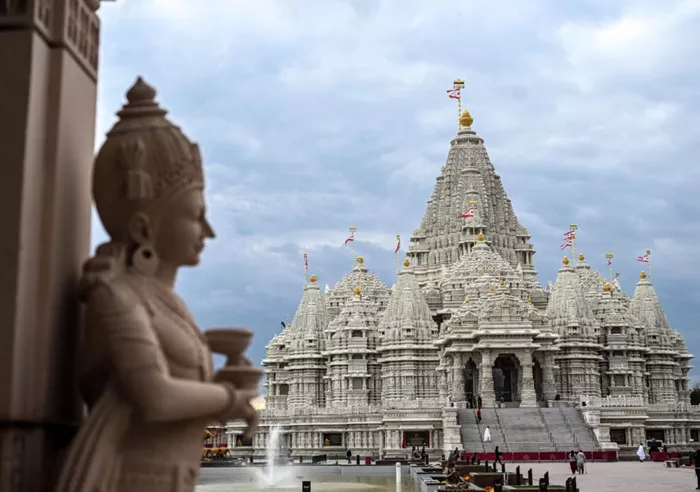
Temples became centers of worship, learning, and community life. Sacred rivers, mountains, and pilgrimage sites also played an important role. People from different regions contributed to building temples and celebrating festivals. This helped Hinduism grow as a living, practical religion.
The Evolution of Hindu Thought
Philosophy and Spirituality
Hinduism includes many philosophical ideas. Some focus on knowledge and meditation, like Advaita Vedanta. Others focus on devotion to gods, like Bhakti traditions. Yoga and meditation practices also became central to Hindu spiritual life. These ideas evolved gradually over centuries through the contributions of many sages and teachers.
Scriptures Beyond the Vedas
Besides the Vedas, Hinduism has many texts like the Upanishads, Puranas, and Agamas. Each text contributed to beliefs, rituals, and moral guidance. These writings were composed by many unknown sages over time. They provided a shared structure for understanding the divine and human life.
The Role of Kings and Empires
Patronage of Hindu Religion
Throughout history, kings and emperors supported Hinduism. They built temples, sponsored festivals, and preserved sacred texts. For example, the Gupta Empire (around 4th to 6th century CE) promoted Hindu art, culture, and learning. Royal support helped Hinduism survive and flourish across India.
The Spread of Hinduism
Hinduism spread through trade, migration, and cultural exchange. It influenced Southeast Asia, including modern-day Indonesia, Cambodia, and Thailand. Temples like Angkor Wat in Cambodia were inspired by Hindu beliefs. Traders and scholars helped carry Hindu ideas across regions.
Hinduism as a Living Tradition
Diversity and Flexibility
Hinduism is unique because it does not have one single founder. It is a living tradition shaped by countless individuals over thousands of years. Its flexibility allows people to follow personal paths of devotion, knowledge, or action. This has helped it adapt to changing times and cultures.
The Contribution of Ordinary People
Beyond sages and kings, ordinary people played a role in Hinduism’s growth. Daily rituals, festivals, and family practices preserved teachings. Local arts, songs, and folklore kept traditions alive. The collective efforts of countless individuals built Hinduism over time.
Conclusion
In summary, Hinduism was built by many people across thousands of years. Ancient rishis, philosophers, kings, and ordinary people all contributed. Local cultures, epics, and scriptures shaped its beliefs and practices. Hinduism grew gradually and became one of the world’s most diverse religions. It is a living tradition that continues to evolve today, reflecting the thoughts and devotion of countless people.
FAQs
Q1: Who is considered the founder of Hinduism?
Hinduism does not have a single founder. It developed over thousands of years from the contributions of many sages, philosophers, and communities.
Q2: What are the earliest texts of Hinduism?
The earliest texts are the Vedas, written in Sanskrit during the Vedic period. They include hymns, rituals, and instructions for priests.
Q3: How did Hinduism spread to other countries?
Hinduism spread through trade, migration, and cultural exchange. It influenced Southeast Asia, including countries like Cambodia, Thailand, and Indonesia.
Q4: What role do ordinary people play in Hinduism?
Ordinary people maintain rituals, celebrate festivals, and pass on teachings through family and community life. Their participation has helped Hinduism survive and grow.
Sign in to leave a comment.