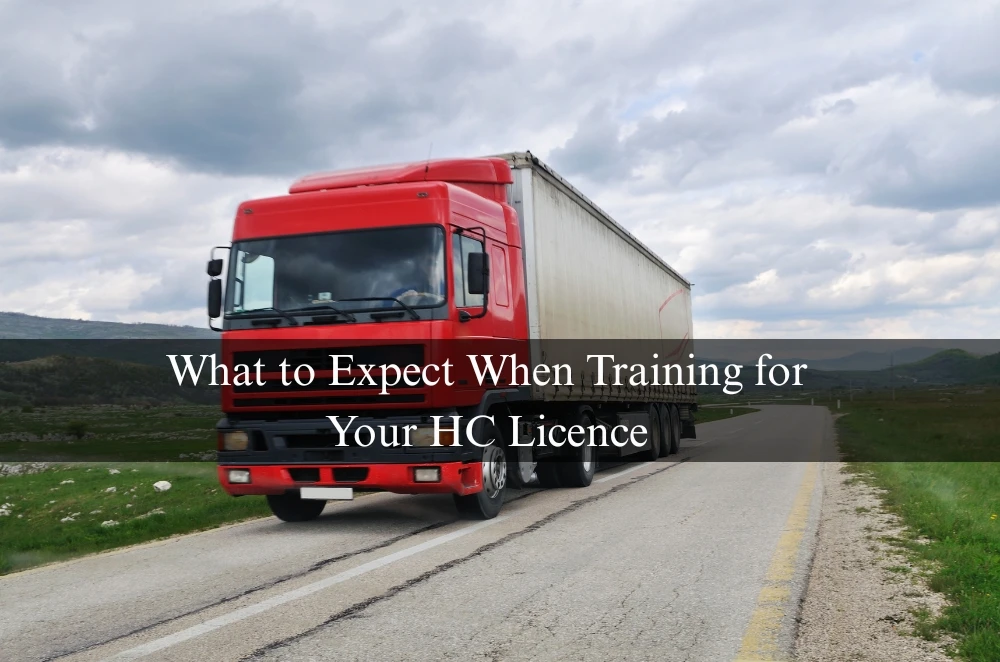

If you're looking to level up your driving career in Australia, few upgrades open as many doors as securing an HC licence. This qualification authorises you to operate heavy combination vehicles like a prime mover and semi-trailer, or a rigid truck towing a trailer over 9 tonnes. It’s a sought-after licence in industries ranging from freight and logistics to agriculture and infrastructure. Whether you're aiming to expand your job prospects or increase your earning potential, understanding what’s involved in the HC training process is the first step.
But what’s involved in training? And how do you know if you're ready? From eligibility and course structure to real-life insights, this guide will break down what to expect when stepping up to the HC licence level.
Who needs an HC licence?
An HC licence is essential for professional drivers who want to handle larger vehicles without stepping straight into the multi-combination (MC) category. It's especially useful for:
- Freight transport workers
- Construction and infrastructure hauliers
- Agricultural and mining transport operators
- Drivers seeking career progression in logistics
If you're already working with medium rigid (MR) or heavy rigid (HR) vehicles and looking to unlock greater flexibility or higher-paying roles, this licence is a logical next step.
Entry requirements and prerequisites
Before you can enrol in HC training, you’ll need to tick a few boxes. NSW Transport has clear guidelines for who qualifies:
- Hold a class MR or HR licence for at least 12 months
- Pass an eyesight test
- Complete the Driver Knowledge Test (DKT) for HC
- Obtain a Heavy Vehicle Competency-Based Assessment (HVCBA) logbook
These steps are part of the formal heavy vehicle licence application process governed by the NSW transport authorities.
What the training program covers
Most HC training programs run for 1–3 days, depending on your skill level and whether you’re training in a road ranger (manual) or synchromesh (auto) gearbox vehicle.
You’ll cover both theory and practical components, such as:
- Pre-departure checks and load restraint
- Gear shifting and throttle control
- Defensive driving strategies
- Turning, reversing, and cornering under load
- Managing traffic flow and vehicle size
Your course provider will supply a logbook, and your performance will be monitored using a competency-based assessment, meaning you’re tested on real skills, not just memorised answers.
Is the training difficult?
The difficulty varies depending on your experience and comfort with large vehicle handling. However, most drivers find the course manageable if they come prepared and focused. Training is delivered in a step-by-step format, and instructors will often adjust the pacing based on your progress.
You’ll need to demonstrate situational awareness, safe decision-making, and complete manoeuvres under supervision. The trickiest part for some? Reversing with a trailer — especially in tight spaces. But with repetition and a calm instructor, even that becomes second nature.
A personal example from the yard
Back when I made the leap from HR to HC, I was mostly worried about shifting gears with a heavy trailer. My first attempt at reversing into a bay was, let’s just say… creative. But by the third go, I started reading the mirrors better and trusting the trailer’s delay. The instructor gave quiet, practical tips like “counter the swing before it starts” — advice that still sticks.
By the end of the second day, I was confident and ready for the final assessment. Having that time in a real-world environment, rather than just watching videos, made a world of difference.
Comparison: HC licence vs mc licence
If you're exploring pathways within heavy vehicle driving, it helps to understand the subtle but important differences between licence types. For instance, the HC licence vs MC licence distinction isn’t just about vehicle size — it also reflects levels of responsibility, training time, and legal access to vehicle combinations. Drivers often choose HC as a stepping stone, gaining experience before moving on to MC qualifications that involve B-doubles or road trains. Making the right choice comes down to the kind of driving career you're aiming to build.
Career benefits and job opportunities
Once qualified, HC drivers are in high demand across industries — from supply chain logistics to rural transport. The skills are transferable between companies, and license holders often benefit from:
- Higher hourly rates or salary offers
- More shift availability (night, interstate, etc.)
- Job stability in sectors that resist economic downturns
- Options for subcontracting or owner-operator setups
In short, if you're looking to future-proof your career, the HC licence is a solid, practical move.
Understanding the assessment day
On test day, you'll be assessed on key competencies including:
- Pre-operational vehicle checks
- Hazard perception and traffic behaviour
- Braking, hill starts, and gear usage
- Negotiating roundabouts and lane merges
- Reversing into a marked bay or loading dock
You'll need to complete each task with minimal instructions to pass. The assessor won’t just look for technical skill — they’ll also note how you interact with other road users, judge distances, and maintain control under pressure.
This final competency-based test ensures that you’re road-ready, not just theory-smart.
Upgrading from MR or HR: what to consider
For those progressing from a medium-rigid background, the qualification path to HC may raise a few common questions, especially around timing, paperwork, and road readiness. Practical guidance on how to qualify for an HC licence in NSW can provide helpful context, particularly for drivers mapping out a clear upgrade plan or comparing available training routes across regions. These real-world insights often shed light on:
- Wait times for practical assessments across different training centres
- Common mistakes that delay final sign-off or logbook completion
- Whether auto or manual gearboxes affect assessment outcomes
- Regional differences in course availability or fees
- What assessors typically look for beyond basic manoeuvres
Understanding these subtleties early can help avoid unnecessary delays and give you more control over your HC upgrade timeline.
Final thoughts: What’s next after you pass?
Once you’ve completed your training and passed the HC test, your driving future opens up considerably. You'll be qualified to apply for roles with logistics companies, industrial delivery fleets, rural cartage operators, and even local government contracts. The licence is nationally recognised, so even if you relocate interstate, your qualification remains valid. Better still, it sets the foundation for future upgrades to an MC licence when you're ready to step into more advanced vehicle classes. If your goal is to gain flexibility, increase your income, and secure stable employment in a high-demand sector, the HC licence is one of the smartest and most future-ready moves you can make.










Sign in to leave a comment.