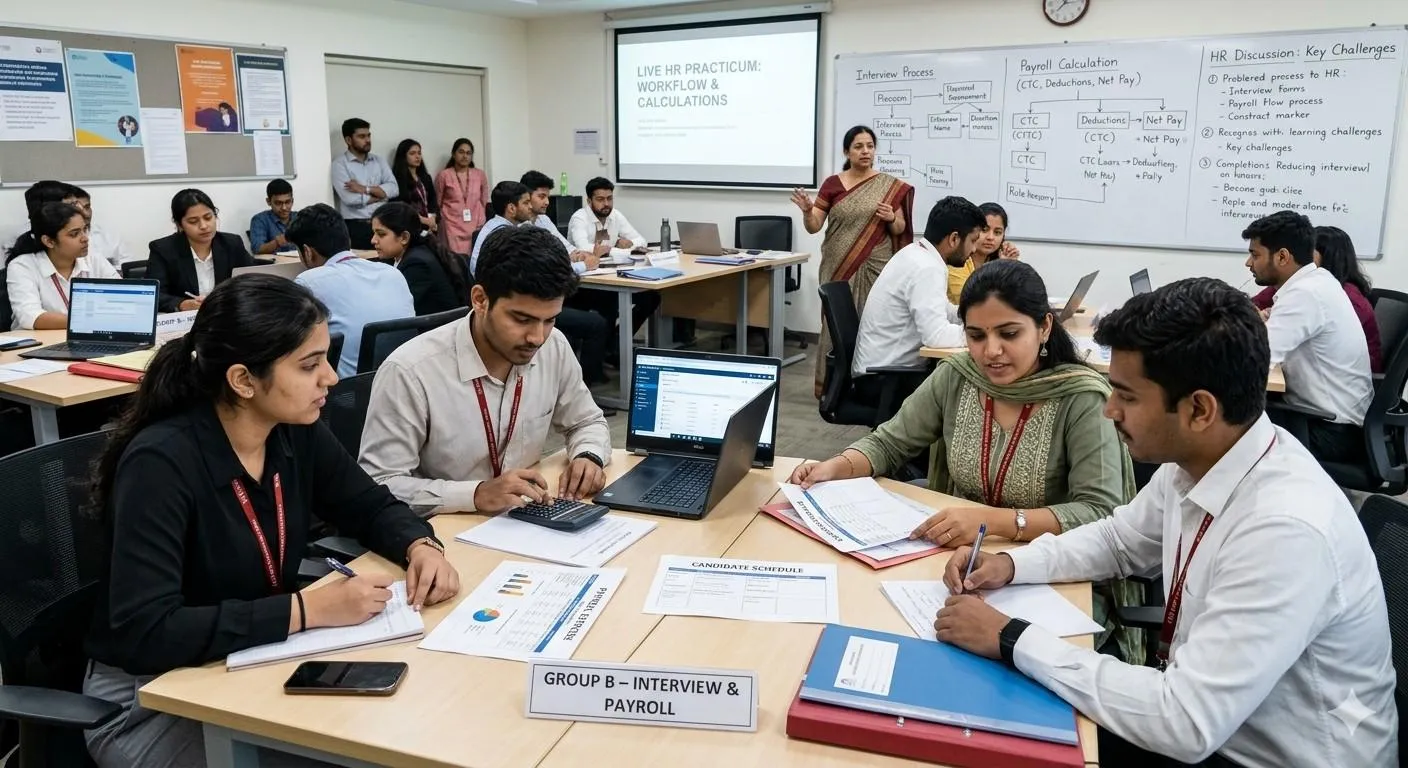

I used to think HR certification classes were mostly for fresh graduates who couldn’t decide what to do after college. Later I realized many people joining these programs are already working somewhere and quietly trying to move into better roles.
One person in my batch was from customer support. Another came from administration. Someone else had worked in sales for almost three years and wanted less target pressure.
Everybody had different reasons, but the common thing was uncertainty.
Nobody was fully sure whether HR would actually suit them.
And honestly, I think that’s normal.
HR sounds simple from outside because people mainly notice the recruitment side. But once training starts, you realize the field is much wider than expected. Payroll, compliance, employee handling, documentation, attendance systems, reporting work — there’s a lot happening behind the scenes.
That realization hits differently when trainers explain situations practically instead of reading definitions.
I attended a few demo sessions before joining anywhere, and the difference between teaching styles became obvious very quickly. Some trainers sounded overly polished, almost rehearsed. Others explained concepts in a way that felt closer to real office conversations.
Ranjan Sir’s sessions stood out mainly because he didn’t try to make HR sound glamorous all the time.
At one point he explained how even experienced HR teams sometimes struggle handling last-minute resignations or salary disputes. It wasn’t presented dramatically. Just realistically.
That actually helped.
Because beginners usually feel nervous already. Overly perfect training makes people more intimidated sometimes.
The useful part about practical HR certification classes is not just learning concepts. It’s slowly becoming comfortable with workplace situations you’ve never handled before.
For example, many learners panic when payroll topics begin. Numbers, deductions, calculations, compliance terms — it feels confusing initially, especially for students from non-commerce backgrounds.
I saw one learner openly admit she avoided payroll sessions for days because she thought she would never understand them properly. Later, after repeated practice and examples, things became easier for her.
That gradual improvement felt more realistic than instant confidence stories.
According to the Society for Human Resource Management, companies increasingly expect HR professionals to balance operational knowledge with employee management responsibilities. More details are available through SHRM
That shift probably explains why learners now care more about practical exposure rather than only certificates.
One thing I personally noticed while researching HR certification classes was that many students focus heavily on placement promises. I understand why because job uncertainty feels stressful. But placement support itself can mean very different things depending on the institute.
Sometimes it means actual interview preparation and company coordination.
Sometimes it simply means forwarding openings on WhatsApp groups.
It helps to ask direct questions instead of assuming.
I also think learners underestimate how much self-practice matters after class hours. HR training gives structure, but communication confidence develops slowly through repetition.
Mock interviews help.
Speaking practice helps.
Even basic Excel practice helps more than people expect.
While comparing different programs, I also came across HR Remedy India as an example of a place learners often look at for practical, job-oriented exposure. I was reading through some of their HR certification structure here: https://www.hrremedyindia.com/hr-certification-online/
Another thing that stayed with me from Ranjan Sir’s sessions was how openly he discussed beginner mistakes. He mentioned that many freshers stay too quiet during their first HR jobs because they’re afraid of sounding inexperienced.
That felt accurate.
A lot of beginners think confidence means pretending to know everything. But practical HR work usually improves when people ask questions early instead of hiding confusion.
The atmosphere during training matters because of that.
If learners feel judged constantly, they stop participating. But when trainers treat confusion normally, discussions become more practical and honest.
I think that’s one reason some students improve faster than others even inside the same batch.
Not because they’re smarter.
Mostly because they participate more openly.
By the time I finished researching different HR certification classes, I stopped expecting any course to completely transform someone overnight.
That expectation itself feels unrealistic.
But practical training can definitely reduce hesitation, especially when sessions sound grounded and trainers explain workplace realities honestly instead of over-selling outcomes.
That approach felt much more useful to me personally


























Sign in to leave a comment.