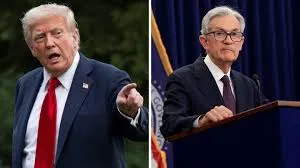

President Donald Trump just can’t get what he wants from the Federal Reserve.
Trump has long pounded the table for rate cuts and has wanted Fed Chair Jerome Powell out for years. But Trump’s own actions over the past year have made those two outcomes far less likely.
Trump…
- introduced a slew of massive tariffs, pushing up inflation.
- went to war with Iran, spiking energy prices worldwide.
- publicly backed a criminal probe into Powell that a federal judge has described as “pretextual.”
- threatened to fire Powell next month if he doesn’t step aside when his stint as Fed chair ends.
- is trying to fire Fed Governor Lisa Cook over unsubstantiated allegations.
Now, there’s a growing chance that the US central bank may not just delay a rate cut but may hike rates instead, particularly if the Price Hikes stemming from the US-Israeli war with Iran prove to be long lasting.
Trump’s efforts throughout his second term have only prompted central bankers to take pause and put any rate cuts on the back burner as they wait for things to play out — an approach that even Treasury Secretary Scott Bessent recently said he agrees with.
The president’s attacks and threats on Fed policymakers themselves are also backfiring.
Holding off on rate cuts
For Fed officials to lower interest rates, they must be confident that inflation is slowing and is on track to their 2% goal. That had been the case right before Trump’s second term began last January.
Then Trump rolled out a confusing patchwork of tariffs last year that jacked up inflation on various goods (and he still isn’t done with his tariff spree, promising to raise duties across the board to get back to the effective tariff rate from before the Supreme Court’s ruling that struck down certain tariffs). That prompted Fed officials to adopt a wait-and-see posture, holding off on any rate moves until they delivered three consecutive cuts at the end of last year.
Fed officials are now more worried about the war that began with joint US-Israeli attacks on Iran in late February. The conflict has led to a weekslong closure of the Strait of Hormuz, a key global trade passage. About 20% of the world’s oil supply, along with other key commodities, passes through the critical waterway.



















Sign in to leave a comment.