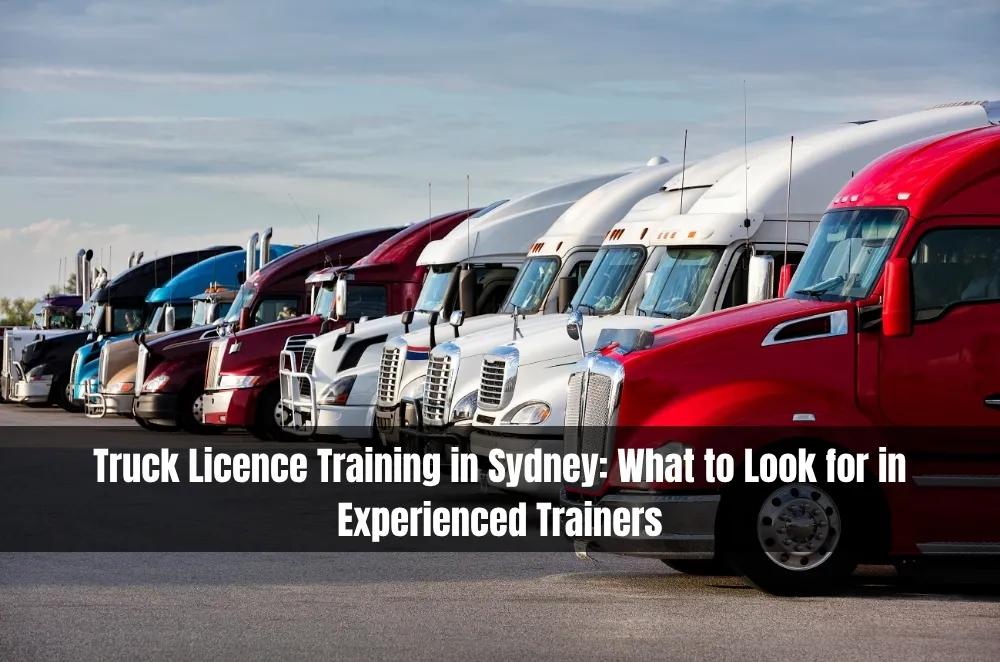

Getting a truck licence is one of those goals that can change work options quickly, but the learning curve is real. The vehicles behave differently, the consequences of small errors are higher, and test-day pressure has a way of exposing gaps you didn’t know you had.
If you’re comparing schools in Sydney and searching for experienced truck licence trainers, it helps to define “experienced” in practical terms. Experience shows up in lesson structure, the way feedback is delivered, how safety habits are built, and whether training prepares you for real NSW road conditions, not just a quiet loop that feels comfortable.
This guide breaks down what strong truck licence training tends to include, how to compare programs fairly, and the questions that reveal whether a school is set up for genuine skill-building.
What “experienced” looks like behind the wheel
A trainer can have years in the industry and still struggle to teach well. The best training usually combines road experience with coaching skill, because teaching adults is its own discipline.
Here are the markers that tend to matter:
- Clear method, not just instructions: You’re taught why something is done a certain way (e.g., setup for turns, scanning routines), so you can self-correct later.
- Repeatable routines: Mirror checks, observation, speed planning, and positioning are trained until they’re consistent under pressure.
- Tight feedback loops: You get specific notes you can apply on the next run, not vague reassurance.
- Progression: Lessons build from simple to complex in a way that matches your confidence and competence, not a one-size plan.
If you leave a lesson thinking “I drove a truck today” rather than “I improved two concrete skills today,” the coaching may not be as structured as it should be.
A realistic training progression
While every student starts in a different place, effective training usually follows a pattern.
1) Vehicle familiarisation and foundational control
Before traffic gets busy, you should get comfortable with:
- seat and mirror setup
- steering input and lane tracking
- braking feel and smooth stops
- safe spacing and speed choice
2) Low-speed handling and positioning
This is where a lot of assessment issues begin, especially with:
- tight left turns
- kerb clearance and rear tracking
- controlling speed through turns
- judging vehicle length in lanes and at intersections
3) Roadcraft that matches Sydney conditions
Sydney driving throws up challenges that are easy to underestimate:
- multi-lane merges and lane changes
- roundabouts with mixed traffic behaviour
- busier industrial zones and loading areas
- narrow streets, parked cars, and impatient drivers
- stop-start congestion that punishes poor following distance and late decisions
Training that never leaves “easy roads” can leave you underprepared when it counts.
4) Test readiness through consistency
Most candidates don’t fail because they “don’t know” what to do, they fail because they don’t do it consistently when stressed. Good trainers focus on:
- maintaining mirror/scan routines under pressure
- steady positioning and speed selection
- calm decision-making at intersections
- smooth, predictable braking
The hidden variables that affect training quality
The truck matters
You don’t need a luxury vehicle, but you do want a truck that supports learning:
- mirrors correctly positioned and usable
- predictable brake feel
- a setup that isn’t distracting with mechanical quirks
- maintained well enough that you’re learning driving, not compensating for faults
The training environment matters too
A good program usually uses:
- a safe area for low-speed basics
- progressively more complex routes
- scenarios that mirror likely assessment demands (without turning every lesson into a “test”)
If training is always in the easiest environment, improvement can plateau.
Instructor-to-student attention
If you’re sharing a session (where permitted and appropriate), clarify how much wheel time you’ll actually get. Quality comes from repetition and feedback, not watching someone else drive.
Questions that quickly reveal whether the coaching is solid
When you contact a school, these questions tend to separate “booking-focused” operations from structured training:
- How is training structured across lessons? What’s the progression?
- How do you build observation and mirror routines so they stay consistent under stress?
- Do you run mock assessment drives, and what feedback do students get afterwards?
- What are the most common reasons people struggle on assessment day, and how do you train to prevent that?
- How do you adapt training for different starting points (nervous beginners vs people with some commercial driving exposure)?
- What should a student practise between sessions (without building bad habits)?
You’re looking for calm, specific answers. Be cautious of guarantees or “everyone passes” type statements, good trainers are usually honest about readiness and consistency.
Common skill gaps that good trainers fix early
If you’ve mostly driven cars, some “normal” habits need upgrading fast for heavy vehicles.
Mirror discipline that doesn’t fade
Many learners check mirrors when they remember, not as a routine. Trainers often build “trigger points” such as:
- before braking
- approaching intersections
- before and after lane changes
- before turns and roundabouts
Turning setup and rear tracking
New drivers often:
- start turns too late
- don’t set up wide enough when needed (safely)
- lose awareness of the rear wheels and tail swing
A strong trainer will teach turning lines and reference points you can repeat.
Speed planning instead of reacting
In trucks, late decisions create harsh braking and unstable positioning. Good training builds early planning:
- reading traffic patterns
- choosing gaps earlier
- controlling speed before the problem arrives
Smooth braking and vehicle sympathy
Harsh stops aren’t just uncomfortable, they often signal poor anticipation. Trainers will usually teach:
- earlier, lighter braking
- controlled final stop
- maintaining stability and comfort
How to get more value from your lessons
Even if you can’t practise in a truck between sessions, you can improve faster by:
- Taking notes right after each lesson (3 things to keep doing, 3 to improve)
- Mentally rehearsing routines (mirror triggers, lane change sequence, intersection approach)
- Practising calm planning in your car (early braking, lane choice, scanning further ahead)
- Arriving rested and fed, fatigue makes learning heavy vehicle control harder
Progress tends to speed up when each lesson has clear targets and you treat feedback like a checklist, not a judgement.
What “ready” looks like before assessment
Most people are ready when performance is consistent, not perfect:
- mirror routine is steady even in complex traffic
- turns are repeatable without kerb strikes or drifting wide unexpectedly
- lane changes are planned early with a clear checking sequence
- speed selection matches conditions (not just the posted limit)
- stops are smooth and controlled
- you can correct small errors without spiralling
If you need a “perfect run” to feel confident, you may benefit from more repetition before assessment.
Key Takeaways
- Experienced truck licence trainers stand out through structure, specific feedback, and safety routines that hold under pressure.
- Training should progress from foundational control to realistic Sydney traffic scenarios, not stay in the easiest environment.
- Ask practical questions about lesson structure, mock assessments, and how trainers address common fail points.
- Vehicle condition and training environment can significantly affect learning quality and confidence.
- Readiness is about consistency across conditions, not one great drive on a quiet day.


















Sign in to leave a comment.