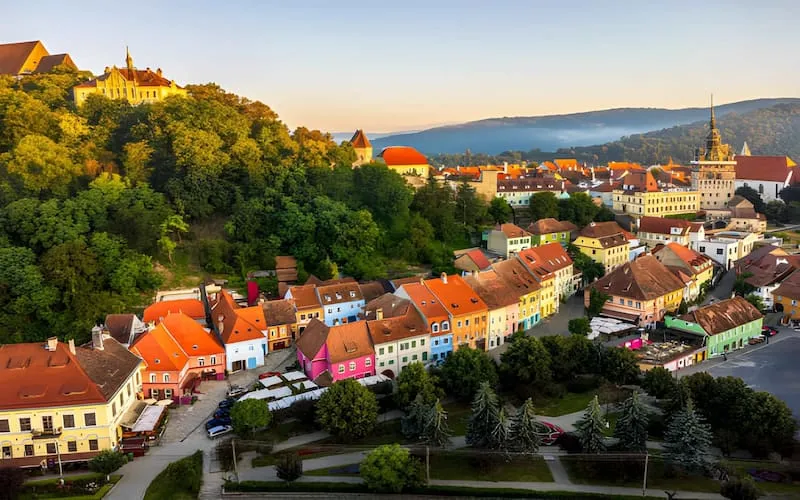

Romania surprises people.
Not with giant landmarks or polished tourist infrastructure. Usually, it’s the atmosphere that catches travelers off guard. One minute you’re driving through ordinary countryside, then suddenly you’re inside a cobbled medieval square with pastel-colored buildings, church towers, and almost no crowds compared to Western Europe.
That’s the thing about Romania. Its medieval towns still feel lived in rather than preserved for tourism alone.
If you’re already researching Romania travel booking from UAE, it’s worth building your itinerary around these smaller historic towns instead of only focusing on Bucharest or Dracula-themed stops. The best parts of Romania often happen in places where you slow down for a night or two without overplanning every hour.
Here are the medieval towns in Romania that genuinely deserve your time.
1. Sibiu
Sibiu is probably the easiest medieval town in Romania to fall into.
The old center is compact but layered. Small squares open into larger ones. Narrow alleys suddenly lead to viewpoints or hidden cafés. And those famous rooftop windows — the “eyes” watching from old buildings — somehow make the city feel slightly surreal without trying too hard.
Most people stay around Piața Mare, the main square. Fair enough. It’s beautiful. But the quieter lower town is where Sibiu feels more authentic.
One evening, I wandered downhill expecting nothing special and ended up finding a tiny local restaurant where nobody spoke much English and the owner kept recommending homemade plum brandy to every table. That side of Sibiu sticks with you more than the postcard angles.
Two nights here works well. One night feels rushed.
Also, winter in Sibiu can be excellent if you don’t mind cold weather. The Christmas market atmosphere suits the city surprisingly well.
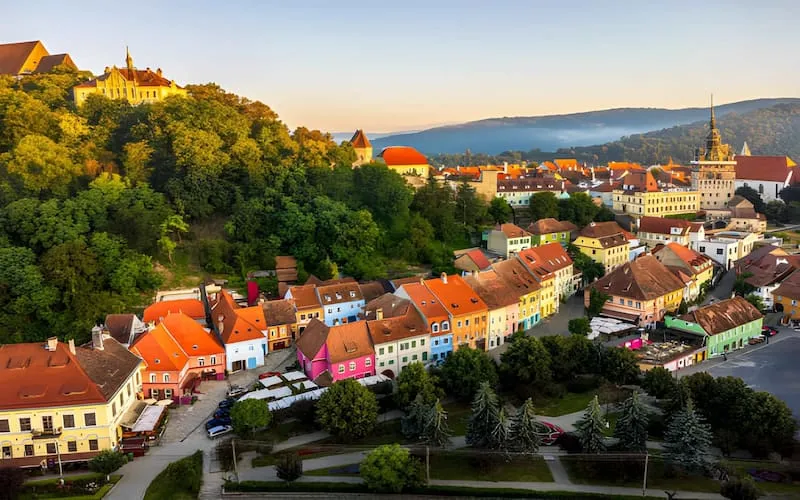
2. Sighișoara
Sighișoara feels almost unreal early in the morning before the tour buses arrive.
The hilltop citadel, colorful houses, stone streets, and old clock tower make it one of the best-preserved medieval towns in Europe. But timing matters here.
By midday in summer, parts of the center become crowded and slightly commercial. Not terrible, just noticeably busier. Stay overnight if possible. That’s when Sighișoara changes completely.
After dinner, once the day-trippers leave, the town becomes quiet enough to hear footsteps echo through the lanes. I remember walking uphill after rain one evening and seeing almost nobody for twenty minutes except a cat sleeping beside a doorway under yellow streetlights.
That’s the version of Sighișoara worth seeing.
Most travelers only spend a few daytime hours here. Honestly, that’s where trips often go wrong.
3. Brașov
Brașov is larger, busier, and more energetic than some of Romania’s smaller medieval towns, but it works well as a base.
The old town itself is attractive without feeling overly curated. Gothic churches, mountain views, cafés spilling into squares, and easy access to nearby castles and hiking routes make Brașov practical for longer stays.
Some travelers complain it feels “too touristy.” Compared to rural Romania, maybe. Compared to Prague or Dubrovnik? Not even close.
The real advantage here is flexibility.
You can spend mornings exploring medieval streets and afternoons hiking in the nearby mountains or taking day trips toward Bran or Râșnov.
One small warning: Bran Castle tours get chaotic during weekends and holidays. Go early or skip peak hours entirely.
Also, don’t miss walking up Tampa Mountain if weather allows. Most visitors photograph the city from below but never see the full view from above.
4. Viscri
Viscri barely feels like a tourist destination at all, which is exactly why people love it.
This small Saxon village is known for its fortified church and traditional houses, but honestly, the atmosphere matters more than the sightseeing checklist.
Roads can be rough getting there depending on your route. Don’t expect luxury infrastructure. Chickens wander through lanes. Horse carts still appear regularly. Some guesthouses feel intentionally simple.
And that simplicity is the point.
I once stayed in a restored farmhouse where dinner was served slowly over several hours because the owner kept sitting down to chat between courses. Nobody seemed concerned about schedules.
Viscri rewards travelers who can relax into slower rhythms. If you need constant activity, you may get bored quickly.
5. Cluj-Napoca
Cluj-Napoca isn’t fully medieval in the same preserved sense as Sibiu or Sighișoara, but it deserves inclusion because of its layered old center and strong local atmosphere.
Cluj feels younger. More creative. More lived-in.
University students shape much of the city energy, which means cafés, bars, bookstores, and nightlife feel active year-round instead of purely seasonal.
The historic center still has beautiful squares and churches, but Cluj works best for travelers who want medieval architecture mixed with modern city life rather than frozen-in-time aesthetics.
Some travelers skip it entirely while rushing between castles and villages. That’s a mistake.
Cluj is one of the easiest Romanian cities to actually settle into for several days without constantly sightseeing.
6. Alba Iulia
Alba Iulia often gets overlooked because it sits between more famous destinations. That’s unfortunate.
The massive star-shaped citadel here is one of the most impressive fortified complexes in Romania, yet somehow still feels uncrowded compared to what you’d expect elsewhere in Europe.
Walking through the wide fortress gates early in the morning almost feels cinematic.
The town itself is quieter than Brașov or Sibiu, which some travelers appreciate and others find too calm. Personally, I liked the slower pace. One relaxed afternoon here felt more enjoyable than fighting crowds in busier cities.
It’s not a nightlife destination. Don’t expect endless entertainment. Come for the architecture, relaxed atmosphere, and fortress walks.
7. Biertan
Biertan is small enough that many travelers only stop briefly on organized tours.
That’s a shame because the fortified church here has a strange quiet beauty that works best without rushing.
The surrounding countryside is part of the experience too. Rolling hills, isolated farms, and roads that force you to slow down naturally.
One thing Romania does exceptionally well is preserving these rural medieval landscapes without overdeveloping them.
You still get moments where entire villages feel disconnected from modern tourism trends.
That won’t last forever.
Final Thoughts
The best medieval towns in Romania are not about ticking off landmarks one after another. They work better when you slow down, stay overnight, and allow space for unplanned moments — quiet morning streets, local food that arrives slowly, conversations with guesthouse owners, unexpected views after wrong turns.
If you’re considering Romania travel booking from UAE, don’t overload the itinerary with constant movement between cities. Romania’s roads and trains can take longer than expected, and the towns themselves deserve more than rushed half-day visits.
For most travelers, a route combining Brașov, Sibiu, and Sighișoara offers the best introduction. Add smaller places like Viscri or Biertan if you want a slower, more rural experience.
Romania still feels refreshingly unpolished in the best possible way. That’s exactly why these towns remain memorable long after the trip ends.
FAQs
1. What is the most beautiful medieval town in Romania?
Many travelers consider Sighișoara the most visually impressive because of its preserved hilltop citadel and colorful medieval streets.
2. How many days do you need for Romania’s medieval towns?
Around 7–10 days works well for visiting several towns without rushing. Distances can look short on maps but travel times are often longer than expected.
3. Is Brașov worth visiting?
Yes. Brașov combines medieval architecture, mountain scenery, and easy access to nearby attractions.
4. What is the best time to visit Romania?
Late spring and early autumn usually offer the best weather and fewer crowds. Summer is lively but warmer and busier.
5. Are Romania’s medieval towns expensive?
Compared to Western Europe, most Romanian towns remain relatively affordable for accommodation, food, and local transport.
Can you visit Romania without renting a car?
Yes, but having a car makes smaller villages like Viscri and Biertan much easier to reach.
Which Romanian town is best for a quieter experience?
Alba Iulia and Viscri are both excellent for travelers wanting slower, less crowded experiences.






















Sign in to leave a comment.