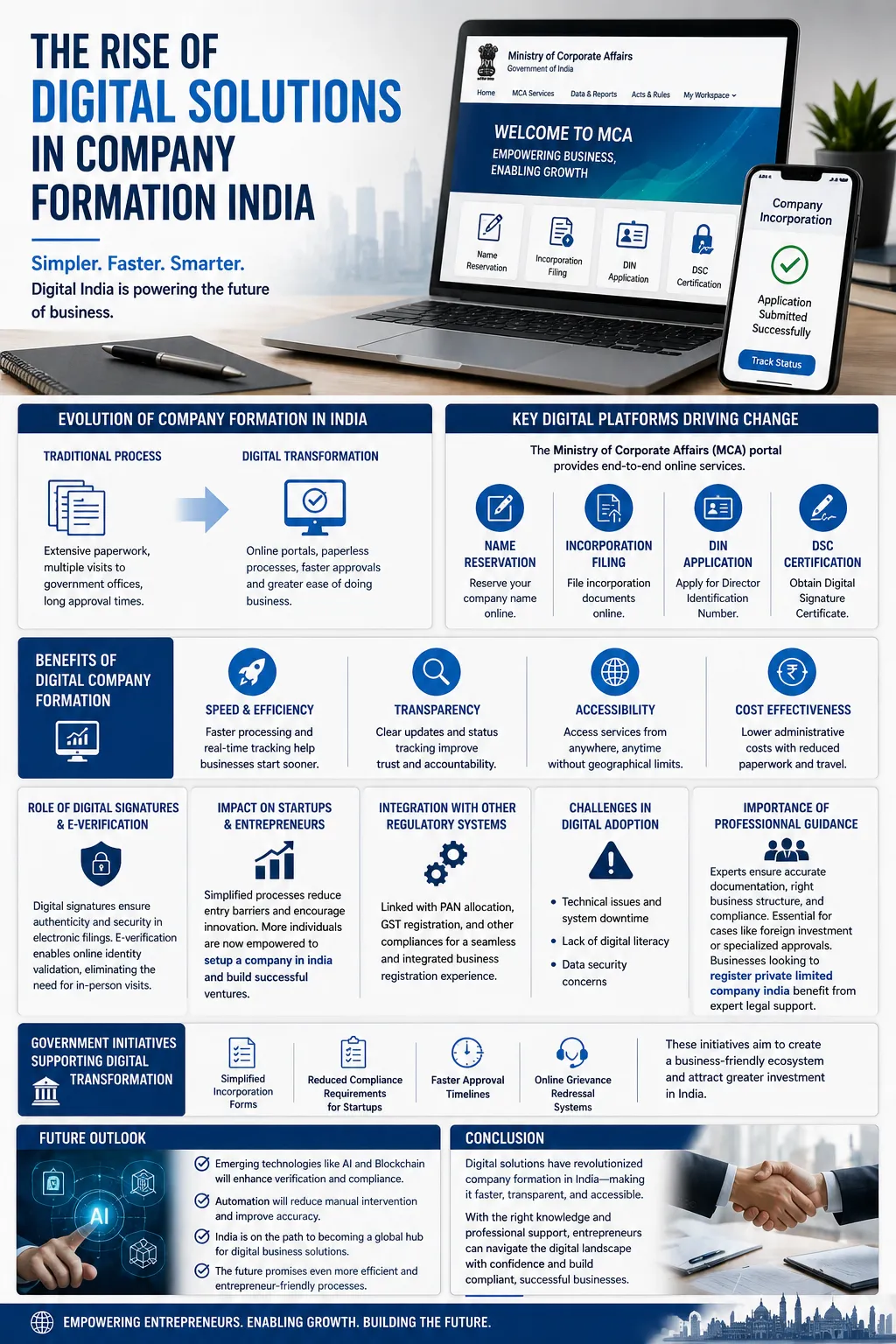

India has witnessed a significant transformation in its business landscape. One of the most notable changes is the shift towards digital processes in company formation. What once involved lengthy paperwork and multiple visits to government offices is now largely completed online.
This transition has improved efficiency, transparency, and accessibility. It has also encouraged entrepreneurship across the country.
Evolution of Company Formation in India
In the past, setting up a company in India required extensive manual procedures. Applicants had to submit physical documents, wait for approvals, and deal with administrative delays.
The introduction of digital platforms has changed this process. Today, most steps in company formation can be completed through online portals managed by regulatory authorities.
This evolution reflects India’s broader push towards digital governance and ease of doing business.
Key Digital Platforms Driving Change
The Ministry of Corporate Affairs has played a central role in digitising company registration. Its online portal allows users to complete various compliance requirements in a streamlined manner.
Important services now available online include:
- Name reservation
- Incorporation filing
- Director identification number application
- Digital signature certification
These services reduce the need for physical interaction and speed up the overall process.
Benefits of Digital Company Formation
1. Speed and Efficiency
Digital systems have reduced processing time significantly. Applications can be submitted and tracked in real time. This allows entrepreneurs to start operations sooner.
2. Transparency
Online platforms provide clear updates on application status. This reduces uncertainty and improves trust in the system.
3. Accessibility
Entrepreneurs from different regions can access the same services without geographical limitations. This is particularly beneficial for small business owners and startups.
4. Cost Effectiveness
Digital processes minimise administrative costs. There is less reliance on physical documentation and travel.
Role of Digital Signatures and E Verification
Digital signatures have become a crucial component of company formation. They ensure authenticity and security in electronic filings.
E verification systems further simplify the process by enabling online identity validation. These tools eliminate the need for in person verification in most cases.
Impact on Startups and Entrepreneurs
The rise of digital solutions has created a more favourable environment for startups. Entrepreneurs can now focus on business development rather than administrative formalities.
Simplified procedures encourage innovation and reduce entry barriers. As a result, more individuals are willing to setup a company in india and explore new business opportunities.
Integration with Other Regulatory Systems
Digital company formation does not operate in isolation. It is integrated with other regulatory frameworks such as taxation and labour compliance.
For example, company registration is often linked with permanent account number allocation and goods and services tax registration. This integrated approach ensures seamless compliance from the outset.
Challenges in Digital Adoption
Despite its advantages, digital company formation faces certain challenges.
Technical Issues
System errors or server downtime can disrupt the process. Users may face difficulties during peak filing periods.
Digital Literacy
Not all entrepreneurs are familiar with online systems. Lack of awareness can lead to errors in applications.
Data Security Concerns
Handling sensitive information online requires robust security measures. Ensuring data protection remains a priority.
Importance of Professional Guidance
While digital platforms simplify procedures, legal and regulatory requirements remain complex. Professional guidance helps ensure compliance and accuracy.
Legal experts assist in drafting documents, selecting the appropriate business structure, and managing filings. Their role becomes especially important in cases involving foreign investment or specialised regulatory approvals.
Businesses planning to register private limited company india often benefit from structured legal support to avoid future complications.
Government Initiatives Supporting Digital Transformation
The Indian government has introduced several initiatives to promote digital company formation. These include:
- Simplified incorporation forms
- Reduced compliance requirements for startups
- Faster approval timelines
- Online grievance redressal systems
Such measures aim to create a business friendly environment and attract investment.
Future Outlook
Digital solutions in company formation are expected to evolve further. Emerging technologies such as artificial intelligence and blockchain may enhance verification and compliance processes.
Automation could reduce manual intervention and improve accuracy. This will make company formation even more efficient in the coming years.
India’s focus on digital infrastructure will continue to support this growth.
Conclusion
The rise of digital solutions has transformed company formation in India. It has made the process faster, more transparent, and widely accessible.
While challenges remain, ongoing improvements in technology and policy are addressing these concerns. Entrepreneurs now have the tools to establish businesses with greater ease and confidence.
A clear understanding of digital processes, combined with professional guidance, can help ensure smooth and compliant company formation in today’s evolving business environment.
































Sign in to leave a comment.