
As the global population increases, the demand for food intensifies. Simultaneously, the concern for water conservation grows stronger as water scarcity becomes a global challenge. To balance between the increasing food demand and water scarcity, farmers are turning towards more efficient and sustainable ways of farming, with specific emphasis on irrigation. Innovative Irrigation Technology in Agriculture has emerged as a game-changer, with Smart Irrigation Technology leading the way.
Irrigation technology, in its most basic form, involves the artificial application of water to land or soil to assist in the growth of crops. With advancements in technology, irrigation systems have evolved from traditional methods to more sophisticated and efficient ones, offering solutions to prominent problems like water scarcity and inconsistent rainfall patterns.
Historically, irrigation practices were simple and manual, involving drawing water from wells and other sources and transporting it to fields. However, with the advent of technology, the irrigation landscape has undergone significant transformation.
1. Surface Irrigation: This is one of the earliest forms of irrigation, where water is distributed over the soil surface by gravity.
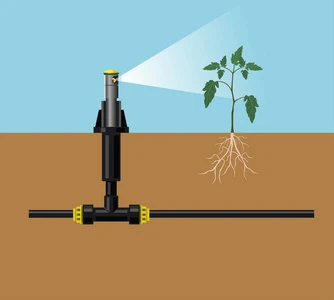
2. Sprinkler Irrigation: Introduced in the 20th century, sprinkler irrigation system mimics rainfall by distributing water through a system of pipes and sprinklers.
3. Drip Irrigation: A more targeted approach, drip irrigation, delivers water directly to the root zone of plants, minimizing evaporation and runoff.
4. Center Pivot Irrigation: An advanced system where equipment rotates around a pivot, irrigating crops in a circular pattern.
Today, with the rise of the digital age, Smart Irrigation Technology has made its mark in the agricultural industry. This technology integrates advanced irrigation systems with ICT (Information and Communication Technology) to optimize water usage and increase crop productivity.
Smart Irrigation Technology is an advanced irrigation system that uses real-time weather data, soil conditions, and plant water needs to regulate watering schedules and amounts. This technology includes weather-based systems (WBICs) and soil moisture-based controllers (SMBCs).
1. Weather-Based Irrigation Controllers (WBICs): These smart systems use local weather data to tailor irrigation schedules.
2. Soil Moisture-Based Controllers (SMBCs): SMBCs monitor the soil\'s moisture levels to provide optimal irrigation to crops.
Benefits of Smart Irrigation Technology
1. Enhanced Water Conservation: Smart Irrigation Technology significantly reduces water waste by providing precise water amounts needed by crops.
2. Increased Crop Yield: By meeting the precise water needs of plants, these systems ensure optimal plant growth, leading to increased crop yield.
3. Cost Efficiency: By reducing the amount of wasted water, farmers can significantly cut down on their water bills.
4. Reduced Labor Costs: Smart systems automate the irrigation process, reducing the need for manual labor.
Despite its numerous benefits, Smart Irrigation Technology also faces its share of challenges. High initial installation costs, lack of technical knowledge, and limited rural internet connectivity can hinder its widespread adoption.
With ongoing research and technological advancements, the future of Smart Irrigation Technology looks promising. Developments like AI-driven irrigation systems, IoT-based solutions, and drone technology are likely to take smart irrigation to the next level.
The adoption of Smart Irrigation Technology in agriculture is a critical step towards sustainable farming. While challenges exist, the benefits it offers in improving water efficiency and boosting crop productivity are substantial. As technology continues to evolve, we can anticipate more innovative and cost-effective smart irrigation solutions that will further revolutionize the agricultural sector. The future of agriculture and food security indeed lies in smart farming practices, with Smart Irrigation Technology playing a pivotal role.













Sign in to leave a comment.