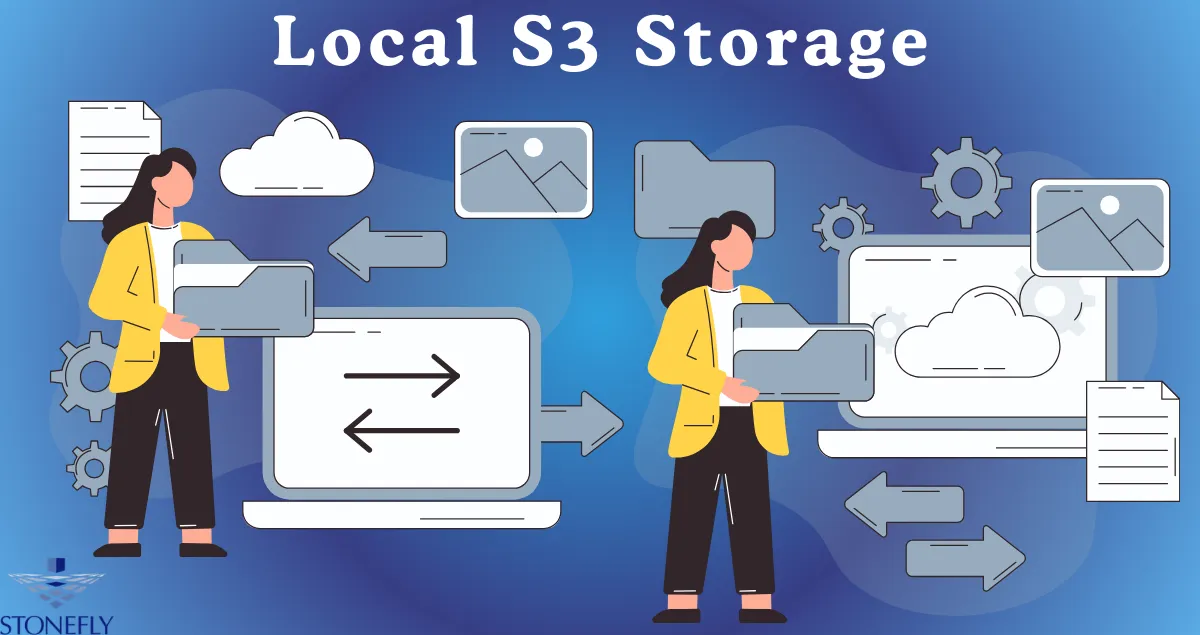

Enterprise data generation shows no signs of slowing down. Organizations systematically accumulate petabytes of unstructured data, ranging from complex machine learning datasets to high-resolution application assets. While external infrastructure initially promised infinite scalability, IT architects frequently encounter severe performance bottlenecks and unpredictable cost structures when moving massive workloads offsite. To regain precise control over infrastructure, systems engineers are actively migrating their most demanding workloads back to their own facilities. Implementing Local S3 Storage provides a robust architectural solution that combines the scalability of modern object protocols with the high-speed performance of internal network topologies.
This technical guide examines the mechanics of hosting object architecture inside your own data center. It will clarify the structural differences between legacy file systems and modern object protocols. Furthermore, it outlines the specific performance, security, and economic advantages of keeping data local. Finally, it provides actionable strategies for IT departments to evaluate, integrate, and optimize this infrastructure within their existing network environments.
The Architecture of Object Repositories
Understanding the structural advantages of this technology requires an examination of how systems write and retrieve data. Traditional network-attached servers utilize hierarchical file systems. These systems organize files into nested directories, utilizing complex metadata tables to track physical locations on disk.
As the volume of files expands into the millions, traversing these complex directory trees creates severe latency. The metadata servers become a primary bottleneck, slowing down read and write operations across the entire network. To solve this, IT departments must continually invest in expensive, high-performance computing nodes simply to manage the directory overhead.
Bypassing Legacy Block and File Systems
Object architecture fundamentally eliminates the nested directory problem. Instead of placing a file within a folder, the system bundles the raw data with highly customizable metadata and assigns it a mathematically unique identifier. The system places this combined object into a completely flat address space.
When an application requests a file, it simply queries the unique identifier. The underlying software instantly locates the object without scanning through complex directory trees. This flat architecture allows systems to scale horizontally without introducing performance degradation. Administrators simply attach additional storage nodes to the cluster, and the software automatically balances the capacity.
How the Object API Functions Internally
Modern applications communicate with these repositories via application programming interfaces (APIs) utilizing standard web protocols. Specifically, applications utilize HTTP PUT, GET, and DELETE commands to interact with the repository. This standardizes the communication layer, allowing developers to write software without worrying about the underlying hardware mechanics.
When a developer issues a PUT command to save an object, the system processes the request through a load balancer. The intelligent storage software then applies erasure coding. It mathematically fragments the object into distinct data and parity segments, distributing these segments across multiple physical drives and server nodes. If a hardware failure occurs, the system utilizes the surviving parity segments to instantly reconstruct the missing data.
Strategic Advantages of Deploying Hardware Locally
Relying entirely on remote facilities introduces variables that enterprise architects cannot control. Moving massive datasets across wide-area networks introduces physical limitations based on the speed of light and fiber optic routing. By bringing the hardware directly into the facility, administrators eliminate these external variables.
Eliminating Latency and Bandwidth Constraints
Network latency dictates the performance of complex applications. Even with high-bandwidth fiber connections, sending requests to remote data centers adds milliseconds of delay to every transaction. For applications running real-time analytics or rendering high-definition media, this latency compounds, severely degrading the user experience.
By deploying local S3 storage directly adjacent to the application servers, data travels exclusively over high-speed internal switches. This physical proximity reduces latency to virtually zero. Internal applications can process complex queries, manipulate large datasets, and execute rapid backups without congesting the organization’s outbound internet connection.
Unpredictable Egress Fees and Cost Containment
External infrastructure providers utilize complex pricing models. While the cost to upload data remains negligible, providers charge significant egress fees when organizations download their own information. These fees accumulate rapidly, particularly for applications requiring frequent data retrieval or during massive disaster recovery operations.
Operating infrastructure on-premises completely neutralizes this variable. Organizations incur a fixed capital expenditure for the hardware and standard operational expenses for power and cooling. Because the hardware resides on the internal network, data scientists can execute millions of queries and retrieve terabytes of data daily without generating massive bandwidth invoices. This predictable cost structure enables accurate IT budgeting.
Fortifying Infrastructure Security and Compliance
Security protocols require absolute transparency and control. When infrastructure resides offsite, administrators must trust third-party vendors to manage hardware security, encryption keys, and network perimeters. Bringing the repository inside the facility re-establishes total administrative authority.
Data Sovereignty and Regulatory Standards
Strict regulatory frameworks govern how organizations handle sensitive information. The Health Insurance Portability and Accountability Act (HIPAA) and the General Data Protection Regulation (GDPR) impose severe penalties for data mismanagement. These regulations often mandate strict data sovereignty, requiring specific datasets to remain within defined geographic or physical boundaries.
Maintaining hardware internally guarantees absolute data sovereignty. Network administrators determine exactly where the physical drives sit. They implement strict role-based access controls, ensuring only authorized internal systems can communicate with the storage cluster. This transparent physical and logical isolation simplifies compliance audits and clearly demonstrates adherence to regulatory standards.
Ransomware Defense Through Immutability
Cybersecurity threats continually target enterprise backup systems to maximize extortion leverage. Advanced ransomware actively scans network topologies, seeking out attached file shares and backup repositories to encrypt. To neutralize this threat, storage administrators must implement hardware-level data protection mechanisms.
Modern localized infrastructure supports precise object-level immutability. This configuration prevents any user, including systems administrators, from modifying, encrypting, or deleting an object for a defined retention period. If malicious software breaches the primary network, the locked objects remain perfectly intact. This immutable architecture provides a mathematically secure foundation for disaster recovery operations.
Implementation Strategies for IT Departments
Successfully integrating new storage architecture requires meticulous planning and rigorous testing. Administrators must evaluate their specific workload requirements, design appropriate network topologies, and configure software endpoints to ensure maximum throughput and stability.
Hardware Evaluation and Network Planning
The first phase involves a comprehensive capacity and performance audit. Storage architects must quantify their current unstructured data footprint and calculate the projected growth over a three-to-five-year lifecycle. This determines the required density and compute power of the initial hardware cluster.
Simultaneously, network engineers must design the supporting topology. High-performance object clusters generate massive internal traffic during data rebalancing and replication events. Engineers must provision dedicated, high-throughput network interfaces specifically for the storage backbone. Isolating this backend traffic on dedicated virtual local area networks prevents congestion on the primary production switches.
Seamless Application Integration
Once the physical hardware is racked and networked, software integration begins. Because standard object APIs dominate the software development landscape, integration rarely requires complex code refactoring. Developers simply redirect their existing application endpoints to point toward the newly provisioned internal cluster.
To execute this transition smoothly, administrators configure the local S3 storage endpoints with the appropriate security credentials and network policies. They generate unique access keys for each application, enforcing the principle of least privilege. After conducting localized performance tests to verify throughput and failover capabilities, the IT team can seamlessly migrate production workloads to the high-performance internal repository.
Conclusion
Managing exponential data growth demands architecture that provides both immense scalability and absolute control. Legacy file systems create performance bottlenecks, while remote infrastructure introduces latency and unpredictable financial burdens. By deploying object-based architecture directly within your facility, your organization resolves these critical issues simultaneously.
Your internal networks deliver the high-speed throughput required for demanding applications, while the flat object architecture ensures limitless horizontal scalability. Evaluate your current unstructured data workloads today. Identify the applications suffering from latency or generating excessive bandwidth costs, and initiate the transition to localized object infrastructure to secure your enterprise data lifecycle.
FAQs
What is the function of metadata in an object repository?
Metadata provides granular, customizable context for every piece of data. Unlike a file system that only records creation dates and file sizes, an object repository allows administrators to attach specific, searchable tags—such as patient IDs, project codes, or compliance classifications. This allows applications to locate specific datasets instantly without scanning underlying data.
How does erasure coding differ from traditional RAID configurations?
Traditional RAID mirrors data across whole drives or utilizes dedicated parity disks, which causes massive rebuild times when a large-capacity drive fails. Erasure coding mathematically divides individual objects into smaller chunks and spreads them across multiple distinct server nodes. During a failure, the system reconstructs only the missing chunks using parallel processing, drastically reducing rebuild times and minimizing data loss risk.
Can an object repository support active transactional databases?
No, object architecture is designed specifically for unstructured data and static files. Active databases require block-level access to constantly rewrite small fragments of data within a larger file. Object repositories are immutable by design; to change an object, the system must rewrite the entire file. Therefore, standard block storage remains necessary for high-speed transactional databases.
How do you scale capacity in a flat address space?
Scaling capacity is purely horizontal. When the cluster nears its maximum capacity, administrators simply install an additional storage node into the server rack and connect it to the network. The management software automatically registers the new hardware, expands the logical capacity pool, and seamlessly redistributes existing data across the new drives without requiring any system downtime.
What is the role of a load balancer in this architecture?
A load balancer actively manages the inbound API requests from multiple applications. It distributes the PUT, GET, and DELETE commands evenly across all available storage nodes in the cluster. This prevents any single node from becoming overwhelmed with traffic, ensuring consistent high-speed performance and maintaining maximum availability if a specific node requires maintenance.









Sign in to leave a comment.