
What happens when Diabetes hits you in an unexpected manner?
In normal circumstances, a hormone known as insulin is in charge of the role of a key that opens the cells allowing sugar to get into the cells and nourish them. But sometimes, diabetes strikes out of the blue, especially for people over 50 years old who never had a problem with blood sugar earlier. That is what is called new-onset diabetes. It's not the conventional type that builds up gradually over time from lifestyle habits. Rather it strikes fast and doctors are left wondering whether there might be something else happening on the inside say in the pancreas which produces insulin.
According to Punarjan, one of the best cancer treatment hospitals, your normal life might be where you are so thirsty, you have to urinate every half an hour or you might just be so tired. These are nothing more than the indications of the sugar in your blood accumulating rather than doing its job. But then suddenly why is this beginning to happen? It's probably your pancreas struggling in its work, and researchers have identified a pattern whereby this ties in with other changes in health.
What Is the Role of the Pancreas in this Process?
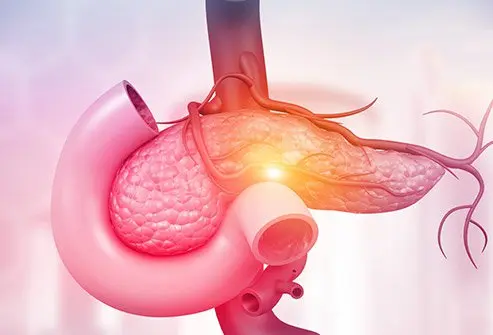
The pancreas is a small, long gland just behind your stomach and it is approximately the size of your hand. Its two primary functions involve assisting with food digestion and regulation of blood sugar levels. In relation to its role in regulating blood sugar, it uses small groups of cells called islets. Within these islets, there are beta cells that can be considered tiny factories that secrete insulin.
On the cell level, the beta cells detect the rise in sugar in the blood. The insulin is thereafter secreted by the beta cells. The insulin then directs to other bodily cells like the muscle cells or the liver cells. These cells absorb the sugar because of the insulin. This process happens in a very balanced way. But if the beta cells are not working properly in the body, the entire process will break down. They fail to produce enough insulin or the insulin does not function properly. This causes high blood sugar.
It is like a group of factory workers. The faster those workers can produce, the better. But when the workers are sick or the machinery is broken, it hinders this process. In the human body, this can begin with a slight problem but quickly increase.
Does it Have any Potential Response to Pancreatic Cancer?
The cancerous cells make a mass referred to as a tumor that may push out the normal cells. In most cases, the cancer develops within the part of the pancreas responsible for the release of juices, and it might also develop within the islets.
On a deeper level, in the cells, the normal cells in the pancreas have signaling in their DNA to grow, to divide, to die if necessary. But in cancer, these tiny bits in the DNA, in the genes, mean the cells go against these rules. They grow out of control, making a mass that puts pressure on surrounding organs. If the growth gets to the beta cells, they will destroy them, kind of like tearing down a neighborhood.
The destroyed beta cells cannot produce the insulin. In other cases, the development of the cancer also causes an inflammatory reaction in which the individual immunity reacts to the assault by the malfunctioning cells resulting in harm to the normal tissues also. The beta cells get stressed by these chemicals and work poorly. Eventually, fewer beta cells mean lower insulin, and this leads to high sugar levels that cause the rapid onset of diabetes.
Some research reveals that in certain patients, blood sugar problems emerged a few months to even a year before any other signs of pancreatic cancer started, such as a sore belly or loss of weight. This is like the body giving the first warning call that something’s amiss inside.
What Happens at a Cellular Level?
Let’s get an even closer look. “Each beta cell contains a nucleus, the control center where the DNA is, and mitochondria, or ‘power plants’ that make energy,” she says. And in the proper configuration, when the sugar comes into the cell through ‘doors’ known as transporters, it is processed in the mitochondria, and ‘signals’ are made to indicate the cell should secrete packets of insulin.”
However, since there is cancer present, the toxins secreted by the cancer cells could spill out and poison this process. The mitochondria may not be functioning properly, and less energy may be produced so that the beta cell does not respond to the high levels of sugar. In addition, what makes matters worse is that the cancerous cells rob nutrition and oxygen from the healthy cells, causing the healthy cells to starve as well. It is a struggle at the cellular level, with cancerous cells competing with healthy cells for dominance, blocking the insulin factory.
There is also the aspect whereby cancer can cause the body to be insulin-resistant. Insulin is released from the tumor cells, which then flows in the blood, telling other cells in the body to be less responsive to insulin. In this instance, the production of insulin will not be able to open the doors.
Wrapping Up:
It is not speculation to be aware of abnormal spikes in blood sugar levels but rather to be alert. In a sudden onset of diabetes, especially when there may be no known family history and huge changes in lifestyle, a physician may be able to look at the pancreas closely. Such basic diagnostic procedures as blood tests and scans can penetrate further.
When it comes to cellular functions, early detection is important, as finding a problem early could mean that fixes are put into effect before it progresses. How these cellular indicators could play a part in earlier detection is still a research area, so at this point, awareness is key.
Understanding this link reminds us how connected our body parts are. The pancreas quietly does vital work, and when its cells face trouble, the effects ripple out. Keeping an eye on sudden changes could be a way to protect that balance. To get to know more information about cancer awareness over the internet, visit, www.punarjanayurveda.com.
REFERENCE LINKS:
https://my.clevelandclinic.org/health/diseases/15806-pancreatic-cancer
https://pmc.ncbi.nlm.nih.gov/articles/PMC2795483/
https://www.endocrine-abstracts.org/ea/0110/ea0110EP1591
Sign in to leave a comment.