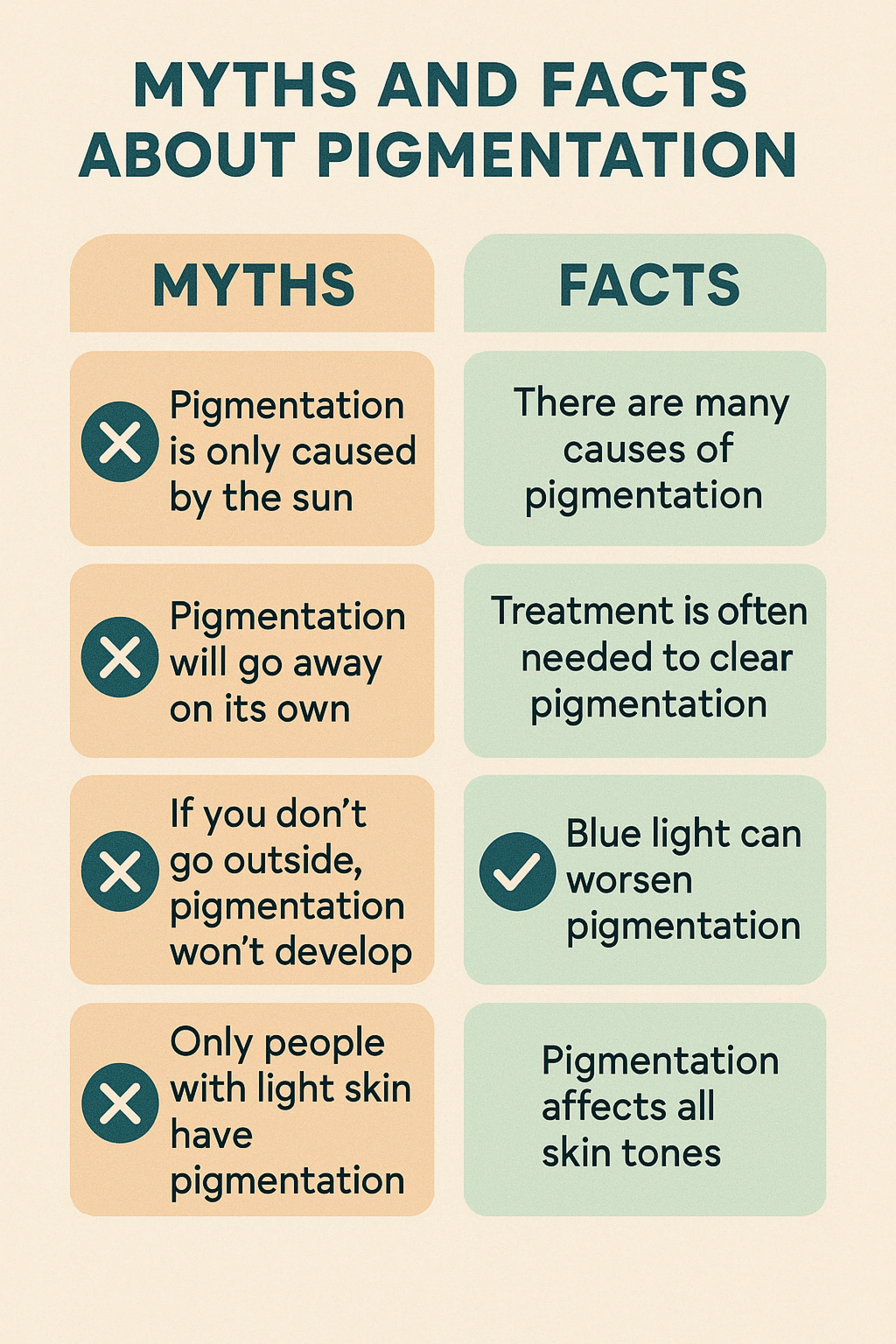

Pigmentation can be a common concern for many, leading to dark spots, patches, and uneven skin tone. Pigmentation not only impacts skin health and self-confidence, but it’s also surrounded by countless myths. Dispelling such myths and providing the facts is crucial to ensure individuals are well-informed. So, in this blog, we will discuss common myths about pigmentation and which clinic offers the best pigmentation treatment in Delhi. Let us start by learning what pigmentation is.

What is Pigmentation?

Pigmentation refers to a coloring of skin due to melanin, a pigment created by special skin cells. When excessive amounts of melanin are produced in an area, this can lead to dark patches. Sun exposure, hormonal changes, aging, inflammation, genetics, and sometimes medications can all lead to excessive melanin production. The most common types are melasma, age spots, and post-inflammatory hyperpigmentation.
Common Myths and Facts About Pigmentation
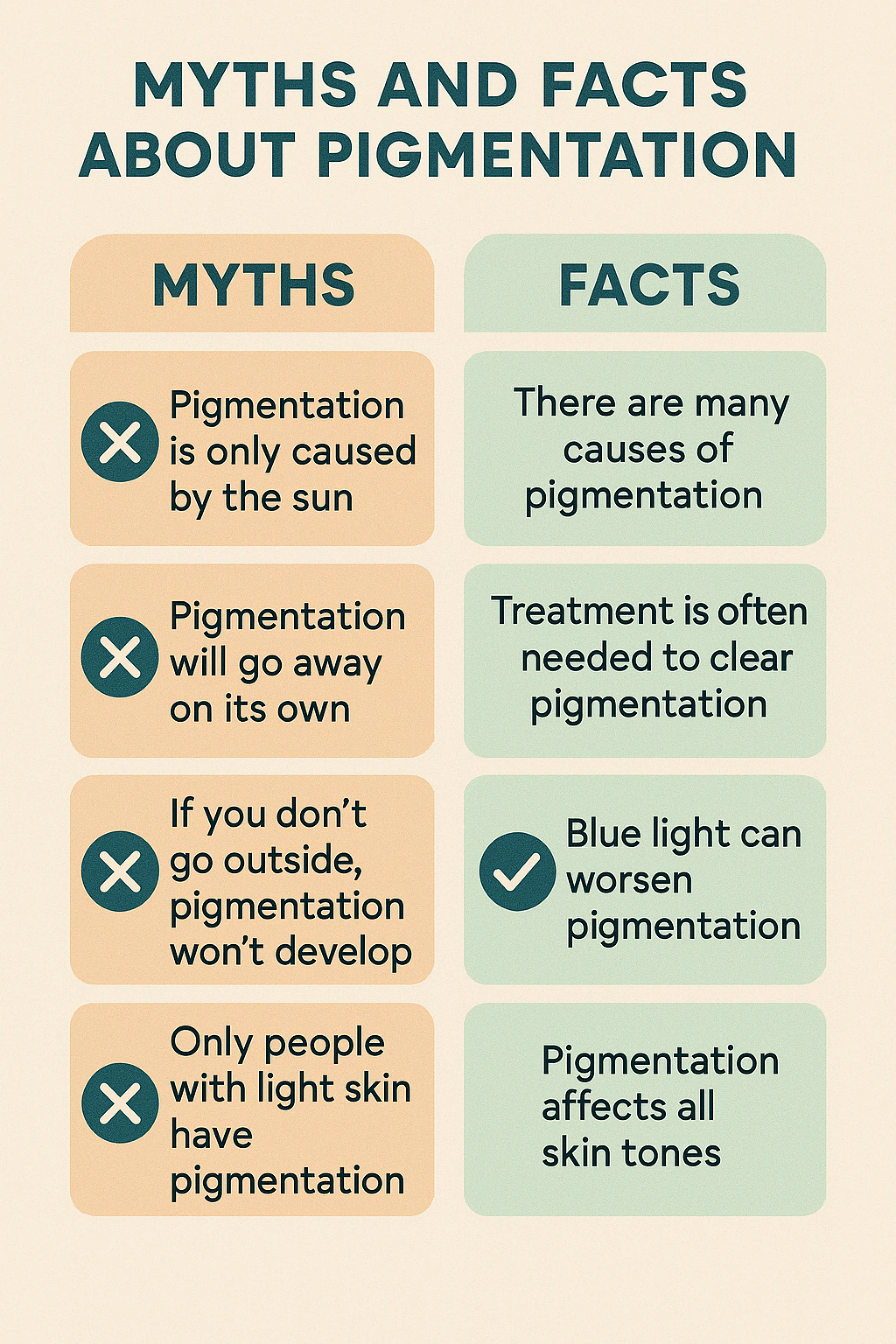
Myth 1: Pigmentation Is Only a Concern for People With Dark Skin
Fact: Pigmentation can occur in people, regardless of skin color, gender, and age. It is more pronounced in medium and dark skin tones, but individuals with light skin can also develop freckles, age spots, and melasma, particularly after sun exposure or hormonal fluctuations.
Myth 2: Pigmentation Disappears on Its Own
Fact: Pigmentation rarely disappears on its own. Some types, such as post-inflammatory hyperpigmentation, may fade over time, but most pigmentation types benefit from treatment and sun protection. In general, pigmentation can exacerbate over time with sun exposure and age.
Myth 3: Natural Remedies Are More Effective than Prescription Treatments
Fact: Although simple home remedies, such as aloe vera, lemon juice, and turmeric, may help reduce minor dark spots, they are not as effective as dermatological procedures. Topical skin care products recommended by a dermatologist (with vitamin C, niacinamide, or retinol) or dermatological procedures (chemical peels or lasers) are safe and efficacious methods to treat more persistent pigmentation.
Myth 4: Pigmentation Treatment Offers Immediate Results
Fact: Most treatments require patience and regular use. Dermatologists generally recommend that it takes several weeks for a complete turnover of skin cells and for brown spots to subside. A treatment that provides fast results is often not an effective treatment, and an approach that slowly and consistently shows improvement will be reasonably effective with better long-term results, especially with daily sunscreen use. Looking for the best skin specialist in Delhi to get pigmentation treatment? Visit Delhi Wellness Clinics.
Myth 5: Once You're Treated, Pigmentation is Gone Forever
Fact: Pigmentation can always return if the underlying cause isn't addressed. Sunlight, hormonal changes, or skin irritation are factors that can all contribute to pigmented spots after treatment. Use sunscreen regularly to prevent pigmentation.
Myth 6: Pigmentation Only Affects People with Light Skin
Fact: Pigmentation can not affect anyone. Dark spots, melasma, and uneven skin tones can and do affect everyone regardless of ethnicity. Treatments oftentimes just have to be tailored to different skin tones, but everyone can benefit from pigmentation treatment.
Myth 7: Scrubbing or Over-exfoliating Will Help Get Rid of Pigmentation
Fact: Exfoliating aggressively can affect the skin barrier and promote additional melanin production, which ultimately leads to worsening pigmentation. Cleansing your skin gently and opting for advanced treatments is a far more effective alternative to scrubbing. Always follow your dermatologist's recommendations to reduce the risk of skin irritation.
Myth 8: Chemical Products Are Harmful for Pigmentation
Fact: Not all chemical products are bad! Numerous professional pigmentation creams use scientifically demonstrated ingredients such as glycolic acid, kojic acid, and retinol that can be extremely effective for reducing pigmentation when used properly. However, you must do a patch test and follow the instructions properly.
Myth 9: Sunscreen Is Not Necessary While Treating Pigmentation.
Fact: The reality is that sunscreen is a necessity for the prevention and management of pigmentation. Unfortunately, sun exposure is one of the factors that frequently cause dark spots. That is why all individuals, regardless of treatment kit, cream, or home remedy, need to wear a broad-spectrum SPF factor of 50 or higher every day.
Myth 10: Pigmentation Kits Bleach the Skin.
Fact: The best pigmentation kits and creams do not bleach the skin; they work to target dark spots and patches to bring the skin back to its natural tone. The goal is to create healthy and even skin.
Consult the skin experts at Delhi Wellness Clinics to get pigmentation treatment

Looking for the best skin clinic to get pigmentation treatment in Delhi? Visit Delhi Wellness Clinics. The experts offer treatments like microneedling, chemical peels, light therapy, topical products to treat pigmentation. For more information, visit the clinic now.











Sign in to leave a comment.