

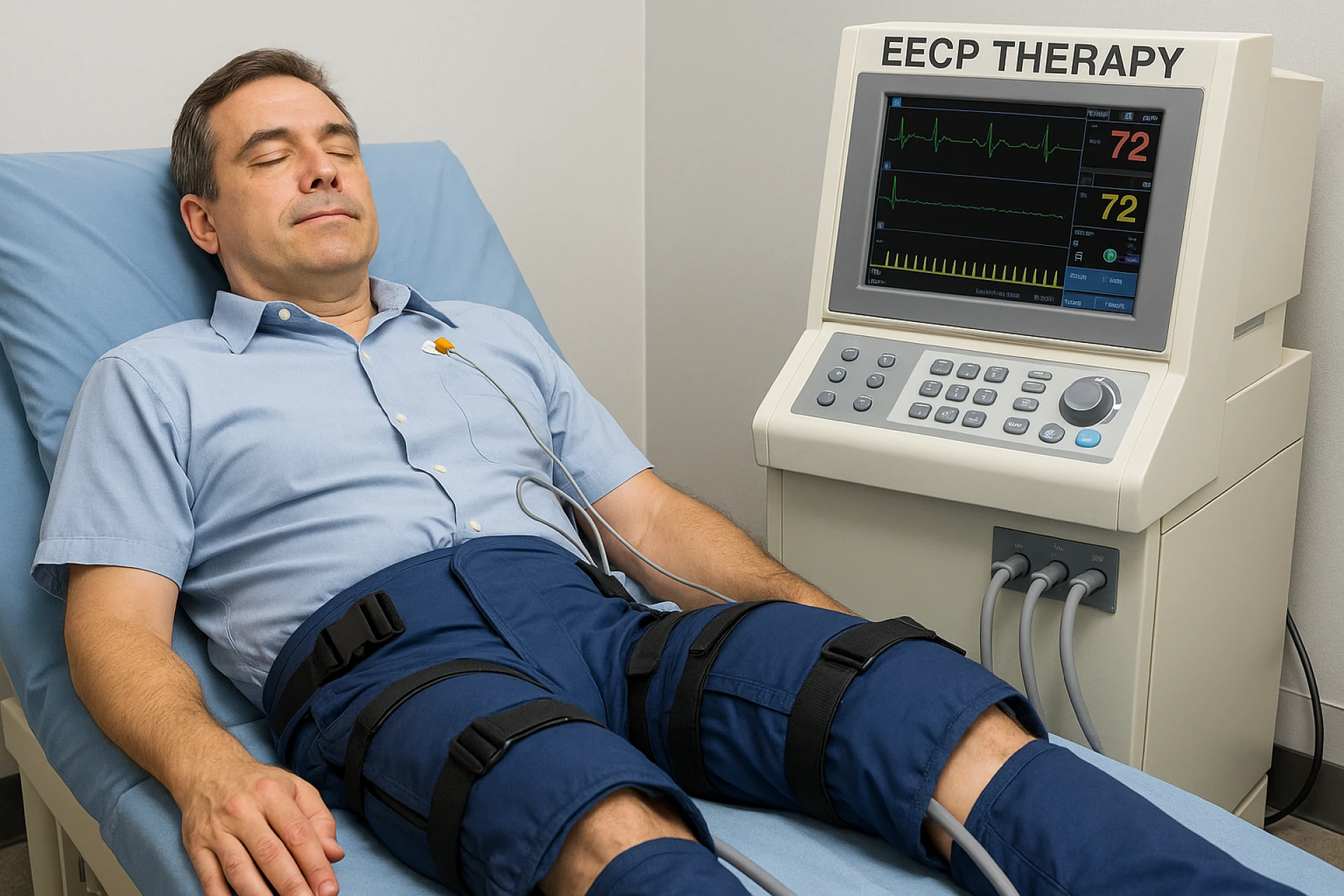
Heart treatments in India tend to be a binary and brutal affair: stents or bypass surgery. And for a lot of people, that’s a scary fork in the road. Yet, a quiet revolution has been happening in recent years – non-invasive and completely painless, but the progressive cardiologists are starting to recommend it: EECP therapy in Delhi/NCR.
And the question that patients, loved ones, and even doctors throughout India are asking now is:
“Is the success rate of EECP treatment in India good?”
The article unpacks that question from the Indian perspective, not Western data alone. What is going on in real Indian clinics with real Indian patients? Does it actually work? Is it being overpromoted? Or is it truly a game-changer for non-invasive heart treatment in India?
So let’s cut through the noise and get to the truth.
Why Indian Heart Patients Are Turning to EECP
One of the youngest and fastest-growing populations of heart patients is in India. With early diabetes, sedentary jobs, and stress-heavy urban living, more Indians are being diagnosed with blocked arteries, younger age, even a decade earlier than their Western counterparts.
But here’s the challenge:
- Open-heart surgery is not feasible for every Indian patient.
- Not everyone can afford the ongoing cost of stents and drugs.
- A lot of them reside in Tier 2 or Tier 3 cities with little access to surgical solutions.
This is where EECP therapy comes in, as a safe, outpatient, and economical treatment. But the core concern remains:
What is the actual success rate of EECP treatment in Indian patients?
Indian Studies & Clinic Data of EECP Success Rate
Whereas most people quote 75–85% success rates for the world, let’s look at India’s numbers.
SAAOL Heart Center- Delhi & Mumbai (Private Clinic):
Internal audits of 5,000+ patients between 2020–2024 found:
- 82% had a better walking ability
- 70% lower drug dose following therapy
- Surgery was avoided in 59·1% of cases
These are not just numbers — they represent the real influence on the lives of Indian heart patients.
Which States in India Get the Best Results?
Although EECP is FDA-approved and evidence-based, the response to treatment is variable based on patient characteristics. In the Indian practice, the highest success rate of EECP treatment are seen in:
- Post-angioplasty patients with recurring symptoms
- Triple vessel disease patients are not suitable for surgery
- Diabetic patients with early-stage CAD (Coronary Artery Disease)
- Elderly patients (65+) who want non-invasive options
Interestingly, Indian women, a group that's widely undertreated when it comes to heart symptoms, express high satisfaction and improvement after EECP when given the chance.
‘Success Rate’ Is Not Just a Number
Many articles interpret the success rate of EECP treatment solely in symptom relief.
But in life, success also means:
- Avoiding surgery in a small town where cardiac surgeons aren’t available
- Being able to walk to your local market again
- Living with dignity at 70, not with 12 pills a day and a pacemaker
Analysts consider the non-invasive nature of EECP as the biggest win for Indian patients, particularly those from lower-middle-class homes and distant areas.
But Is It Overhyped? The Honest Verdict
Let’s be 100% transparent. Not everyone achieves a miraculously good outcome.
- If a patient has very calcified arteries, EECP is not going to reverse that.
- When a patient stops partway, the gain is unfinished.
- If you want a “quick fix” (results in 2–3 sessions), you’ll be disappointed.
A Successful Outcome in EECP – Especially in India—Happens When:
- The task might take up to 40 sessions
- Zero-oil diet and walking are then implemented as lifestyle changes
- Aftercare treatment with medical monitoring
Clinics that claim “cures” or “reversals” in 10 sessions are falling far short of ethical standards.
Last Word on the success rate of EECP treatment in India
If we were to measure success not in clinical graphics, but in real-world Indian lives, then the success rate of EECP treatment in India is:
- Clinically Effective (70–85%)
- Economically Sensible
- Surgically Avoidant
- Patient-Friendly
- Underrated but Rising
It’s not a silver bullet. But for tens of thousands of Indian heart patients every month, it’s a way to skip the scalpel — and take back control of their health.
Conclusion: It’s More Than Stats. It’s About Stories
The success rate of EECP treatment in India isn’t just recorded in medical journals — it’s seen in patients walking out of clinics with less pain, more breath, and more years.
So yes, EECP works in India. But only if it’s delivered ethically, in a holistic and patient manner. If this is the path you’re thinking of going down, you should ask yourself the right questions. Choose your clinic wisely. And here’s the thing to remember: It’s not about the closest, or the most affordable — it’s about where you find that you feel seen, that you feel supported, and that you feel safe.




























Sign in to leave a comment.