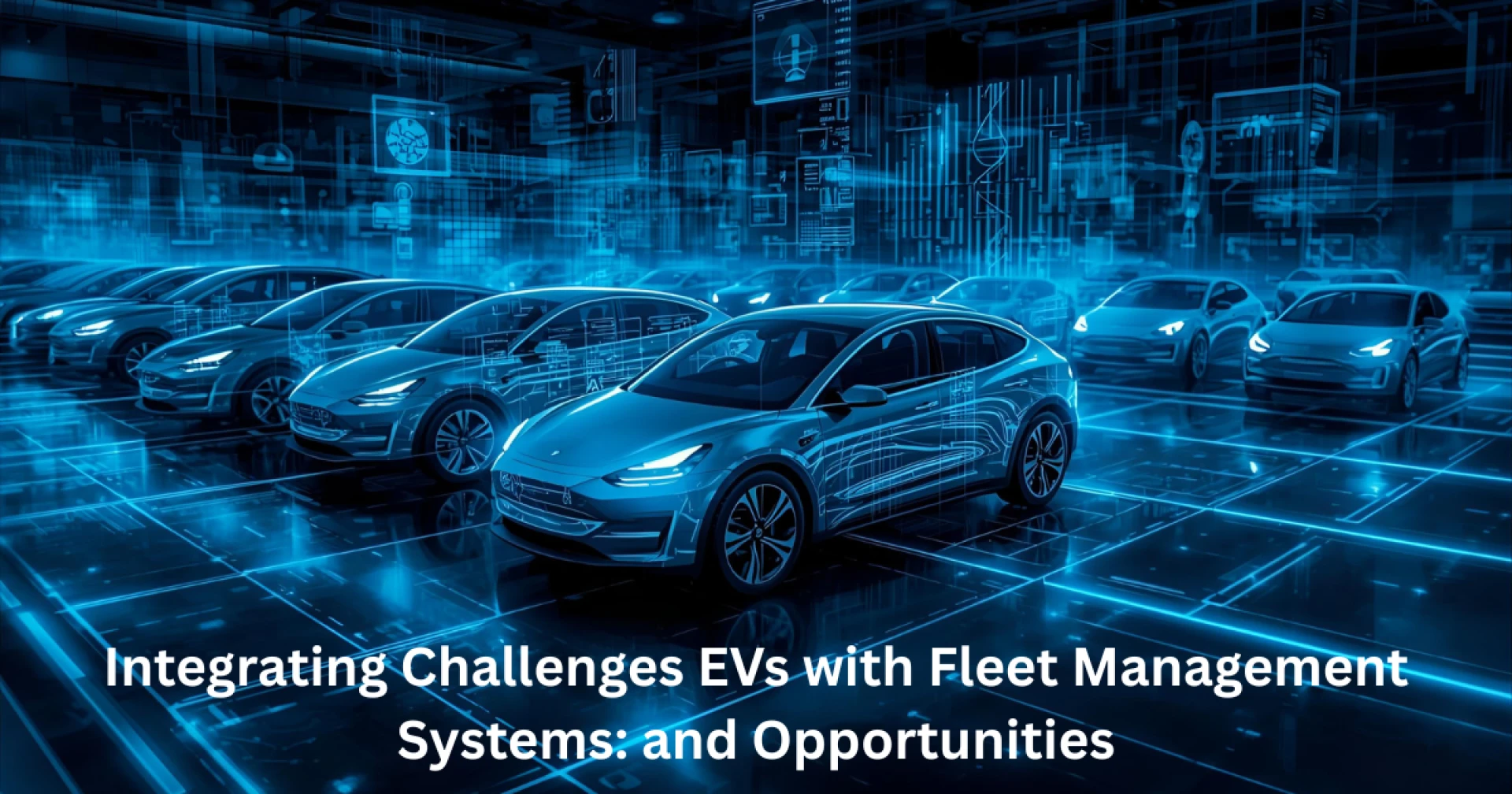

The global automotive landscape is experiencing a profound shift as electric vehicles (EVs) rapidly gain traction in commercial transportation. Companies across logistics, delivery, and public transport are transitioning to electric mobility to reduce fuel dependency, minimize emissions, and comply with sustainability mandates.
However, introducing EVs into existing fleets isn’t just about replacing engines—it’s about restructuring operations. The move from fuel-based to electric-powered fleets demands advanced digital infrastructure, including a Fleet Management System (FMS) capable of handling the complexities of electric mobility—such as charging, energy use, and battery health.
Integrating EVs with Fleet Management Systems is, therefore, no longer an option but a necessity for businesses aiming for operational efficiency and long-term sustainability.
Understanding Fleet Management Systems (FMS)
A Fleet Management System (FMS) is a centralized software platform that allows organizations to manage, track, and optimize all aspects of their vehicle operations. Traditional FMS platforms focus on tracking routes, fuel usage, and maintenance schedules.
However, with the adoption of electric fleets, the system’s scope expands significantly. A modern EV-integrated FMS must handle:
- Battery state of charge (SOC) monitoring
- Charging station management
- Predictive maintenance based on battery data
- Energy cost optimization
- Driver efficiency analytics
This holistic system connects telematics devices, sensors, and IoT platforms to provide a complete view of fleet performance, enabling better decision-making and cost management.
The Rise of Electric Vehicles (EVs) in Fleet Operations
The global shift toward EV adoption is undeniable. According to the International Energy Agency (IEA), electric vehicles accounted for 18% of global car sales in 2024, up from just 4% in 2020.
Several factors drive this transition:
- Regulatory mandates encouraging zero-emission vehicles.
- Lower running costs due to reduced fuel consumption.
- Technological maturity in battery performance.
- Corporate sustainability goals (ESG and CSR initiatives).
Commercial fleets—especially logistics, ride-sharing, and last-mile delivery—are leading the charge. For example, Amazon, DHL, and UPS have already deployed thousands of EVs worldwide.
But the success of these transitions depends on seamless integration with digital fleet systems that can monitor, analyze, and optimize EV usage in real time.
Why Integration Matters: Connecting EVs with Fleet Management Systems
Integrating EVs into an FMS ecosystem ensures data synchronization, operational continuity, and intelligent management across all fleet assets.
Without integration, fleet operators face disconnected systems—one for EVs and another for traditional vehicles—making it impossible to view performance holistically.
A properly integrated system allows:
- Unified dashboards for EVs and ICE vehicles.
- Battery analytics for better lifespan management.
- Real-time alerts for charging, maintenance, and range.
- Streamlined scheduling based on EV readiness.
In short, integration bridges the gap between traditional fleet tracking and electric mobility intelligence, enabling smarter operations.
Key Benefits of Integrating EVs with Fleet Management Systems
1. Reduced Operational Costs
EVs inherently reduce fuel and maintenance expenses, but integration takes savings further. By analyzing energy consumption patterns and automating off-peak charging, fleet operators can significantly reduce electricity bills.
2. Real-Time Monitoring and Predictive Maintenance
Fleet systems connected to EVs continuously monitor parameters such as battery temperature, state of charge, and health degradation. Predictive analytics can anticipate potential issues—like cell degradation—before they cause downtime.
3. Sustainability and Emission Control
An integrated FMS provides emission tracking reports that help companies comply with green policies. Businesses can quantify carbon savings, align with ESG frameworks, and promote eco-friendly branding.
4. Enhanced Route Optimization
EVs have range limitations; hence, dynamic route planning based on battery charge, terrain, and nearby charging points ensures smooth operations without disruptions.
5. Better Driver Performance Insights
Driver behavior—such as speed, acceleration, or braking—directly affects battery performance. Through integrated telematics, fleet managers can identify and correct inefficient driving habits to extend EV lifespan.
Major Challenges in EV-Fleet Management Integration
1. Charging Infrastructure and Availability
Limited fast-charging networks remain a critical challenge. Fleet operators must strategically plan depot charging and coordinate schedules to avoid delays.
2. Range Anxiety and Battery Management
EV range varies with driving behavior and weather. Advanced FMS algorithms must dynamically calculate available range and recommend real-time charging stops.
3. Data Compatibility and Integration Complexity
Different EV manufacturers use proprietary telematics protocols, making integration difficult. FMS providers must support open APIs and interoperability standards like OCPI or OCPP.
4 Total Cost of Ownership (TCO) Concerns
High upfront costs and unpredictable battery degradation can impact ROI. Integration helps by analyzing usage data to optimize fleet replacement cycles.
5. Training and Change Management
Drivers and maintenance teams must adapt to new operational models. Training programs are essential for efficient EV utilization and safety compliance.
Technological Enablers Supporting Integration
1. IoT and Telematics
IoT devices embedded in EVs transmit real-time data—location, charging status, and diagnostics—to the FMS, enabling automation and intelligent control.
2. AI-Driven Analytics
AI algorithms process historical data to predict charging needs, detect anomalies, and suggest cost-efficient routes.
3. Cloud-Based Platforms
Cloud systems allow centralized data storage, scalability, and easy integration across locations, essential for large fleets.
4. Integration with Energy Management Systems
Linking FMS with smart grid and energy systems allows real-time cost management, energy load balancing, and carbon tracking.
Best Practices for Implementing EV Fleet Management Integration
- Start Small: Pilot integration with a few EVs before scaling.
- Choose Open Systems: Use FMS platforms supporting multiple EV models.
- Integrate Charging Management: Connect FMS to charging stations via APIs.
- Adopt Predictive Analytics: Use data for maintenance and cost forecasting.
- Focus on Cybersecurity: Protect EV data from unauthorized access.
- Train Your Workforce: Educate drivers and technicians on EV operations.
Success Stories from Global Fleets
Amazon
Integrated its EV fleet with AI-powered FMS, achieving 25% higher route efficiency and reduced idle time.
DHL
Uses telematics to track EV battery performance and optimize charging schedules, reducing emissions by 60% across its European fleet.
UPS
Adopted smart charging FMS that aligns charging times with low-tariff periods, reducing operational energy costs by 15% annually.
Future Trends: What’s Next for EV Fleet Management
- Vehicle-to-Grid (V2G): EVs supplying excess energy back to the grid.
- Autonomous Electric Fleets: Self-driving EVs managed via cloud-based FMS.
- Blockchain Integration: Secure transaction and maintenance data sharing.
- 5G Connectivity: Faster, real-time telematics data flow.
- AI for Sustainability: Predictive environmental reporting and ESG compliance.
Why Choose HashStudioz for EV Fleet Management Solutions
HashStudioz Technologies stands at the forefront of IoT-driven digital transformation, offering customized Fleet Management Systems that seamlessly integrate with electric vehicles.
Why Choose HashStudioz:
- Proven expertise in IoT, telematics, and mobility solutions.
- Custom-built EV-compatible fleet management software.
- AI-powered analytics for route and energy optimization.
- Integration with charging infrastructure and smart grids.
- Real-time dashboards for performance tracking and carbon footprint monitoring.
HashStudioz helps organizations modernize their fleets with future-ready, scalable, and intelligent systems that ensure efficiency and sustainability.
How HashStudioz Helps You Integrate EVs with Fleet Management Systems
- Assessment & Strategy: Evaluates your fleet size, EV readiness, and goals.
- Custom Development: Builds tailored FMS modules for EV data and charging.
- System Integration: Connects FMS with IoT devices, chargers, and cloud servers.
- Data Analytics: Implements AI-driven insights for energy and performance optimization.
- Ongoing Support: Provides maintenance, updates, and real-time monitoring.
With HashStudioz, you gain a strategic technology partner to achieve operational excellence, sustainability, and data-driven fleet transformation.
Conclusion
The integration of Electric Vehicles with Fleet Management Systems represents a critical step toward sustainable mobility and intelligent logistics. It allows companies to leverage the best of both worlds—clean energy and smart analytics—to reduce costs, improve performance, and achieve ESG goals.
Despite challenges like charging infrastructure and data interoperability, forward-thinking companies adopting integrated EV fleet solutions today will lead the green revolution tomorrow.
A partner like HashStudioz Technologies ensures that transition is seamless, efficient, and future-proof.
FAQs
Q1. What is an EV Fleet Management System?
It’s a software platform designed to manage and optimize electric fleets, focusing on battery health, charging, and performance analytics.
Q2. Why is FMS integration essential for EVs?
Integration provides unified data visibility, efficient route planning, and reduced operational costs by connecting EV data to fleet dashboards.
Q3. How can HashStudioz assist with EV integration?
HashStudioz offers custom fleet management platforms, IoT integration, and AI analytics to enable smooth EV transition and smart management.
Q4. What industries benefit most from EV fleet management?
Logistics, transportation, last-mile delivery, public transit, and service industries benefit the most from EV-FMS integration.
Q5. What is the future outlook of EV fleet management?
The future involves AI-driven predictive analytics, V2G integration, and autonomous fleet operations powered by connected systems.









Sign in to leave a comment.