Have you ever opened your fridge and sighed at the sight of lonely carrots, half onions, or wilted spinach? You’re not alone. Most of us toss out more vegetables than we realize — not because we don’t care, but because we don’t know what to do with them.
The truth is, those “leftover” veggies are full of flavor, nutrition, and potential. They’re not waste — they’re waiting for a little creativity.
At MyFoodValley.net, we believe that good food starts with gratitude — and that means making the most of what we already have. Let’s turn those forgotten vegetables into something fresh, tasty, and surprisingly beautiful.
Why Using Leftover Veggies Matters
Food waste is one of the biggest issues facing modern kitchens. Studies show that nearly one-third of all food produced globally is wasted, and vegetables make up a large portion of it.
But when you repurpose leftover veggies, you’re not just saving money — you’re showing respect for your food, your budget, and the planet.
Here’s why it’s worth doing:
- 🌱 It saves money. Every carrot or potato you reuse is one less item you need to buy.
- 🥦 It reduces waste. Fewer scraps in the bin mean less landfill impact.
- 🍲 It sparks creativity. When you learn to reinvent leftovers, cooking becomes an art.
- ❤️ It feels good. There’s pride in knowing you made something delicious from almost nothing.
The best part? You don’t need special skills or fancy tools — just curiosity, a pan, and a little imagination.
Step One: Rethink Your “Scraps”
Before we get to the recipes, here’s a mindset shift — stop seeing vegetable bits as trash. They’re ingredients in disguise.
Those stems, peels, and leaves often hold more flavor and nutrients than the parts we usually eat.
Here’s a quick guide to what’s worth saving:
- Broccoli stems: Perfect for stir-fries, soups, or grating into slaws.
- Carrot tops: Great for pesto or garnishes.
- Onion skins: Add them to broth for color and depth.
- Celery leaves: Flavor boosters for salads or soups.
- Potato peels: Bake or fry them into crispy snacks.
As we often say at MyFoodValley — “Every part of a vegetable deserves its chance to shine.”
1. Veggie Broth from Scratch — The Foundation of Flavor
This is the easiest way to use leftover vegetables — and once you make it, you’ll never go back to store-bought broth again.
What You’ll Need:
- Onion peels, carrot ends, celery bits, herbs, garlic, or any clean veggie scraps
- Salt, pepper, and water
How to Make It:
- Save your vegetable scraps in a freezer bag throughout the week.
- When full, place them in a large pot, cover with water, and bring to a boil.
- Simmer for an hour, strain, and store.
MyFoodValley Tip: Add a dash of soy sauce or vinegar for extra depth.
You can freeze the broth in cubes for quick soups, risottos, and sauces. Nothing wasted — everything gained.
2. Leftover Stir-Fry — The Fastest Fix
Got a mix of veggies that don’t seem to match? Throw them together in a wok. Stir-fries are the easiest way to clean out your fridge while still eating something fresh and exciting.
How to Make It:
- Heat oil in a large pan.
- Add chopped veggies — onions, peppers, carrots, beans, or cabbage.
- Stir-fry with garlic, soy sauce, and a touch of honey or chili sauce.
- Serve over rice or noodles.
Ready in: 10–15 minutes
MyFoodValley Tip: Cut all veggies the same size so they cook evenly.
This is the kind of meal that proves — even scraps can taste like restaurant food when cooked with care.
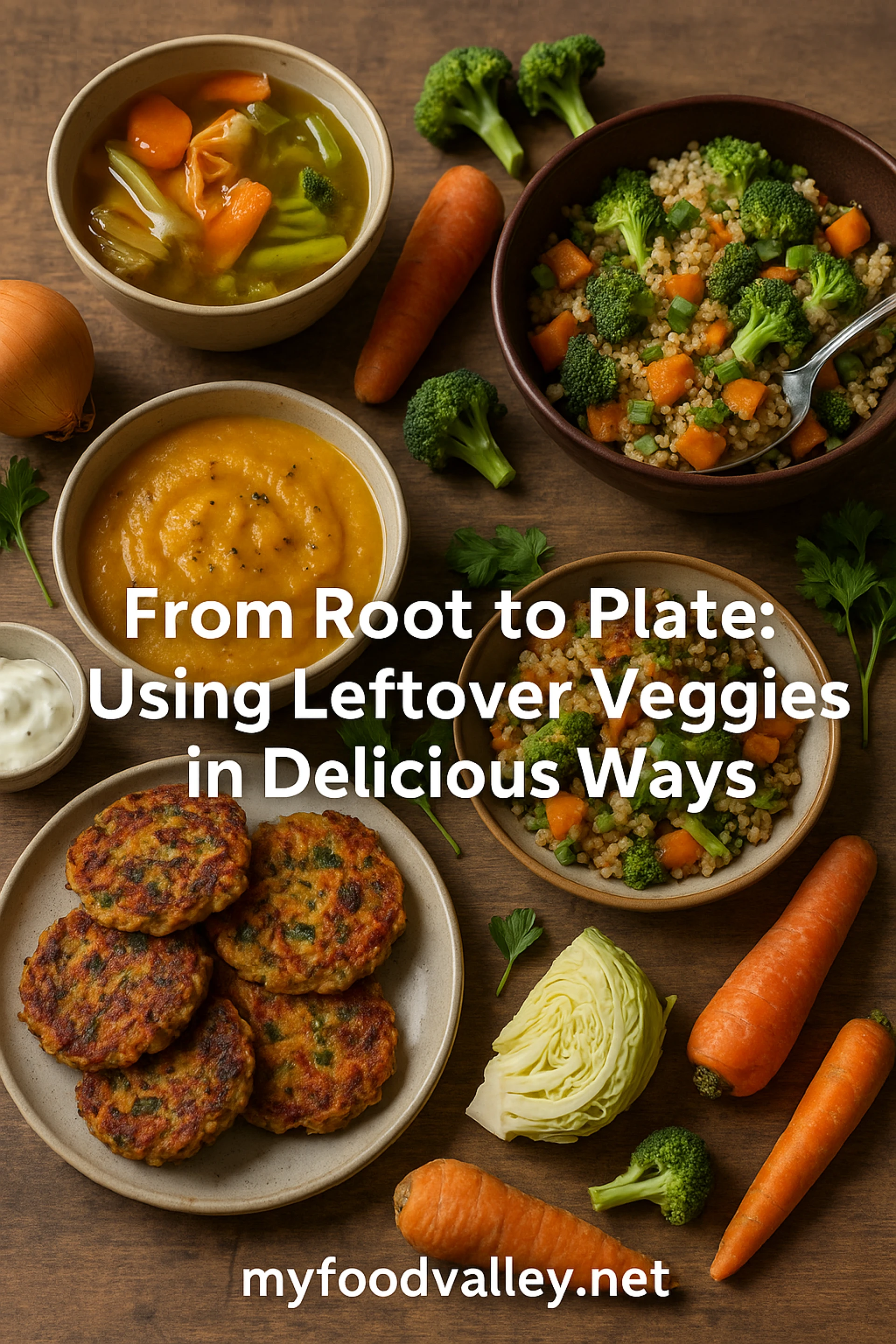
3. Veggie Fritters — Crispy, Fun, and Frugal
Turn leftover grated veggies into golden fritters that are perfect for snacks, sides, or even breakfast.
What You’ll Need:
- 2 cups grated mixed veggies (carrot, zucchini, potato, cabbage)
- 1 egg (or flaxseed mix for vegan)
- 3 tablespoons flour
- Salt, pepper, and your favorite herbs
How to Make It:
- Mix everything in a bowl.
- Heat oil in a pan and drop spoonfuls of the mixture.
- Flatten slightly and fry until crispy on both sides.
MyFoodValley Tip: Serve with yogurt dip or spicy ketchup — pure happiness!
They’re crunchy, flavorful, and make the perfect use of that single carrot or half zucchini lying around.
4. Creamy Vegetable Soup — A Hug in a Bowl
This one is pure comfort. Take any leftover vegetables — the more variety, the better — and blend them into a rich, creamy soup.
How to Make It:
- Sauté chopped onion and garlic.
- Add all your leftover veggies and broth (from earlier!).
- Simmer for 15–20 minutes.
- Blend until smooth and season to taste.
Optional: Add a splash of cream or coconut milk for a luxurious texture.
MyFoodValley Tip: Roast your veggies first for deeper flavor.
It’s warm, healthy, and comforting — proof that good food can come from humble beginnings.
5. Veggie Rice or Quinoa Bowl — Simple and Satisfying
If you’ve got small bits of cooked vegetables, turn them into a colorful rice or quinoa bowl.
How to Make It:
- Combine leftover rice or grains with your veggie mix.
- Add olive oil, herbs, and a squeeze of lemon.
- Top with seeds, cheese, or a fried egg.
Quick, hearty, and flexible — this bowl adapts to whatever’s in your fridge.
MyFoodValley Tip: Add a spoonful of hummus or yogurt for a creamy finish.
It’s balanced, fresh, and nourishing — exactly what busy people need at the end of the day.
Other Smart Ways to Use Veggie Leftovers
Even the smallest scraps can serve a purpose. Here are more clever ideas:
- Make veggie chips from beet, kale, or potato peels.
- Blend greens into smoothies for a quick vitamin boost.
- Add chopped stems to pasta sauces or omelets.
- Freeze diced veggies for future soups or stews.
- Use wilted herbs to make flavored butter or oil.
With a little imagination, every leftover becomes a new ingredient.
How to Store and Organize Leftovers
Using leftovers becomes easier when you organize them properly.
- Store chopped veggies in airtight containers with paper towels.
- Label jars with the date to avoid forgetting them.
- Keep a “use me soon” section in your fridge.
- Freeze broth, herbs, or extra sauce in small portions.
These small habits save time and money — and they keep your kitchen calm and clutter-free.
The Beauty of Imperfect Cooking
One of the best things about cooking with leftovers is that it teaches you to relax. There’s no pressure, no exact recipe — just intuition and creativity.
Your dish doesn’t have to be perfect. It just has to be made with love.
Each reused vegetable is a tiny victory — a reminder that good cooking isn’t about waste or worry; it’s about care and respect.
That’s the heart of MyFoodValley — celebrating real people, real kitchens, and real food.
Final Thoughts: The Joy of Using What You Have
Cooking with leftover vegetables is more than a smart habit — it’s an act of gratitude.
When you turn scraps into soup or peels into chips, you honor the effort that grew that food. You also remind yourself that creativity thrives under limits.
So tonight, before you toss anything away, look again. Maybe that old carrot wants to become a fritter. Maybe those spinach stems would love to be a stir-fry.
And when you take that first bite, you’ll taste not just flavor — but mindfulness, care, and joy.
Because in the end, food is never just about eating. It’s about appreciating.
Written by: The MyFoodValley Team
For more cozy, sustainable recipes and creative cooking ideas, visit MyFoodValley.net.
Tags: Sustainable Cooking, Leftover Recipes, Vegetable Ideas, MyFoodValley, Zero Waste Kitchen, Comfort Food, Creative Meals










Sign in to leave a comment.