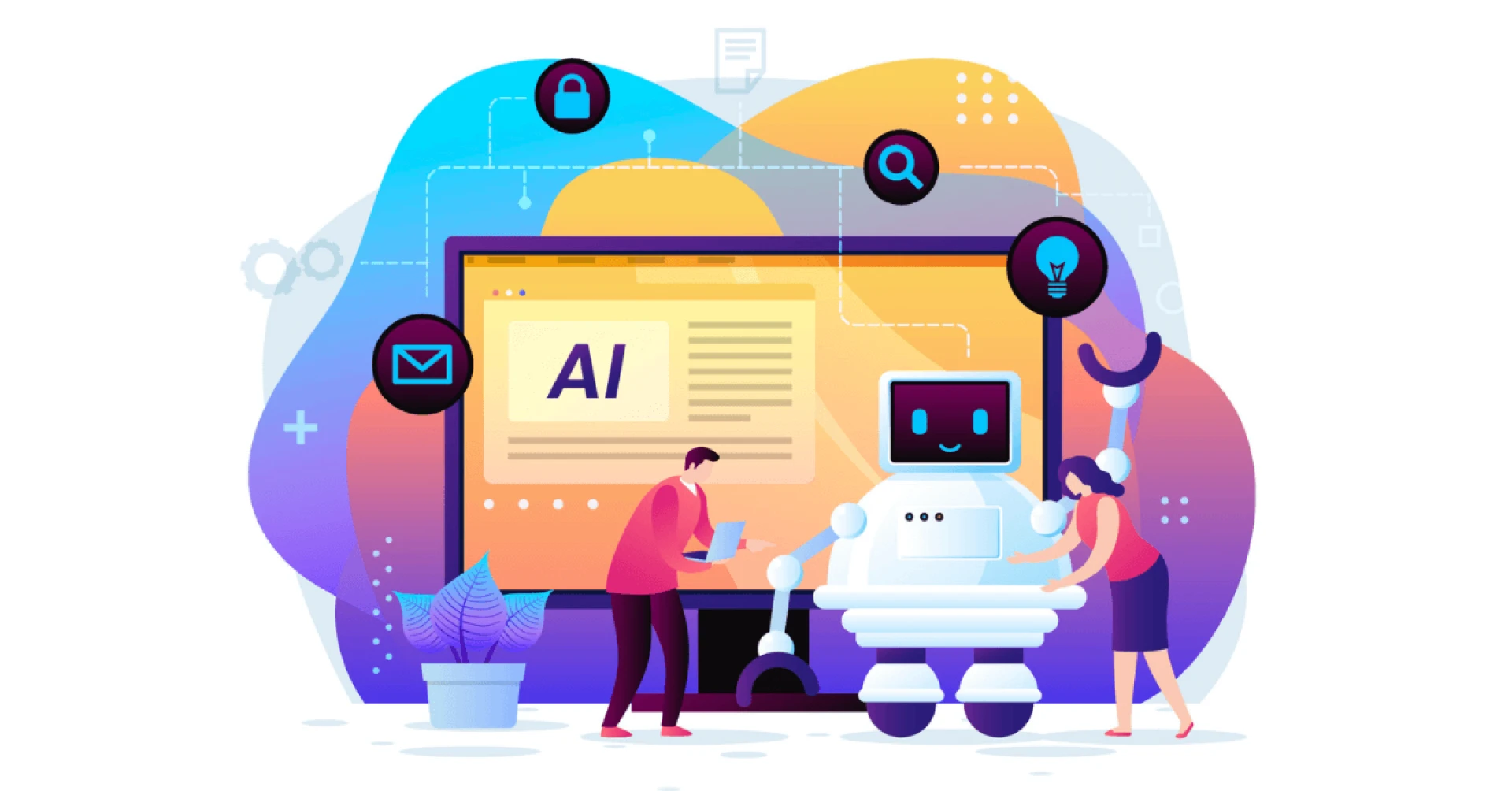

In the age of digital transformation, AI is not just a buzzword it’s a critical driver of growth and efficiency for modern enterprises. But bringing AI into an organization isn’t as simple as installing a plugin or downloading software. It involves a structured, strategic, and multi-phase process that transforms an idea into a fully functional AI solution. This is the essence of the enterprise AI development lifecycle.
Whether you're optimizing logistics, enhancing customer service, or predicting market trends, understanding the stages of AI implementation is key to success. Let’s explore how enterprises go from a simple AI concept to full-scale deployment with the support of the right enterprise AI development company.
1. Ideation and Business Alignment
Every successful AI project starts with identifying a real business problem. In this stage, stakeholders across departments IT, operations, sales, and leadership collaborate to define goals.
Key questions include:
- What specific problem are we solving with AI?
- How will this improve efficiency or generate value?
- What data do we already have, and what do we need?
At this stage, it's critical to align AI goals with overall business objectives to ensure a focused and ROI-driven initiative.
2. Feasibility Assessment and Use Case Design
Once the problem is defined, the next step is to assess feasibility both technically and economically. The organization evaluates whether AI is the right fit and what form it should take: predictive models, recommendation systems, computer vision, or AI agents capable of real-time decision-making.
A reliable enterprise AI development company can assist by:
- Evaluating the quality and availability of data
- Estimating development timelines and resource requirements
- Mapping AI capabilities to high-impact use cases
3. Data Collection and Preparation
AI is only as good as the data it learns from. In this phase, teams gather, clean, and label large datasets to train machine learning algorithms. Data engineers use techniques like data normalization, feature extraction, and dimensionality reduction to make datasets usable for model training.
The success of your AI model heavily depends on this step, as inconsistent or biased data can lead to flawed outputs.
4. Model Development and Training
Here, the actual "intelligence" begins to take shape. Data scientists experiment with different machine learning or deep learning architectures to build models that solve the defined problem.
The process involves:
- Selecting the right algorithm (e.g., decision trees, neural networks)
- Running training iterations using historical data
- Evaluating performance using validation datasets
Model training may also involve hyperparameter tuning to find the optimal balance between accuracy and generalization.
5. Testing, Validation, and Feedback Loop
Before deployment, models must be thoroughly tested. This ensures they perform well not only on training data but also on new, unseen data in real-world conditions.
This step includes:
- Running A/B testing scenarios
- Validating outputs against benchmarks
- Creating feedback loops for continuous learning
Many enterprise AI development initiatives fail when this phase is skipped or rushed. Proper validation protects against model drift and ensures long-term effectiveness.
6. Integration and Deployment
Once validated, the AI solution is integrated into the enterprise environment. This could mean embedding it into a CRM platform, logistics system, or customer support dashboard. Enterprise AI development companies often use MLOps (Machine Learning Operations) frameworks to streamline this process.
Best practices include:
- Building APIs for seamless system communication
- Ensuring data pipelines are automated and secure
- Monitoring model performance in real-time
This phase also includes edge deployment for use cases requiring AI at the point of data collection (e.g., IoT sensors or mobile apps).
7. Monitoring, Maintenance, and Scaling
AI isn’t a “set it and forget it” solution. After deployment, models must be monitored regularly to detect performance drops, adapt to new data patterns, and scale as needed.
Key maintenance tasks:
- Retraining models as new data becomes available
- Monitoring for model drift or biased results
- Scaling systems for higher data volume or user load
Ongoing support from a trusted enterprise AI development company ensures that the system evolves along with your business needs.
Conclusion: Turning Vision into Value
The journey from idea to AI-powered solution requires more than just coding it requires a deep understanding of business goals, robust data infrastructure, and continuous optimization. By following a structured enterprise AI development lifecycle, organizations can minimize risk, maximize ROI, and stay ahead of the competition.
Whether you're building intelligent chatbots, predictive models, or real-time AI agents, partnering with an experienced enterprise AI development company is the key to transforming your vision into scalable, intelligent systems that drive long-term value.











Sign in to leave a comment.