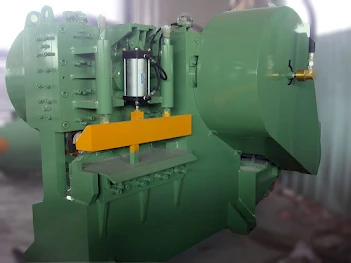

In modern metal processing, efficiency, precision, and adaptability are no longer optional—they are essential. As rolling mills evolve to meet increasing demands for quality, speed, and customization, the supporting equipment must evolve as well. Among the most critical components in this ecosystem are shearing machines, which play a decisive role in cutting, sizing, and preparing metal products for downstream operations. For advanced rolling mills, standard solutions often fall short, making custom-built shearing systems a necessity rather than a luxury.
The Role of Shearing Machines in Rolling Mills
Shearing machines are used to cut metal billets, bars, rods, sections, and coils to precise lengths during various stages of rolling mill operations. Whether positioned at the entry, intermediate, or finishing stages, these machines ensure dimensional accuracy, smooth workflow, and minimal material wastage.
In rolling mills, shearing machines must operate under demanding conditions—high temperatures, continuous production cycles, varying material grades, and strict tolerance requirements. Any inefficiency or inaccuracy can lead to production delays, quality issues, or increased operational costs.
Why Advanced Rolling Mills Require Custom Solutions
Every rolling mill has unique operational parameters. Factors such as product range, material specifications, production capacity, mill layout, and automation levels significantly influence equipment requirements. Off-the-shelf shearing machines are often designed for generic use cases and may not align perfectly with a mill’s specific needs.
Custom shearing machine solutions address these challenges by offering:
- Exact compatibility with rolling mill configurations
- Optimised cutting accuracy for specialised products
- Improved productivity through tailored speed and automation
- Enhanced safety and reliability under harsh operating conditions
For advanced rolling mills producing high-value or specialised steel products, customization ensures consistent quality and long-term operational efficiency.
Key Features of Custom Shearing Machines
Custom-designed shearing machines are engineered to integrate seamlessly into rolling mill operations. Some of the defining features include:
Precision Engineering
Advanced rolling mills demand tight tolerances. Custom shearing machines are designed with precision blades, robust frames, and accurate control systems to deliver clean, burr-free cuts, even at high speeds.
Material-Specific Design
Different materials—carbon steel, alloy steel, stainless steel, or special grades—require different cutting forces and blade geometries. Custom solutions take material properties into account, ensuring optimal performance and extended blade life.
High-Speed Operation
Modern rolling mills operate at high throughput levels. Custom shearing machines are engineered to match mill speeds without compromising cut quality, enabling smooth and uninterrupted production flow.
Automation and Control Integration
Custom machines can be integrated with PLCs, sensors, and automation systems to synchronise with rolling mill operations. This reduces manual intervention, enhances repeatability, and improves overall plant efficiency.
Types of Custom Shearing Machines for Rolling Mills
Depending on the application and production stage, rolling mills may require different types of shearing machines. Customisation allows these machines to be tailored precisely to operational needs.
- Billet and Bloom Shears: Designed for heavy-duty cutting of hot billets and blooms at the entry stage.
- Flying Shears: Used in continuous rolling mills to cut material on the move without stopping production.
- Crop Shears: Remove defective ends or irregular sections to ensure uniform product quality.
- Cold Shears: Provide precise cutting of finished products at ambient temperatures.
Each type can be custom-built to handle specific sizes, shapes, and production rates.
Benefits of Custom Shearing Machine Solutions
Investing in customised shearing machines offers multiple long-term advantages for rolling mills:
Higher Productivity
Machines designed specifically for a mill’s workflow reduce downtime, eliminate bottlenecks, and support higher production volumes.
Superior Product Quality
Accurate cutting improves dimensional consistency and surface finish, which is critical for meeting customer specifications and industry standards.
Reduced Maintenance Costs
Custom designs consider real operating conditions, resulting in more durable components and reduced wear and tear.
Energy and Cost Efficiency
Optimised machine performance leads to lower power consumption, reduced material wastage, and improved return on investment.
Engineering Expertise and Innovation
Developing custom shearing machines for advanced rolling mills requires deep engineering expertise and practical industry knowledge. From conceptual design and simulations to manufacturing and commissioning, every stage must be carefully executed to ensure reliability and performance.
The Steefo Group brings decades of experience in rolling mill equipment manufacturing, combining mechanical strength, innovative design, and application-specific engineering. Their approach focuses on understanding customer requirements in detail and translating them into robust, high-performance shearing solutions that integrate seamlessly with modern rolling mills.
Integration with Modern Rolling Mill Technology
As rolling mills increasingly adopt Industry 4.0 practices, custom shearing machines must be compatible with digital monitoring and smart control systems. Advanced solutions can include real-time performance tracking, predictive maintenance features, and remote diagnostics.
This level of integration helps rolling mill operators improve operational transparency, anticipate issues before they escalate, and maintain consistent production quality.
Future of Shearing Machines in Rolling Mills
The future of shearing machines lies in greater automation, smarter controls, and increased adaptability. As rolling mills diversify their product offerings and focus on efficiency and sustainability, custom-built solutions will continue to play a pivotal role.
Innovations such as servo-driven systems, AI-based monitoring, and energy-efficient designs are shaping the next generation of shearing machines. Rolling mills that invest in customised, future-ready equipment will be better positioned to remain competitive in a rapidly evolving industry.
Conclusion
In advanced rolling mills, where precision, speed, and flexibility are critical, custom shearing machine solutions provide a decisive competitive advantage. By aligning machine design with specific production requirements, rolling mills can achieve higher efficiency, improved product quality, and long-term operational reliability.
As the industry continues to advance, the demand for specialised shearing machines will only grow—making custom engineering an essential part of modern rolling mill success.




Sign in to leave a comment.