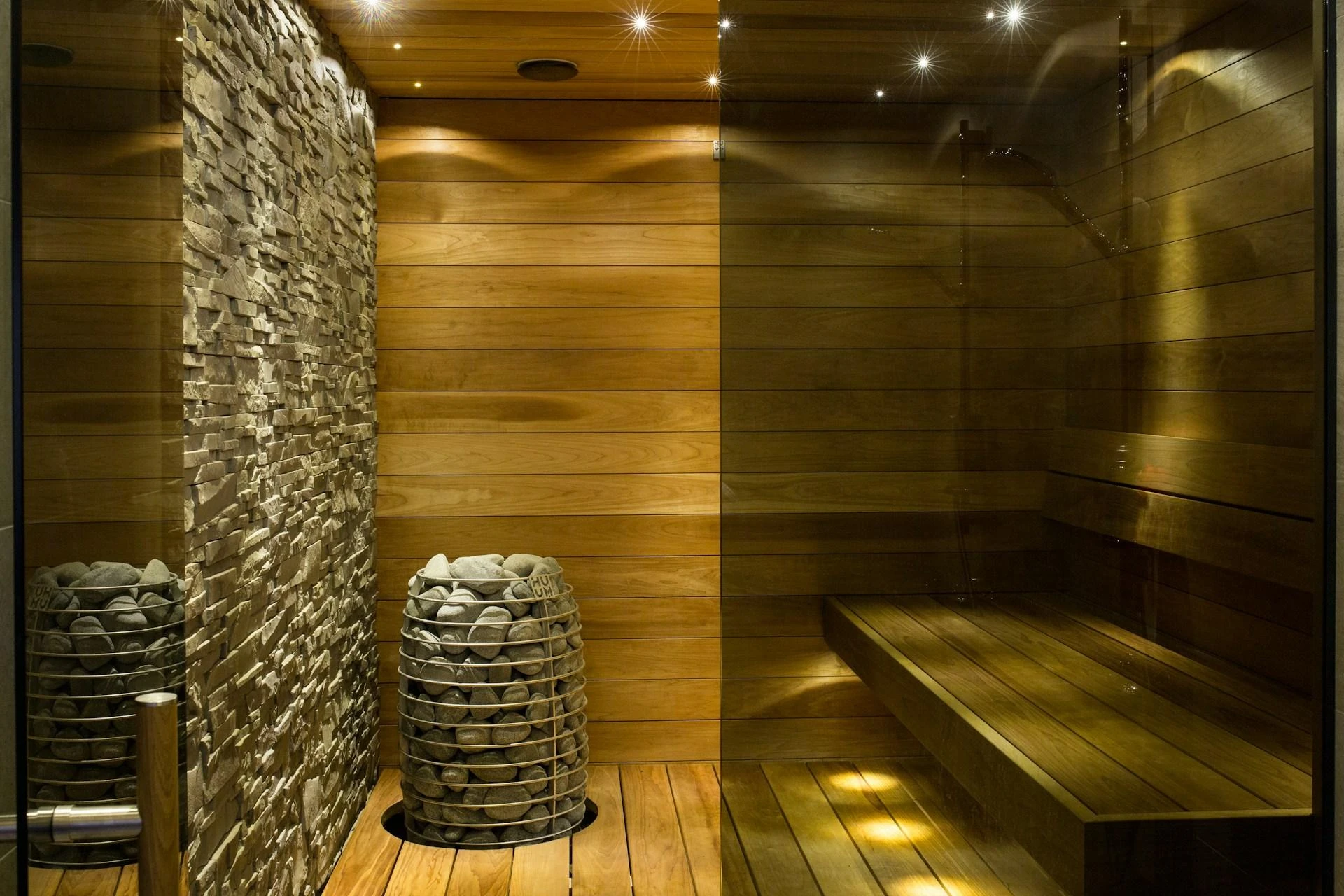

When you're working with a small space, every detail counts. There’s no room for filler. No space for “maybe later” design decisions. Whether you're in a cozy condo, a tiny home, or just that awkward little nook under the stairs, every inch needs to pull its weight —and still look good doing it.
That’s why imitation stone panels are such an underrated gem. They’re bold, textured, and full of character — but lightweight, flexible, and shockingly easy to install. Basically, the design equivalent of a multitasker.
So if you’re looking for smart, stylish ways to use imitation stone panels without overwhelming your space, you’re in the right place. Let’s get into it.
Small but Mighty: Why Imitation Stone Works in Tight Quarters
There’s a common myth in interior design that small spaces can’t handle texture. That if you add anything other than flat, white surfaces, it’s going to feel cramped or chaotic. Not true.
Done right, texture can actually make small spaces feel bigger. It draws the eye, adds depth, and gives the illusion of dimension — even when your square footage says otherwise.
Imitation stone panels bring just enough rugged charm to break up bland drywall without dominating the room. And unlike actual stone (which weighs a ton and needs reinforced support), these panels are made from lightweight polyurethane. That means they go up easy, even in places where you'd never dream of dragging in real stone.
Plus, with the variety of tones and profiles available from brands like NextStone Canada — think Slatestone, Country Ledgestone, Rundle Ridge, and more — you can match your aesthetic whether you lean modern, rustic, or somewhere in between.
The Entryway Pop
Let’s start right at the front door. Small entryways can feel like design afterthoughts — but they’re your home’s first impression.
Try using imitation stone panels on just one wall of your entry or mudroom. You don’t need much. Even a four-foot stretch makes a statement. Add a mirror, a few hooks, maybe a wooden bench with baskets underneath… and suddenly your “just enough room to take off shoes” entryway feels curated and welcoming.
The texture breaks up the flat wall, and because the panels are water-resistant, they hold up beautifully in a space where wet boots and slush are part of the daily routine.
Kitchen Island Charm
Kitchen islands are another great spot to experiment with imitation stone panels — especially if you’re short on wall space. Wrap the base of your island in stone veneer and it instantly feels more anchored. Like it belongs.
It's an especially clever trick for open-concept condos or lofts where the kitchen and living area share space. The added texture helps visually separate zones without building anything bulky or permanent.
And since the panels are easy to wipe clean, they’re perfect for kitchens where spills happen. Because let’s be honest — they always do.
Fireplace Facelift in Compact Living Rooms
Fireplaces are natural focal points, even in small living rooms. But if yours is surrounded by bland drywall or outdated tile, it might not be making the impact it could.
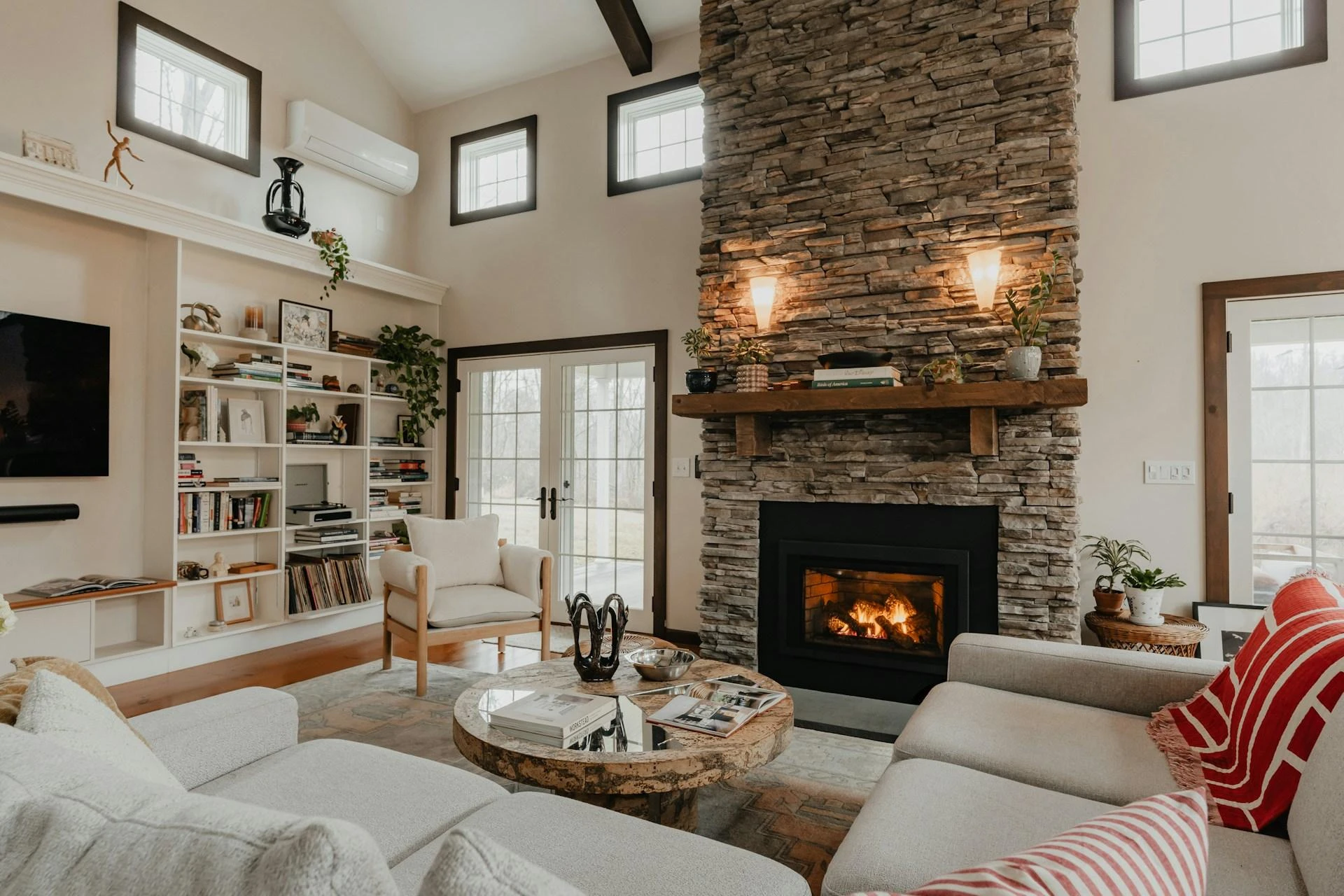
Swap in some faux stone and give your fireplace a little architectural drama. It doesn’t need to cover the whole wall — a few feet above and around the mantle does the job. Pair it with some reclaimed wood or matte black accents and you’ve got the kind of design moment that makes a room feel pulled together, even if the room itself isn’t massive.
Built-In Bookshelves or Nooks
If you’ve got a recessed space in your home — like a little reading nook, a window seat, or a built-in bookshelf — this is where imitation stone panels can really shine.
Stone adds coziness without bulk. Use it as a backdrop to make the nook feel intentional, not accidental. Especially in small homes where these details are often tucked away, it’s an easy way to turn forgotten corners into features.
Add a cushion, a sconce, a few books, and you’ve turned an awkward wall into your new favorite reading spot.
Bathroom Backsplash (Yes, Really)
Bathrooms are usually tight on space, but they’re not short on impact. And if you want yours to feel more like a spa and less like a rental unit, imitation stone panels might be your answer.
Try a partial wall behind the vanity or a vertical stripe behind a freestanding tub. As long as the area isn’t exposed to constant direct water (think splash zone, not shower wall), the panels hold up great. They’re mold-resistant, wipe clean, and create a warm, grounding effect in a space that often feels sterile.
It’s the kind of design move that makes you want to light a candle and stay in the bath a little longer.
Mini Bar or Basement Accent
Small basements are tricky. They’re often dark, oddly shaped, and easy to ignore when planning upgrades. But adding a little character down there goes a long way.
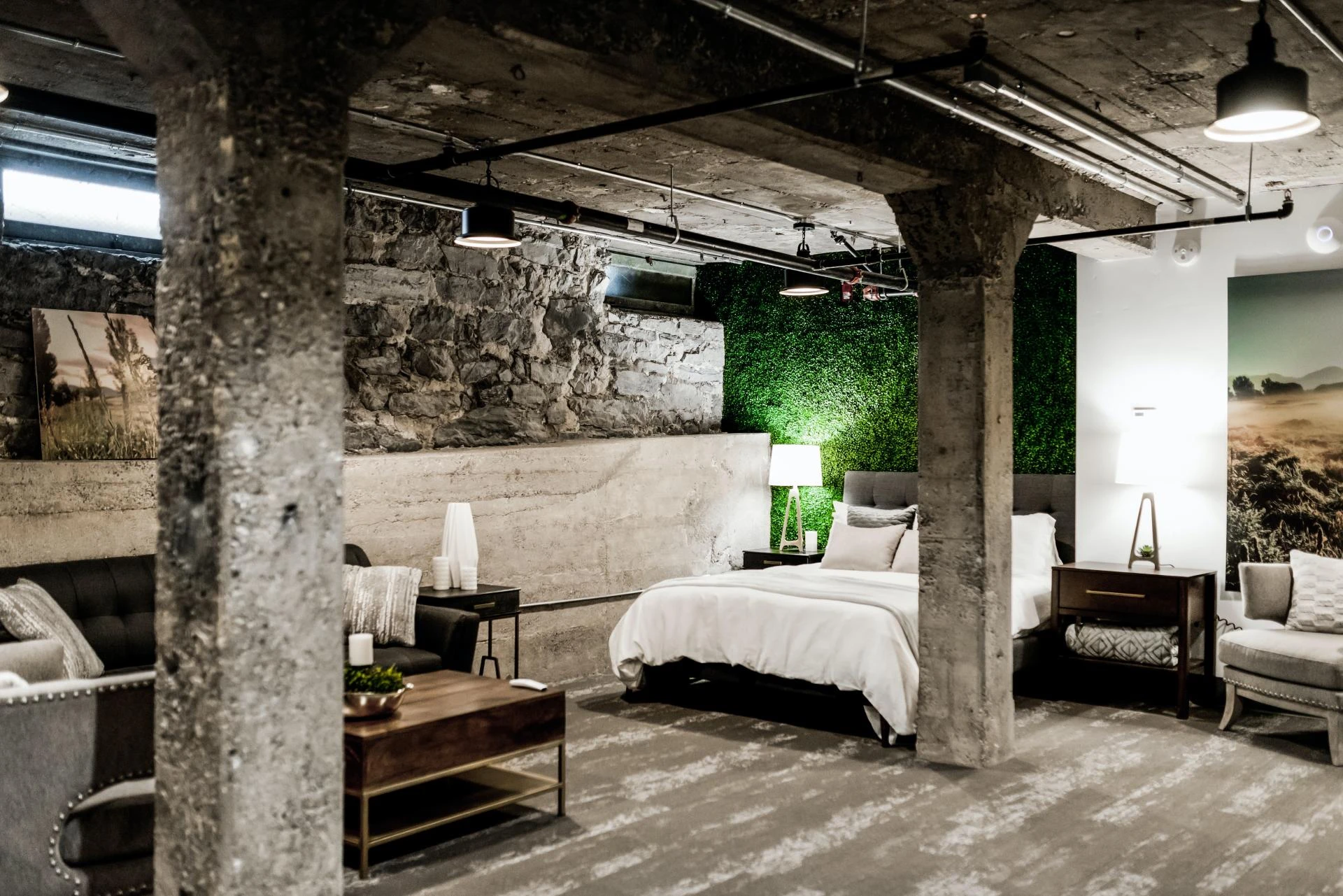
Create a faux stone feature wall behind a mini bar setup, or add texture to a gaming corner or home gym. Because the panels are so easy to install, you don’t need to commit to a major renovation. A few square feet of stone can change the vibe of a whole room — especially when paired with soft lighting or wood accents.
And because they’re made for durability, imitation stone panels can handle a little humidity without falling apart.
Under the Stairs — Make It Count
Ah, the under-the-stairs nook. Often wasted. Sometimes cluttered. Rarely celebrated.
But picture this: a faux stone backdrop, a floating shelf or two, some plants or stacked firewood, maybe a wine rack. Suddenly that awkward triangle space becomes an architectural moment.
Stone draws attention in the best way — especially when paired with minimalist styling. You don’t need to fill the area. Let the texture do the talking.
A Note on Color and Light
When working with small spaces, color and lighting matter just as much as layout. Choose stone tones that reflect your natural light. If your room’s on the darker side, stick with warm neutrals like Santa Fe or Teton Buff to keep things feeling cozy but not closed in. If you’ve got good daylight, deeper tones like Midnight Ash or Onyx can add drama without making the room feel heavy.
And lighting? Always layer it. Sconces, pendant lights, under-cabinet LEDs — all of it plays off the texture of the stone and makes it feel alive.
Style Without the Struggle
What really makes imitation stone panels so great for small spaces isn’t just how they look — it’s how easy they are to work with.
They’re lightweight, so you don’t need special anchors or reinforcements. They’re cuttable with standard tools. And you don’t have to hire a crew or wait for the perfect weather to install them. Just a tape measure, a drill, and a little weekend motivation.
It’s style, without the struggle. Texture, without the permanence. And in small homes or apartments, that kind of flexibility matters.
So whether you’re dealing with one blank wall, an odd corner, or just want to shake things up in a space that doesn’t give you a lot of room to work with — give imitation stone a shot. Your small space might be about to make its biggest statement yet.
You might get some additional inspo by following the link: https://nextstonecanada.com/blogs/news/imitation-stone-panels-simplicity-and-style
Sign in to leave a comment.