
There is a version of every sales visit that developers dread. A well-dressed couple walks in with genuine interest, spends 45 minutes with your best consultant, takes a brochure, and says — 'we'll think about it and get back to you.' Three weeks later, you're still following up.
The moment interest stops converting into action is the moment your sales process has a leak. And in most cases, that leak has nothing to do with pricing or location. It has everything to do with engagement — specifically, whether the buyer left feeling certain or just hopeful.
This is where digital twin technology for real estate changes the game entirely.
Interest Is Easy. Action Is the Hard Part.
Most developers have no problem generating footfall. Events, digital campaigns, broker networks — there are enough channels to fill a site office on a weekend. The harder question is: what happens after they walk in?
When Nahar Group developed their Valley project experience centre, this was the core challenge. The project had a compelling narrative — a township-scale development in a greenbelt setting with a strong value proposition. Buyer interest was not the problem. Getting buyers to move from 'interested' to 'booked' within a reasonable timeframe was.
The Psychology of Inaction
Buyers delay for a predictable set of reasons. Most of them come down to one thing — they cannot picture themselves living there clearly enough to justify the financial and emotional commitment. This is not reluctance. It is rational caution in the face of incomplete information.
Traditional sales tools do not resolve this. A floor plan requires the buyer to do the mental heavy lifting of imagining scale, proportion, light, and flow. A CGI video is passive — the buyer watches but does not experience. A physical model gives scale but not reality.
What buyers actually need is to feel the certainty of having already lived in the space — before they commit. That is precisely what a real estate digital twin delivers.
How Nahar Valley's Experience Centre Turned Visitors Into Buyers
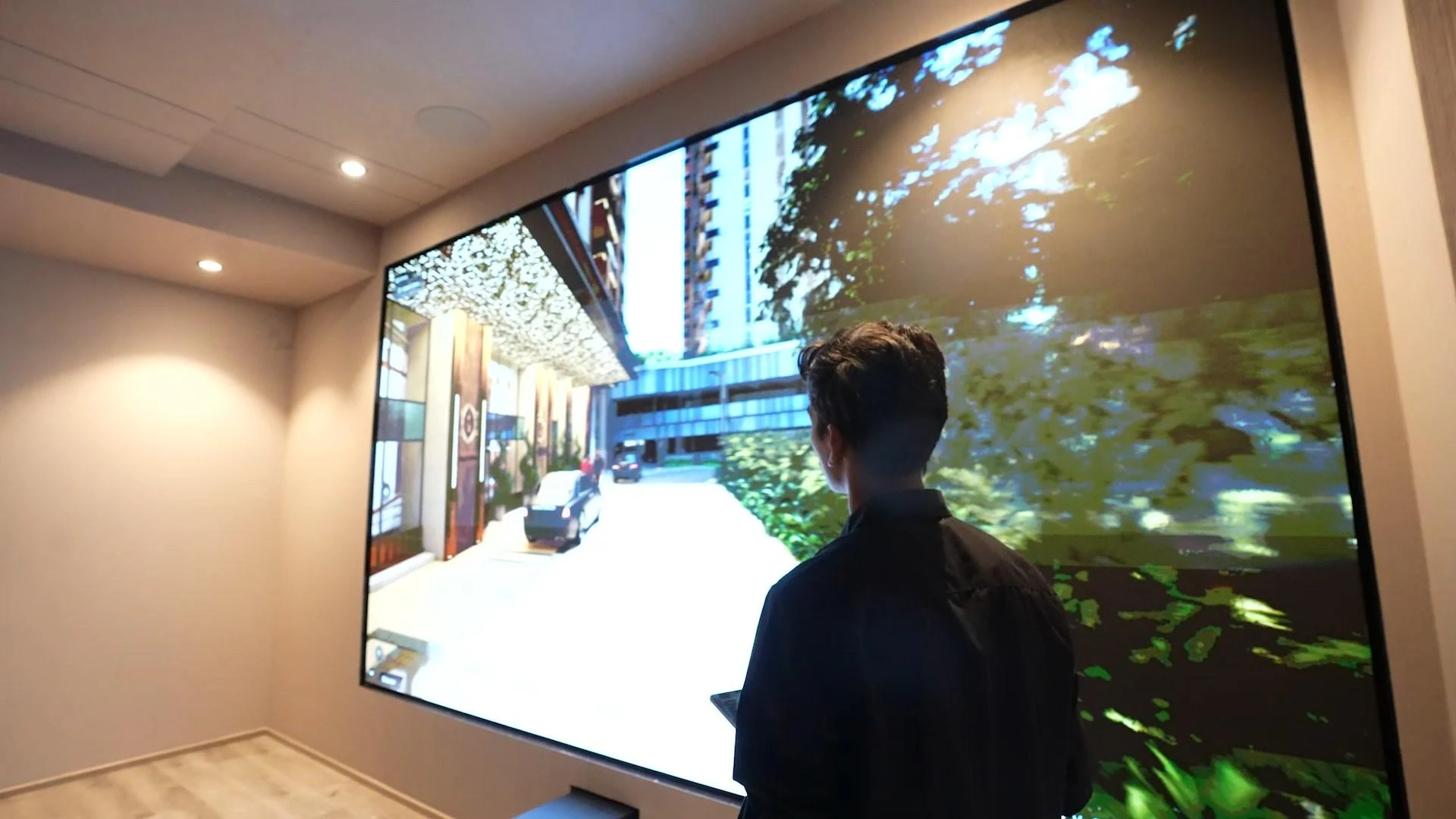
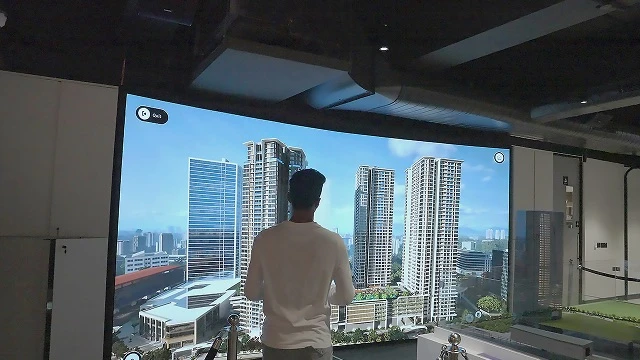
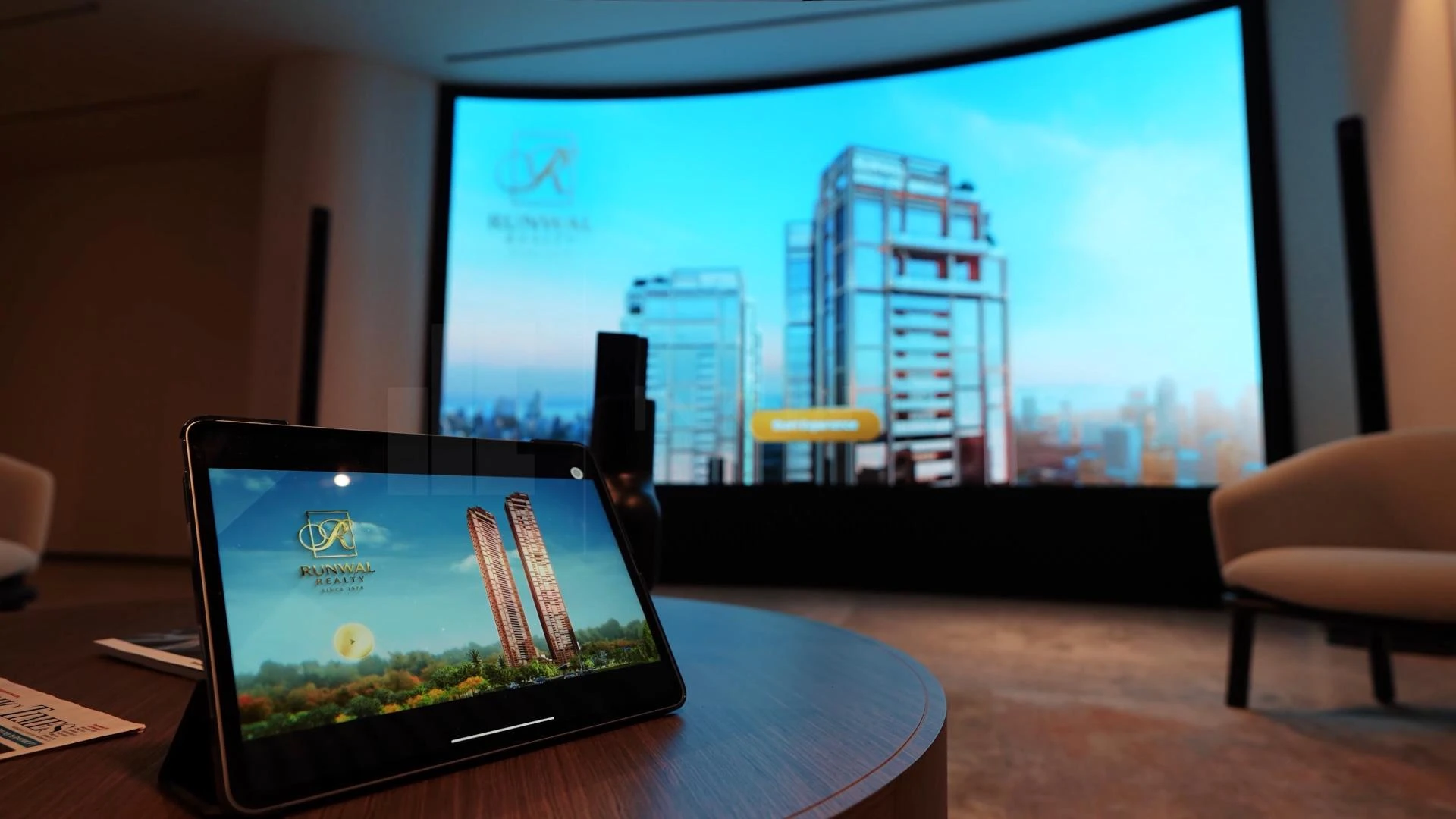
Vestate created a fully immersive experience centre for Nahar Valley that put buyers inside the project from the moment they arrived. Using interactive 3D walkthroughs and a property digital twin, visitors could:
• Explore multiple unit configurations across different towers and floors
• Understand exactly what the view from their specific unit would look like — including landscaping, open spaces, and connectivity
• Walk through common areas, clubhouses, and amenity zones that wouldn't be complete for another 18 months
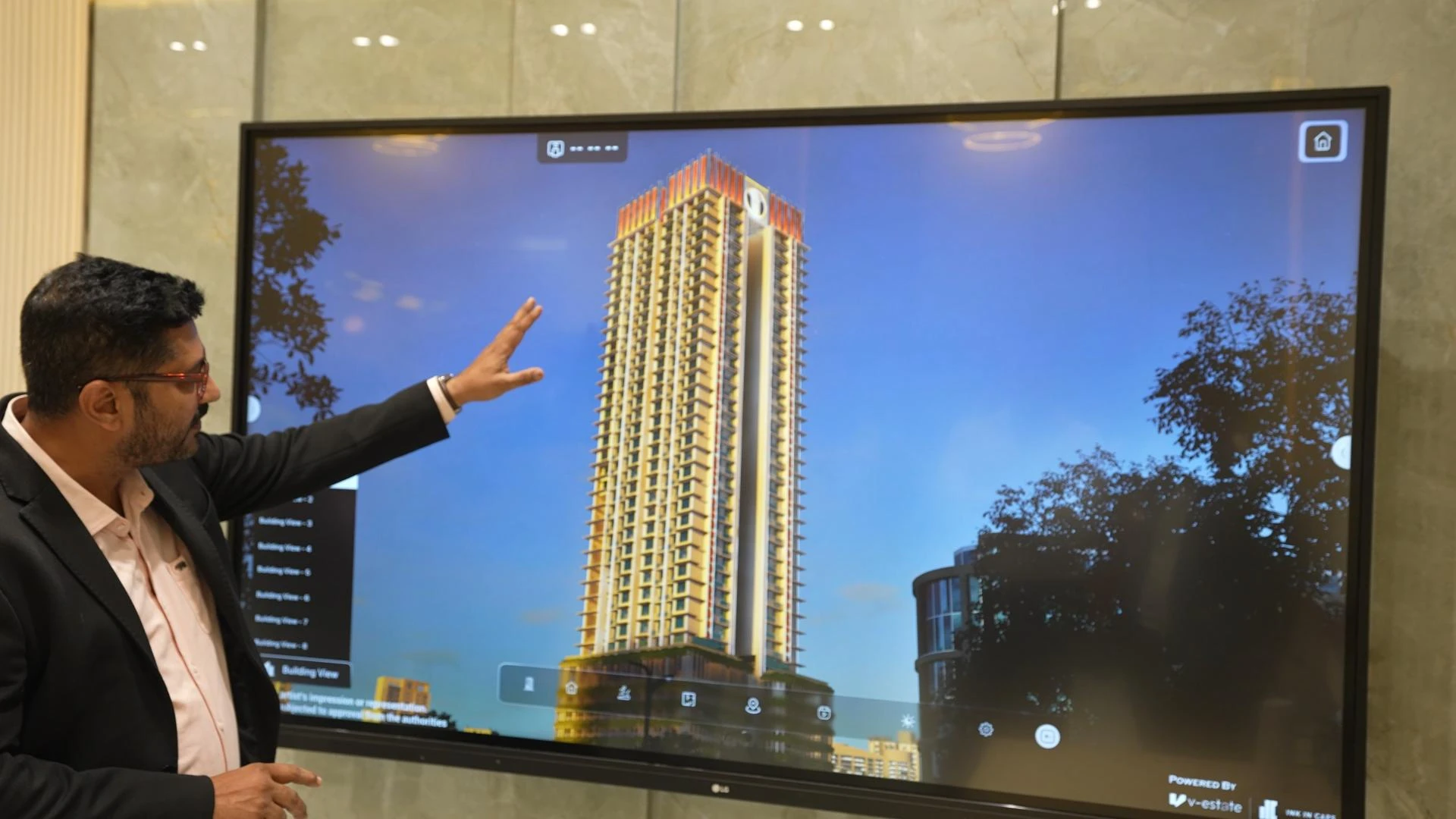
• Sit with a sales consultant who could answer questions in real time while navigating the digital twin together
The offline capability was critical here. The experience centre ran flawlessly on-site without requiring connectivity — which meant no awkward buffering, no technical glitches mid-conversation, no loss of momentum at the most important point of the buyer's visit.
What Changes When Buyers Experience Rather Than Imagine
The shift in buyer behaviour when an immersive experience replaces a brochure presentation is well-documented at this point. But here is what it actually looks like on the sales floor:
• Questions become specific — 'Can we see the 3BHK on the 14th floor?' rather than 'Tell me about the 3BHKs'
• Objections become negotiable — 'The living room feels smaller than I'd like' is a conversation, not a dealbreaker
• Follow-up calls have a different quality — buyers reference what they saw, not what they were told
• Decisions happen faster — because the mental work of imagining is already done
When a buyer has navigated their potential future home using digital twin technology for real estate, the psychological distance between interest and commitment collapses.
Engagement Is a Design Choice, Not a Sales Skill
Sales teams get blamed for slow conversion rates more often than they deserve. The truth is, no amount of sales training can compensate for an experience that leaves buyers uncertain. Engagement that converts is not a function of how well your consultants speak — it is a function of what you put in their hands.
At Nahar Valley, the experience centre gave the sales team an instrument, not just a script. They could respond to any question visually and immediately. They could tailor the experience to each buyer's priority — whether that was the view, the floor, the layout, or the amenities — and show it rather than describe it.
That is the difference between a sales team that closes and one that follows up endlessly.
Experience-Based Engagement Has a Compound Effect
Projects that invest in experience-based property engagement do not just close faster in the short term. They generate a different quality of word-of-mouth. Buyers who have had a genuinely impressive experience at your site office talk about it. Brokers who bring clients to an immersive experience centre remember it — and recommend it more often.
In a market where referrals still drive a significant share of residential sales, this is not a small thing. The experience you design today becomes a sales channel tomorrow.
Stop leaving action on the table. Start designing for it.
Vestate's real estate digital twin platform is built for developers who want buyers to move, not just visit. See what experience-based engagement looks like in practice at vestate.io.










Sign in to leave a comment.