
As we enter 2026, the global Building Information Modeling (BIM) market is no longer a "future trend" it is an US$4.7 billion reality that is fundamentally reshaping project delivery. According to recent industry outlooks, over 62% of large-scale AEC contracts worldwide now mandate specific BIM collaboration protocols. However, the complexity of these mandates has evolved. We are moving beyond simple 3D coordination into the era of the "Golden Thread"—a seamless flow of information that connects design, construction, and lifelong asset management.
The BIM Execution Plan (BEP) remains the most critical document in this ecosystem. Yet, a BEP designed in 2022 is no longer sufficient for the AI-driven, ISO-compliant landscape of 2026. To protect your firm and ensure project success, your BEP template must evolve from a technical manual into a robust data-governance framework.
The Shift from "Modeling" to "Information Management"
The most significant shift in 2026 is the release of the updated ISO 19650:2026 standards, which move the industry’s focus from "BIM" to "IM" (Information Management). This isn't just a linguistic tweak; it’s a strategic repositioning. Projects are now prioritized by their "Information Production Requirements" rather than just model detail.
For AEC professionals, this means the BEP must now account for a unified 9-step information management process. If your current template still treats "Handover" as the finish line, you are already behind. In 2026, the BEP must define the Asset Information Model (AIM) as the enduring outcome, ensuring that data is live and validated for the next 50 years of the building’s lifecycle.
1. The Interoperability and Open Data Clause
With the rise of smart cities and national digital twin initiatives, proprietary file formats are becoming a liability. In 2026, leading firms are mandating Industry Foundation Classes (IFC) and COBie data exchange as non-negotiable standards.
Your BEP must explicitly outline:
- The "Open Standard" Mandate: Requirement for all stakeholders to provide exports in open formats (e.g., IFC 4.3) at specified milestones.
- Data Validation Protocols: How and when data integrity will be audited to prevent "data drops" during software version transitions.
Expert Insight: Research shows that interoperability issues can increase project setup costs by up to 18% for mid-sized firms. Standardizing these clauses early mitigates this financial leak.
2. AI Governance and Automated Quality Control
Artificial Intelligence has moved from experimental to essential. Current data shows that 31% of major BIM vendors have embedded AI-driven clash detection and predictive scheduling. However, AI brings new risks regarding data ownership and algorithmic bias.
A 2026-ready BEP must include an AI Usage Clause:
- Algorithm Transparency: Define which AI tools are permitted for generative design or automated quantity takeoffs.
- Liability for AI Outputs: Clarify that AI-generated models must still be validated by a "Human-in-the-Loop" (HITL) to maintain professional indemnity.
- Automated QA: Specify the frequency of automated model health checks to minimize crashes and conflicts before major delivery milestones.
While optimizing your workflows, it’s equally important to learn from the industry's collective experience. Many firms struggle with the initial setup; for instance, you might want to review the top 10 BIM Execution Plan (BEP) mistakes to avoid in 2026 to ensure your template doesn't fall into common traps like over-modeling or vague responsibility matrices.
3. The "Golden Thread" and Cybersecurity Liability
As buildings become IoT-enabled assets, the BIM model becomes a primary target for cyber threats. In 2026, 21% of BIM-enabled companies reported risks related to cloud data sharing.
Your BEP must address:
- CDE Security Standards: Explicitly naming the Common Data Environment (CDE) and the encryption standards required for all participants.
- Access Control Matrix: Defining who can view, edit, or delete specific data subsets at each project stage.
- Cyber-Liability Insurance: Ensuring that all consultants carry appropriate coverage for potential data breaches within the shared model environment.
Actionable Takeaways for AEC Leaders
To modernize your BEP template today, focus on these three immediate steps:
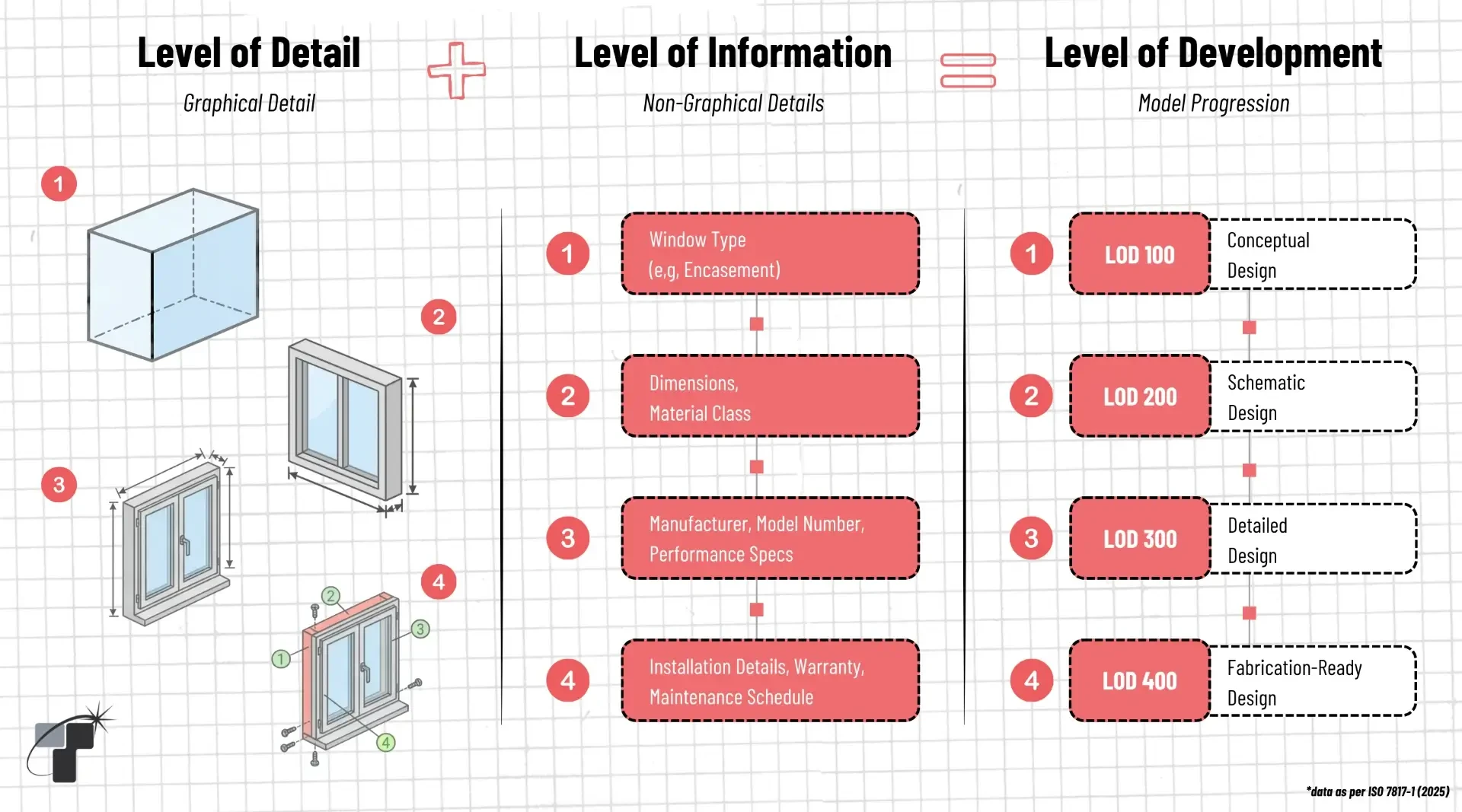
- Audit for ISO 19650:2026 Compliance: Replace outdated terminology (like "Level of Detail") with "Level of Information Need" (ISO 7817) and "Information Production Plans."
- Define the "Human-in-the-Loop": Create a role-based matrix that identifies who is responsible for signing off on AI-assisted modeling outputs.
- Standardize Offshore Collaboration: As the labor shortage hits an estimated 499,000 workers this year, many firms are turning to offshore BIM teams. Your BEP must include clear protocols for 24/7 production cycles and global data security compliance.
Conclusion: The Future of Digital Contracts
The 2026 landscape demands that we stop viewing the BEP as a static PDF and start viewing it as the "operating system" of the project. By integrating clauses for AI governance, open-source interoperability, and lifecycle data management, you move your firm from mere compliance to a distinct competitive advantage. In an era where information is as structural as steel, the quality of your BEP will determine the resilience of your built assets and the profitability of your practice.












Sign in to leave a comment.