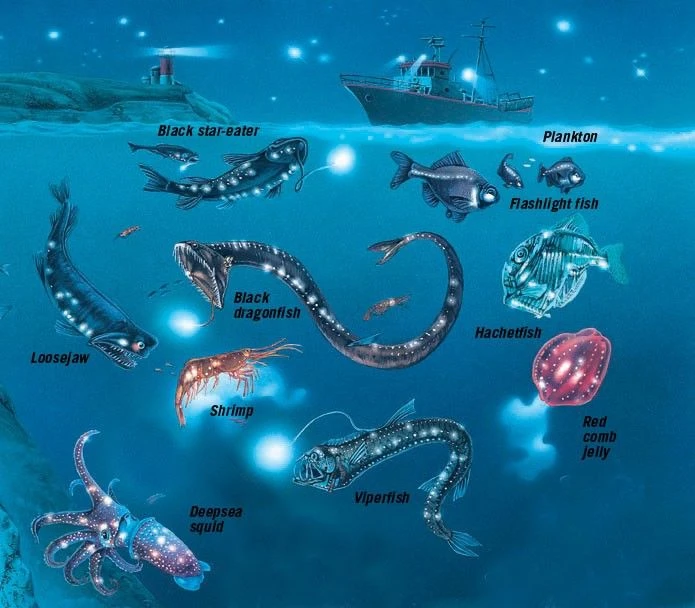

The ocean remains the final frontier of exploration on planet Earth. While we have mapped the surface of Mars and the Moon with incredible precision, nearly 80% of our own oceans remain unmapped and unobserved. This vast, dark expanse is home to some of the most bizarre and fascinating organisms known to science. Recently, public interest in underwater biology has spiked, often fueled by viral puzzles and crossword clues regarding the appearance of the maine creature nyt, leading many to wonder why these deep-sea inhabitants look so vastly different from the life we see on land. To understand these creatures, we must dive deep into the evolutionary pressures of the abyss.
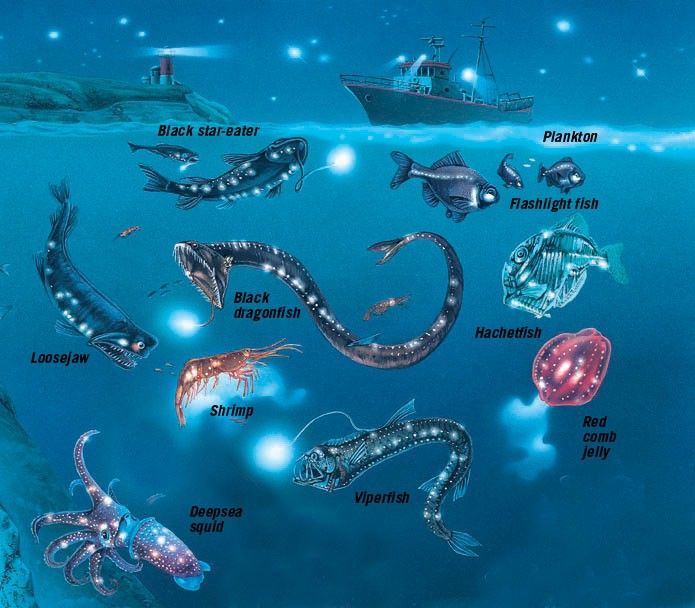
The Harsh Reality of the Midnight Zone
To appreciate the biology of deep-sea marine life, one must first understand the environment they inhabit. Beyond 1,000 meters (3,300 feet), sunlight disappears entirely. This is the "Midnight Zone" or Bathypelagic zone. Here, the water temperature hovers just above freezing, and the pressure is crushing—equivalent to having an elephant stand on your thumb.
In such an extreme environment, the standard rules of biology are rewritten. Photosynthesis is impossible, meaning the entire ecosystem relies on "marine snow"—detritus, dead organic matter, and waste that drifts down from the upper layers of the ocean. This scarcity of food and light has forced deep-sea marine life evolution to take some of the most creative paths in the natural world.
Bioluminescence: The Language of Light
In a world of perpetual darkness, the ability to produce light is not just a parlor trick; it is a vital survival mechanism. Bioluminescence is the chemical production of light by living organisms, and in the deep sea, it serves multiple purposes:
- Hunting: The famous Anglerfish uses a glowing lure (an esca) filled with symbiotic bacteria to attract curious prey directly into its needle-like teeth.
- Defense: Some species of shrimp and squid can "spew" glowing clouds of chemicals to blind predators while they make their escape.
- Counter-Illumination: Many fish have light-producing organs (photophores) on their bellies. By matching the faint light coming from the surface, they disappear against the sky when viewed from below, becoming invisible to predators.
Structural Adaptations to High Pressure
One of the most common questions about deep-sea creatures is why they don't get crushed by the immense pressure. The answer lies in their cellular structure. Unlike land animals, deep-sea creatures lack air-filled cavities like lungs or swim bladders, which would collapse under pressure.
Instead, their bodies are composed mostly of water and gelatinous tissue that is incompressible. Furthermore, their cell membranes are reinforced with special types of unsaturated fats that remain fluid in near-freezing temperatures, preventing their biological "machinery" from seizing up. This is why many deep-sea fish appear "blob-like" when brought to the surface; their bodies are designed to be held together by the pressure of the deep, and they lose their structural integrity in the lower pressure of our atmosphere.
The Giants of the Deep: Deep-Sea Gigantism
In the shallow waters, most invertebrates are relatively small. However, in the deep sea, we encounter a phenomenon known as "abyssal gigantism." Creatures like the Giant Isopod (which looks like a massive, 14-inch version of a woodlouse) and the Colossal Squid thrive in these depths.
Biologists believe this gigantism is an evolutionary response to several factors:
- Scarce Resources: Larger bodies are more efficient at storing energy and can travel longer distances to find food.
- Lower Metabolism: Cold temperatures slow down metabolic rates, allowing animals to live longer and grow larger over time.
- Lack of Predators: The deep sea has fewer active predators compared to the coral reefs, allowing certain species to grow undisturbed for decades.
Feeding Strategies in a Food Desert
When food is a rare luxury, you cannot afford to let a meal pass by. This has led to the evolution of terrifyingly efficient feeding apparatuses. Many deep-sea fish, such as the Fangtooth or the Viperfish, possess teeth so large they cannot even close their mouths. These teeth act as a cage, ensuring that once prey is caught, there is no escape.
Other species, like the Gulper Eel, have evolved hinged jaws and expandable stomachs that allow them to swallow prey much larger than themselves. This "opportunistic feeding" ensures that even a single successful hunt can sustain the creature for weeks or even months.
The Importance of Ocean Conservation
While these creatures seem like they belong on another planet, they are inextricably linked to the health of our global ecosystem. The deep sea plays a crucial role in carbon sequestration, helping to regulate the Earth’s climate by trapping carbon dioxide in the "biological pump."
However, deep-sea ecosystems are increasingly under threat from:
- Deep-Sea Mining: The search for rare earth metals used in batteries threatens to destroy hydrothermal vent communities before we even fully understand them.
- Plastic Pollution: Microplastics have been found in the guts of organisms living in the Mariana Trench, the deepest point on Earth.
- Climate Change: As the oceans warm and acidify, the delicate balance of the "marine snow" cycle is disrupted, potentially starving the creatures of the abyss.
Conclusion
The evolution of deep-sea marine life is a testament to the resilience and creativity of nature. From the shimmering lights of the hatchetfish to the massive bulk of the giant squid, these organisms have mastered an environment that would be fatal to almost any other form of life.
As we continue to explore the depths using remote-operated vehicles (ROVs) and advanced sonar, we are likely to discover even more "alien" life forms that challenge our understanding of biology. Protecting these mysterious regions is not just about saving "scary" fish; it is about preserving the ancient, complex systems that keep our planet habitable. The next time you see a headline about a strange new discovery in the ocean, remember that we are only just beginning to scratch the surface of the wonders held within the deep.








Sign in to leave a comment.